
Affiliate & Editorial Disclosure: As an Amazon Associate, The PC Audit earns from qualifying purchases. If you buy through verified affiliate links on this page, we may earn a small commission at no extra cost to you. Every sub-$800 Amazon listing pattern, rejected configuration, and clean step-up system below is audited independently with zero paid brand placements.
Direct Buyer Alert: The Sub-$800 Amazon Prebuilt Reality
Shopping for gaming pcs under 800 on amazon in 2026 exposes a harsh catalog trap: virtually every Page-1 prebuilt below $800 recycles obsolete AM4 DDR4 silicon paired with bandwidth-starved 4GB RX 6500 XT or cut-down 6GB RTX 3050 graphics cards, single-stick memory, 500GB drives, and Wi-Fi 5. Verify GPU VRAM, PCIe lane compatibility, memory channels, and clean step-up alternatives before clicking Add to Cart.
Every shopper hunting an affordable desktop tower wants the same thing: smooth 1080p framerates in current titles without paying flagship markups. Yet Amazon’s entry-level gaming desktop pages are engineered to reward nostalgia and surface flash rather than modern hardware balance. Bright RGB fans behind tempered glass, four-figure inherited star counts, and familiar brand names make a $650–$800 tower look like an effortless bargain—until you open a modern 2026 release and hit immediate VRAM overflow stutters, single-channel memory hitching, and zero storage capacity after installing two games.
Inside our broader Best Prebuilt Gaming PC (2026) hub and 10-axis Amazon component buyer guide, we track exactly how system integrators configure retail towers across every budget tier. In the sub-$800 bracket specifically, component cuts compound one another: pairing a 4GB PCIe x4 graphics card with a PCIe 3.0 budget processor, one stick of RAM, and an undisclosed power supply creates hidden upgrade costs that quickly erase the apparent savings over clean sub-$1,000 gaming PC options or balanced DIY parts.
Inside This Sub-$800 Amazon Budget Audit
- 10-Axis Dissection Table: Sub-$800 Headlines vs. Hidden Reality
- Trap 1: Why 4GB RX 6500 XT & 6GB RTX 3050 Prebuilts Fail in 2026
- Trap 2: Amazon Sidebar Filter Limits & Parent ASIN Review Pooling
- Trap 3: AM4 Dead Ends, 16MB-Cache CPUs, Single-Stick RAM & 500GB SSDs
- Trap 4: Omitted PSUs, Stealth Wi-Fi 5 & The $250 Hidden Upgrade Math
- Audited Red-Flag Case Studies: 4 Sub-$950 Traps to Skip
- The 60-Second Pre-Checkout Amazon Verification Checklist
- Clean Alternatives: DIY $800–$1,000 Bridge & 4 Audited Step-Up Builds
- Frequently Asked Questions
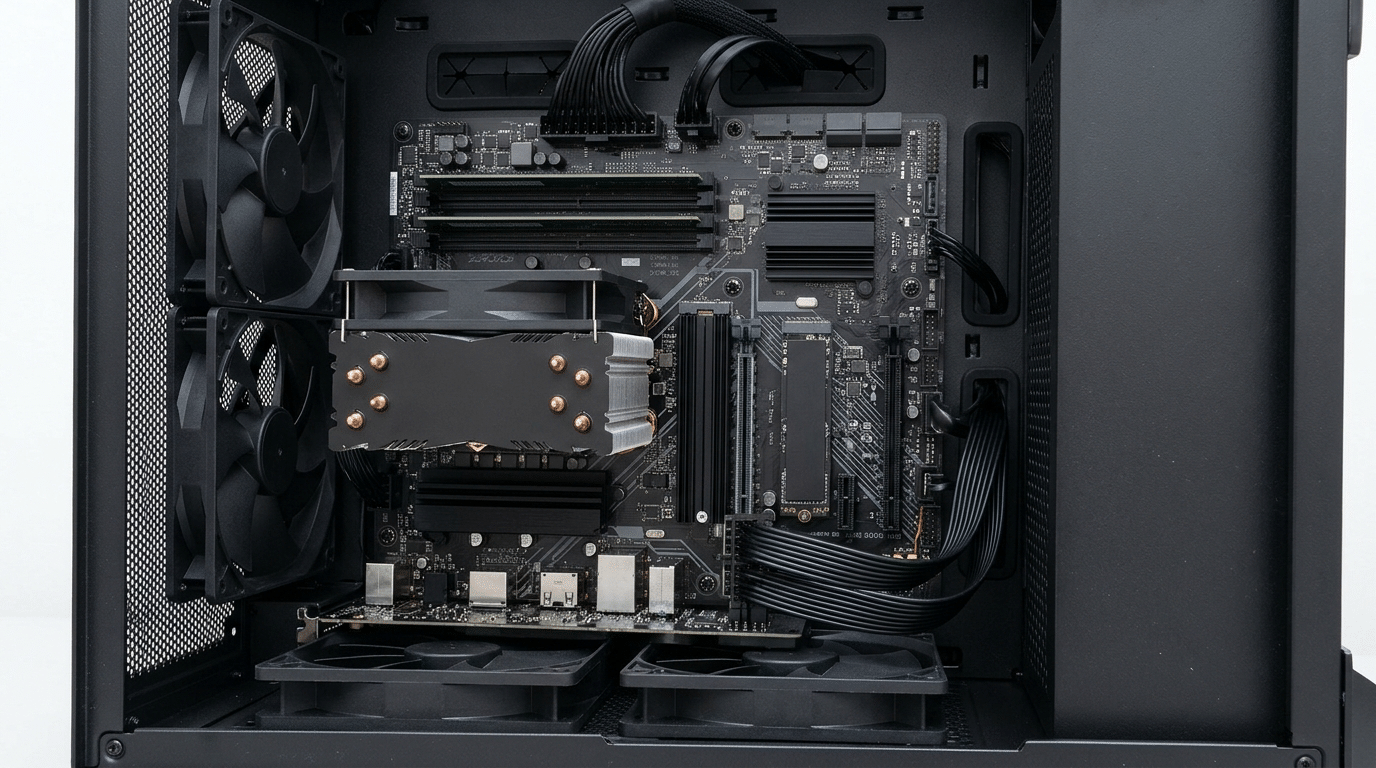
10-Axis Dissection Table: Sub-$800 Headlines vs. Hidden Reality
When auditing gaming pcs under 800 on amazon, evaluating the graphics card alone misses half the compromises buried inside the chassis. Every Amazon desktop configuration spans ten distinct component and catalog axes. Below is how sub-$800 retail listings present themselves versus what actually arrives at your door.
| Component / Listing Element | What Sub-$800 Amazon Headlines Show | What Is Often Hidden or Omitted | How to Verify in 30 Seconds |
|---|---|---|---|
| 1. GPU & VRAM | “Radeon RX Gaming”, “RTX Ray Tracing”, or sidebar “8 GB & above” | RX 6500 XT 4GB (64-bit, PCIe x4), cut-down RTX 3050 6GB (96-bit), or “Brand may vary” | Read exact GPU model and GB figure in title/bullets; disqualify 4GB and 6GB GPUs outright |
| 2. CPU & Platform | “AMD Ryzen 5”, “Ryzen 7”, or messy duplicate dropdown strings | Legacy AM4 Ryzen 5 5500 (PCIe 3.0 only) or cut-cache OEM chips (Ryzen 7 8700F 16MB L3) | Match full model number (5500 vs. 8400F vs. 9600X vs. 14400F) on active variant selector |
| 3. Motherboard | Omitted completely or vague “Gaming Motherboard” | Entry A520/B550 AM4 dead-end boards or proprietary 10-pin OEM layouts | Confirm standard ATX/mATX layout via interior buyer photos and check AM5/LGA 1700 socket support |
| 4. System RAM | “8GB Gaming Memory” or “16GB DDR4 / DDR5” | Single-stick 1x8GB DDR4 or 1x16GB DDR5-4800 CL42–46 cutting 1% Low framerates | Count populated DIMM slots in customer photos; demand dual-channel (2 sticks) |
| 5. NVMe SSD | “500GB PCIe SSD” or “512GB High-Speed NVMe” | Cramped 500GB capacity plus unbranded DRAM-less QLC drives slowing past 70% full | Insist on 1TB NVMe minimum or confirm a spare M.2 slot exists for immediate expansion |
| 6. CPU Cooling | “ARGB Air Cooling” or glowing stock ring fan | Tiny 92mm downdraft stock coolers running loud under sustained loads | Check customer photos for at least a vertical copper-heatpipe tower or 240mm AIO |
| 7. Power Supply | Completely omitted on nearly all sub-$800 listings | Low-wattage 450W–550W non-modular ATX 2.x units lacking ATX 3.1 / 12V-2×6 safety | Inspect Q&A and buyer teardowns for 650W 80+ Gold ATX specs before planning GPU swaps |
| 8. Networking | “High-Speed Wi-Fi” or “802.11ac” | Outdated Wi-Fi 5 adapters and older Bluetooth 4.2/5.0 cards with higher ping jitter | Verify Wi-Fi 6, Wi-Fi 6E, or Wi-Fi 7 in bullet points—or budget an M.2/PCIe Wi-Fi card |
| 9. Case & Extras | “Panoramic RGB Glass” + “Free RGB Keyboard & Mouse” | Choked solid glass fronts trapping heat, cheap membrane peripherals, high markup over parts | Verify perforated front mesh intake grilles and skip bundled office-grade peripherals |
| 10. OS & Condition | “Windows 11 Ready” + green coupon or deal badges | Blended Amazon Renewed / Used third-party listings and heavy trial antivirus bloat | Lock sidebar Condition filter to “New” and verify “Shipped & Sold by Amazon” |
Trap 1: Why 4GB RX 6500 XT & 6GB RTX 3050 Prebuilts Fail in 2026
Under our Amazon catalog audit criteria, Page-1 sub-$800 systems built on legacy AM4 DDR4 platforms paired with 4GB to 6GB graphics cards must be flagged and disqualified as poor value—regardless of glowing review averages. The reason is architectural physics, not brand bias. Even at 1080p Medium to High settings in 2026 Unreal Engine 5 releases, texture pools, frame buffers, and shader caches routinely demand 8GB minimum—and 10GB to 16GB for longevity. Both legacy GPUs dominating the under-$800 shelf fail fundamental bandwidth requirements.
The AMD Radeon RX 6500 XT 4GB + Ryzen 5 5500 Compound Bottleneck
The Radeon RX 6500 XT 4GB is the single most destructive trap found on Amazon under $800. Built originally for entry laptop silicon, the card ships with just 4GB of GDDR6 across a narrow 64-bit memory bus, strips out hardware video encoding entirely (no H.264, HEVC, or AV1 encode engine for streaming or clips), and limits its motherboard connection to only 4 PCIe lanes (x4) instead of a full x16 interface.
Now watch how sub-$800 integrators make that flaw exponentially worse: they routinely pair the RX 6500 XT 4GB with an AMD Ryzen 5 5500 processor. Because the Ryzen 5 5500 is built on Cezanne silicon supporting only PCIe 3.0—even when installed on a B550 motherboard—it forces the x4 graphics card down to PCIe 3.0 x4 bandwidth. The instant a modern game exceeds 4GB of local VRAM, textures spill across that starved four-lane PCIe 3.0 link into slow system memory, causing violent frametime spikes and collapsed 1% Lows. Our standalone RX 6500 XT 4GB and RTX 3050 6GB prebuilt trap analysis breaks down why this pairing cannot sustain modern 1080p releases.
Why the NVIDIA GeForce RTX 3050 6GB Is Not an 8GB Card
Shoppers often assume an “RTX 3050” performs like the original 2022 8GB model. It does not. The RTX 3050 6GB widely installed inside $750–$950 Amazon towers is a heavily cut-down 70W slot-powered spin: NVIDIA reduced CUDA cores, narrowed the memory bus from 128-bit down to 96-bit, and trimmed VRAM to 6GB GDDR6. Moreover, because it runs previous-generation Ampere silicon, it lacks Blackwell’s DLSS 4 Multi-Frame Generation and newer transformer upscaling efficiency.
In 2026 gaming evaluations across our hardware catalog, 8GB is already an entry-level 1080p baseline where heavy textures or Ray Tracing can overflow memory. Dropping down to 6GB forces immediate texture quality compromises in modern AAA engines, turning an apparent “RTX gaming rig” into an instant upgrade candidate. Contrast both legacy traps against modern budget silicon: an Intel Arc B580 ($249 Launch MSRP) supplies 12GB GDDR6 on a 192-bit bus (456 GB/s) plus AV1 encoding, an Intel Arc B570 ($219 Launch MSRP) provides 10GB GDDR6 (160-bit), and both the NVIDIA RTX 5060 ($299 Launch MSRP) and AMD Radeon RX 9060 XT 8GB/16GB ($299 / $349 Launch MSRP) bring current upscaling architectures that completely outclass 4GB and 6GB holdovers.
Trap 2: Amazon Sidebar Filter Limits & Parent ASIN Review Pooling
Even cautious buyers looking for gaming pcs under 800 on amazon fall into two structural interface distortions built directly into the marketplace:
- Left-Sidebar Facet Blind Spots: Amazon’s Graphics Memory filter caps out at
"8 GB & above", hiding differences between 8GB, 12GB, and 16GB cards—while leaving uncategorized 4GB and 6GB desktops scattered through general “Under $800” searches. Worse, the Graphics Processor filter still surfaces obsolete labels likeRX 500,Vega, andIntel HD/UHD, and RAM Size mixes DDR4 and DDR5 together. Worse still, search results routinely mix Amazon Renewed or used third-party reseller builds directly alongside brand-new OEM towers unless you lock the Condition: New checkbox manually. Learn every filter workaround in our Amazon sidebar filter buyer guide. - Parent ASIN “Set name” Review Pooling: On Amazon
/dp/product pages, multiple integrators bundle completely different hardware generations under a single parent listing using the Set name or Style dropdown. Older listings such as"2600 | 1660Ti"accumulate over a thousand 4.5-star ratings from 2019–2022, and those inherited reviews remain displayed right above brand-new 2026 variants. Meanwhile, duplicate processor selector strings—such as"AMD Ryzen 7","AMD Ryzen 7 8700 F", and"8700F"—appear side by side, and Amazon’s collapsed#prodDetailsgrid fills with catalog noise likeScreen Size: 0.01or vagueCache Size: 8rows. See our dedicated breakdown on Parent ASIN review pooling explained.
Trap 3: AM4 Dead Ends, Cut-Cache CPUs, Single-Stick RAM & 500GB SSDs
Legacy 4GB and 6GB graphics cards rarely travel alone inside sub-$800 towers. To hit aggressive margin targets, builders trim three surrounding core subsystems that immediately punish smoothness and longevity:
1. Platform Dead Ends vs. OEM Cut-Cache Chips
Most sub-$800 towers rely on the retired AM4 DDR4 socket with a Ryzen 5 5500 (6C/12T, 16MB L3, PCIe 3.0 only). Moving off AM4 requires replacing the motherboard, processor, and RAM simultaneously. Step slightly higher toward $900–$1,100 and you will frequently encounter OEM AM5 processors like the Ryzen 5 8400F or Ryzen 7 8700F. Buyers must recognize what makes the 8700F different: although it sits on an upgradeable AM5 socket (leaving an open path to a Ryzen 7 7800X3D or 9800X3D later), its Phoenix die trims L3 cache down to 16MB—half the 32MB L3 of a full-cache Zen 5 Ryzen 5 9600X and one-sixth the 96MB L3 of an X3D processor—while capping usable lanes to 16 PCIe 4.0 lanes with zero integrated graphics.
2. Single-Channel 1x8GB DDR4 & 1x16GB DDR5-4800 Cuts
Shipping a lone stick of memory—such as 8GB DDR4 (1x8GB) in sub-$700 towers or 1x16GB DDR5-4800 CL42–CL46 in entry AM5 builds—cuts memory bus bandwidth in half. In CPU-sensitive shooters and open-world streaming games, single-channel memory drops critical 1% Low framerates by 15% to 30%, creating perceptible hitching even when average FPS looks tolerable. Worse, adding a mismatched single stick later often triggers instability; modern gaming desktops belong on matched dual-channel kits—ideally 32GB (2x16GB) DDR5-6000 CL30 on AM5 (holding an optimal 1:1 UCLK:MCLK ratio) or at minimum two matched sticks running dual-channel.
3. Cramped 500GB DRAM-less QLC Drives
Sub-$800 towers almost universally ship 500GB primary NVMe drives without naming the controller, NAND type, or cache status. Once Windows 11 and system updates consume ~80GB–100GB, two modern 150GB AAA releases push the drive past 70% capacity. On cheap DRAM-less QLC NAND drives, saturating the pseudo-SLC write buffer causes sustained patch speeds to plummet to hard-drive levels. Always demand 1TB PCIe 4.0 NVMe minimum (2TB ideal) and confirm a second M.2 slot exists for a clean DRAM+TLC drive like a WD Black SN850X or Samsung 990 Pro—ignoring unnecessary PCIe 5.0 SSD upgrades that deliver 0 FPS gain in games.
Trap 4: Omitted PSUs, Stealth Wi-Fi 5 & The $250 Hidden Upgrade Math
The biggest financial trap when buying gaming pcs under 800 on amazon is believing you can buy a cheap $750 tower today and simply drop in an RTX 5060 Ti or RX 9070 next year. Before assuming any budget tower is “upgrade-ready,” inspect what sellers omit:
- Omitted PSU Wattage & ATX 2.x Non-Modular Units: Almost no sub-$800 listing declares PSU wattage, 80+ efficiency, or PCI-SIG ATX 3.1 / PCIe 5.1 compliance. Legacy 450W–550W Bronze units cannot safely handle 200%–300% GPU transient power excursions or supply native 12V-2×6 connectors with recessed sense pins. Read our omitted PSU ratings and Brand May Vary decoder before banking on PSU headroom.
- Stealth Wi-Fi 5 (802.11ac) Downgrades: Legacy 802.11ac Wi-Fi 5 cards remain pervasive across sub-$1,000 towers (and even sneak into $1,500–$3,000 rigs), limiting multi-gigabit fiber speeds and introducing wireless ping jitter unless you run a hardwired Ethernet cable.
- Choked Solid Front Glass & Proprietary Layouts: Sub-$800 enclosures from major OEMs sometimes use non-standard motherboards, proprietary 10-pin/12-pin PSU headers, or solid unvented front glass panels pressing fans flat against glass—choking airflow and trapping thermal throttling inside.
Do the realistic upgrade math on a “$750” legacy PC: replacing 1x8GB DDR4 with 16GB–32GB dual-channel RAM (~$45–$85), adding a clean 1TB PCIe 4.0 TLC NVMe SSD (~$65–$85), swapping Wi-Fi 5 for a Wi-Fi 6E/7 card (~$35), and buying a 650W–750W 80+ Gold ATX 3.1 PSU (~$85–$110) before even touching the GPU adds $230 to $315 in immediate hardware fixes. You end up spending over $1,000 on an obsolete AM4 chassis—still stuck with a 4GB or 6GB GPU—when spending $1,100–$1,200 upfront (or building DIY) eliminates every bottleneck on day one.
Audited Red-Flag Case Studies: 4 Real Sub-$950 Amazon Configurations to Skip
To make these warnings concrete, here are four real Amazon US entry-level prebuilts evaluated across our 2026 live marketplace audits that illustrate why sub-$800 and entry sub-$1,000 configurations consistently fail our specification audit. We list these purely as educational Rejected / Cautionary Picks without affiliate buy buttons.
| Audited Entry Model (Price Bracket) | Core CPU & GPU Pairing | RAM, SSD & Networking Cuts | Audit Verdict & Why Rejected |
|---|---|---|---|
| CyberPowerPC Gamer Master GMA3100A3 (Under $700) | Ryzen 5 5500 (AM4, PCIe 3.0) + RX 6500 XT 4GB (PCIe x4) | 8GB DDR4, 500GB NVMe SSD, Wi-Fi 5, undisclosed PSU | REJECTED: Severe 4GB VRAM + PCIe 3.0 x4 bandwidth crash, 8GB RAM choke, 500GB SSD, dead-end AM4. |
| iBUYPOWER Element SE ESA5N3501 (Under $1,000) | Ryzen 5 8400F (AM5) + RTX 3050 6GB (96-bit Ampere) | 16GB DDR5-4800 (1x16GB single-stick), 1TB NVMe, Wi-Fi 5, undisclosed PSU | REJECTED: Single-channel DDR5-4800 slashes 1% Lows, 6GB RTX 3050 stalls AAA textures, Wi-Fi 5 cut near $1,000. |
| Skytech Gaming Nebula Series (Under $950) | Ryzen 5 5500 (AM4) + RTX 3050 6GB | 16GB DDR4-3200, 1TB NVMe, 650W 80+ Gold PSU, Wi-Fi 5 | REJECTED: Transparent Gold PSU and mesh front cannot justify obsolete AM4 + 6GB GPU + Wi-Fi 5 near $950. |
| HP OMEN 16L Compact (Under $950) | Core i5-14400F (10C/16T) + RTX 3050 6GB | 16GB DDR5-5600 dual-channel, 512GB NVMe SSD, Wi-Fi 6, 16L SFF case | CAUTION / SKIP: Better RAM/Wi-Fi/CPU, but 6GB RTX 3050 ceiling, 512GB storage squeeze, and cramped 16L upgrade limits. |
Notice how deceptive these four listings look on a quick search page: Skytech discloses a genuine 650W 80+ Gold PSU and front mesh, iBUYPOWER puts an AM5 motherboard and 1TB SSD in the box, HP delivers dual-channel DDR5-5600 and Wi-Fi 6, and CyberPowerPC brings a recognizable name under $700. Yet every single one embeds a 4GB or 6GB legacy GPU alongside at least two silent subsystem compromises. You can cross-check additional warning patterns inside our dedicated 10 prebuilt gaming PC red flags checklist.
The 60-Second Pre-Checkout Amazon Verification Checklist
Never rely on Amazon deal badges or summary star ratings when browsing gaming pcs under 800 on amazon. Run these seven verification steps on any /dp/ page before adding a tower to your cart:
- Lock Condition & Direct Fulfillment: Filter search results strictly to Condition: New and confirm the Buy Box reads “Ships from and sold by Amazon.com” (or the official builder storefront), eliminating blended Renewed units with 90-day warranties.
- Isolate Exact Variant Reviews: Select your exact CPU and GPU tier under Set name or Style, open Customer Reviews, and switch the filter to “This format only” so legacy 2019–2021 systems cannot inflate scores.
- Verify Exact GPU VRAM & Architecture: Ignore the sidebar’s
"8 GB & above"checkbox and read the title/bullets carefully. Reject 4GB RX 6500 XT and 6GB RTX 3050 cards immediately; insist on at least 8GB GDDR7 (RTX 5060) or 10GB–16GB for longevity. - Check CPU Suffix & Platform Socket: Verify whether the CPU sits on obsolete AM4 (Ryzen 5 5500), cut-cache OEM AM5 (Ryzen 7 8700F 16MB L3), LGA 1700 (Core i5-14400F), or full-cache Zen 5 AM5 (Ryzen 5 9600X)—and ignore automated
#prodDetailsgarbage likeScreen Size: 0.01. - Inspect Buyer Photos for Dual-Channel RAM & ATX Layout: Scroll straight to customer interior photos. Confirm two spaced memory sticks in slots A2/B2 (never a single lone DIMM), a perforated mesh front panel instead of sealed front glass, and a standard rectangular retail ATX PSU bay.
- Audit Omitted PSU, SSD & Wi-Fi Details in Q&A: If wattage, 80+ certification, SSD capacity, or Wi-Fi 6/6E/7 are left blank in the bullet points, search the Q&A section—and treat unstated PSUs as non-ATX 3.1 units requiring replacement before future GPU upgrades.
- Calculate Total Adjusted Cost Before Checkout: Add the cost of upgrading single-stick RAM, a cramped 500GB SSD, Wi-Fi 5, and a weak PSU to the listing price. Whenever the adjusted cost tops $950–$1,100, skip the trap and buy a clean build upfront.
Clean Alternatives: DIY $800–$1,000 Bridge & 4 Audited Step-Up Builds
If your firm ceiling is $800 to $1,000, the cleanest way to sidestep 4GB–6GB prebuilt traps on Amazon is building a custom system yourself—or stretching slightly into the $1,100–$1,350 prebuilt bracket where modern RTX 5060 8GB GDDR7 GPUs, DDR5 platforms, 1TB NVMe storage, and Wi-Fi 6/6E replace legacy shortcuts.
Path A: The DIY $800–$1,000 Blueprint (Zero 4GB–6GB Compromises)
Assembling components individually lets you allocate 35% to 52% of total budget straight into modern GPU silicon instead of paying OEM assembly markups on leftover stock. Centered on a $1,000 DIY gaming PC blueprint, pairing an Intel Arc B580 12GB ($249 Launch MSRP) or Intel Arc B570 10GB ($219 Launch MSRP)—or an AMD Radeon RX 9060 XT 8GB/16GB ($299 / $349 Launch MSRP) or RTX 5060 ($299 Launch MSRP)—with an AM5 Ryzen 5 9600X on an AMD B850 board, 32GB (2x16GB) DDR5-6000 CL30, a 1TB PCIe 4.0 TLC NVMe SSD, a mesh case, and a Cybenetics / 80+ Gold 650W ATX 3.1 PSU delivers double to triple the VRAM of sub-$800 prebuilts alongside a multi-year upgrade runway. Just remember to enable Resizable BAR (ReBAR) in BIOS immediately for Intel Arc Battlemage GPUs.
Path B: 4 Specification-Transparent Amazon Prebuilt Step-Up Alternatives
If you require single-point prebuilt warranty coverage and out-of-the-box Windows 11 convenience from Amazon US, stepping out of the sub-$800 trap tier into these four verified current-generation systems eliminates 4GB–6GB legacy GPUs, 8GB RAM chokes, and 500GB SSD bottlenecks while keeping standard ATX upgradability intact. We also audit each unit’s remaining watch-items transparently below.
1. MSI Codex R2 (A14NVL5-454US) — Core i5-14400F & RTX 5060 (Best Clean Step-Up Out of the $800 Trap)

Budget Tier: Value mid-range (under $1,200; roughly $1,100-$1,200) | Audited Specs: Intel Core i5-14400F (10C/16T: 6P+4E, up to 4.7 GHz, 20MB L3) | NVIDIA GeForce RTX 5060 8GB GDDR7 | 16GB DDR5-6000 | 1TB M.2 NVMe SSD | 80+ Gold PSU (650W class), ARGB Air Cooler | Wi-Fi 6E, Front & Rear USB-C | Shipped & Sold by Amazon, Windows 11 Home, MSI KB & Mouse.
Why It Clears Sub-$800 Traps: The MSI Codex R2 resolves nearly every silent downgrade that plagues sub-$950 Amazon listings. Instead of an RX 6500 XT 4GB or RTX 3050 6GB, you get a current-gen Blackwell RTX 5060 8GB GDDR7 ($299 GPU Launch MSRP) with full DLSS 4 support, paired with fast 16GB DDR5-6000 (bypassing slow DDR5-4800), a full 1TB M.2 NVMe SSD, a documented 80+ Gold 650W-class PSU, modern Wi-Fi 6E, and direct Shipped & Sold by Amazon fulfillment. Transparent Caveats: As an 8GB GPU, the RTX 5060 is tailored for 1080p High/Ultra gaming rather than maxed 1440p textures, and Intel’s LGA 1700 socket lacks multi-generation future CPU upgrades compared with AM5. Confirm dual-stick 2x8GB vs. 1x16GB population and add a 32GB DDR5-6000 kit later if multitasking heavily.
Audit Passes: Explicit 80+ Gold PSU; fast DDR5-6000 memory speed; 1TB NVMe storage; Wi-Fi 6E; standard MSI ATX parts; direct Amazon fulfillment.
Watch Items: 8GB VRAM targets 1080p gaming; verify 2-stick memory population upon delivery; LGA 1700 upgrade ceiling.
2. ZOTAC MEK Gaming PC White — Ryzen 5 9600X & RTX 5060 (Best AM5 Platform Transparency)
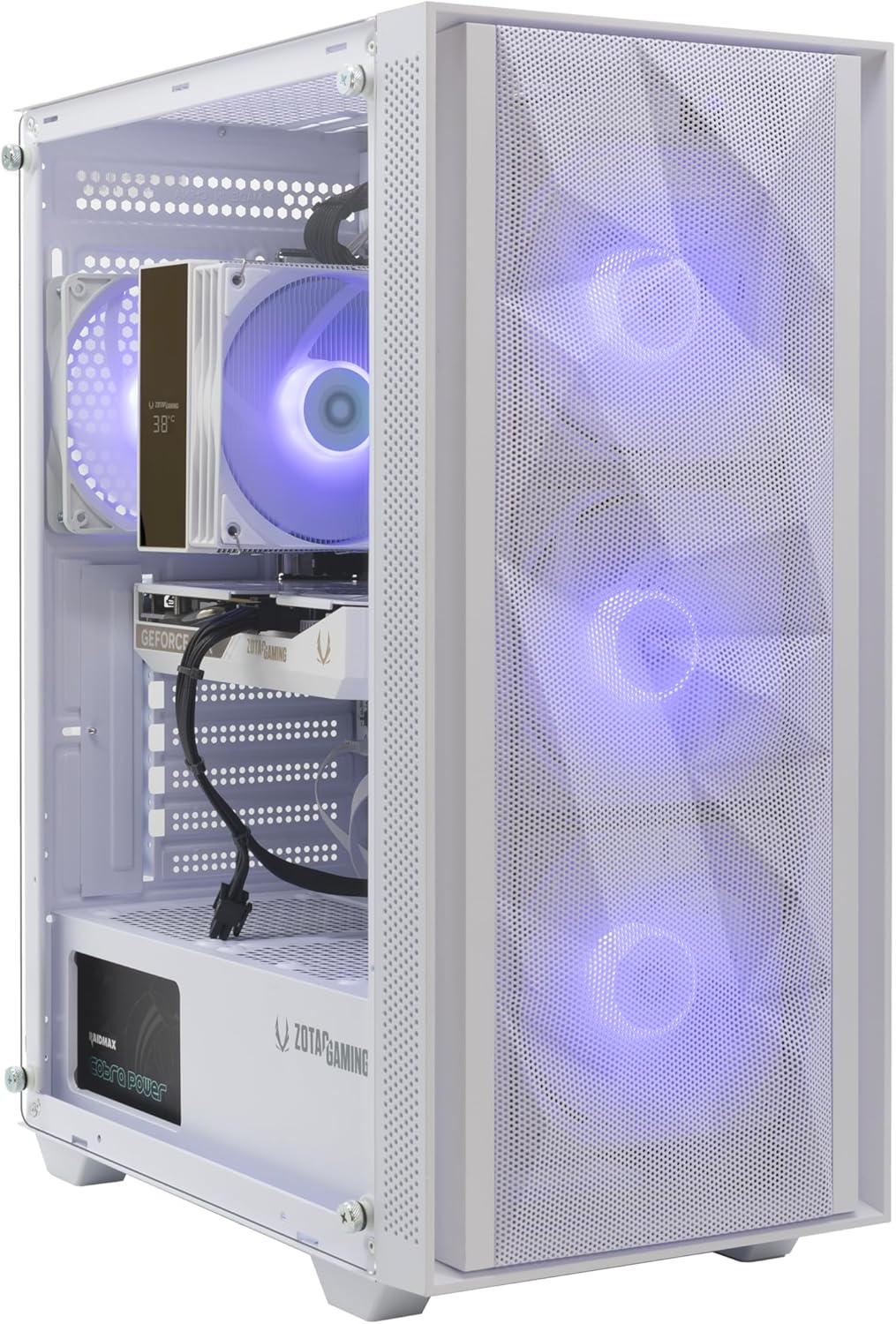
Budget Tier: Mid-upper tier (roughly $1,200-$1,350) | Audited Specs: AMD Ryzen 5 9600X (6C/12T Zen 5, up to 5.4 GHz, 32MB L3, AM5) | ZOTAC GAMING GeForce RTX 5060 8GB GDDR7 | 16GB Dual-Channel DDR5-5200 RGB | 1TB NVMe M.2 SSD | 650W 80+ Gold PSU | Mesh Front, 4x 120mm RGB Fans, Temp Display | Wi-Fi 6E, 5GbE LAN | 1-Yr System + 3-Yr ZOTAC GPU Warranty.
Why It Clears Sub-$800 Traps: If your priority is zero hidden specs and maximum upgrade runway off the AM5 socket, the ZOTAC MEK White checks every box sub-$800 towers obscure. Rather than a Ryzen 5 5500 (AM4) or cut-cache Ryzen 7 8700F, you receive a full-cache Zen 5 Ryzen 5 9600X (32MB L3), explicit Dual-Channel DDR5 (confirming two populated sticks), a declared 650W 80+ Gold PSU, perforated mesh front airflow with four 120mm fans, a 1TB NVMe SSD, and standout Wi-Fi 6E + 5GbE Ethernet backed by a 3-year GPU warranty. Transparent Caveats: It sits roughly $400–$550 above an $800 ceiling, ships DDR5-5200 rather than ideal 32GB DDR5-6000 CL30, and shares the 8GB 1080p VRAM ceiling of any RTX 5060 build.
Audit Passes: Full-cache Zen 5 AM5 CPU; explicit Dual-Channel RAM; disclosed 650W 80+ Gold PSU; genuine mesh front intake; Wi-Fi 6E + 5GbE LAN.
Watch Items: Costs above $1,200; 8GB VRAM limits heavy 1440p textures; 16GB DDR5-5200 leaves room for a future 32GB DDR5-6000 CL30 kit.
3. CyberPowerPC Gamer Xtreme (GXiVR8060A47) — Core i5-14400F & RTX 5060 (Amazon-Fulfilled ATX Step-Up)

Budget Tier: Value mid-range (under $1,200; roughly $1,100-$1,200) | Audited Specs: Intel Core i5-14400F (10C/16T, up to 4.7 GHz, Intel B760) | NVIDIA GeForce RTX 5060 8GB GDDR7 | 16GB DDR5 | 1TB PCIe 4.0 NVMe SSD | Wi-Fi 6, Bluetooth, Gigabit LAN, KB & Mouse | Shipped & Sold by Amazon.
Why It Clears Sub-$800 Traps: Compared directly against CyberPowerPC’s sub-$700 GMA3100A3 (Ryzen 5 5500 + 4GB RX 6500 XT + 8GB DDR4), stepping up to the GXiVR8060A47 replaces every crippling entry bottleneck at once: you gain a 10-core i5-14400F, RTX 5060 8GB GDDR7 with DLSS 4, 16GB DDR5, a 1TB PCIe 4.0 NVMe SSD, Wi-Fi 6, and direct Amazon fulfillment inside standard ATX hardware. Transparent Audit Caveats: Unlike the MSI Codex R2 and ZOTAC MEK White above, this headline omits exact PSU wattage/80+ Gold status and RAM stick speed/count. Inspect the rear PSU label and confirm two DDR5 DIMMs on delivery if planning heavier GPU swaps later.
Audit Passes: Eliminates 4GB/6GB VRAM and 500GB SSD cuts; standard ATX upgradability; Wi-Fi 6; direct Shipped & Sold by Amazon checkout.
Watch Items: PSU wattage/rating and RAM channel speed/count not stated upfront; verify physical PSU label before future GPU upgrades.
4. MSI Codex Z2 (A8NVM-671US) — Ryzen 7 8700F & RTX 5060 Ti 8GB (Higher Blackwell Frame Tier on AM5)

Budget Tier: Mid-upper tier (under $1,350; roughly $1,200-$1,350) | Audited Specs: AMD Ryzen 7 8700F (8C/16T, up to 5.0 GHz, 16MB L3, AM5) | NVIDIA GeForce RTX 5060 Ti 8GB GDDR7 | 16GB DDR5 | 1TB M.2 NVMe SSD | 4-Fan Airflow Tower, ARGB Air Cooler, USB Type-C | Shipped & Sold by Amazon.
Why It Clears Sub-$800 Traps: Buyers wanting more raw shader compute than an entry RTX 5060 while staying on an upgradeable standard ATX AM5 board get a meaningful GPU boost with the RTX 5060 Ti 8GB GDDR7 ($379 GPU Launch MSRP), paired with four chassis airflow fans, an ARGB tower air cooler, 1TB NVMe storage, and Shipped & Sold by Amazon reliability. Transparent Audit Caveats: Applying our strict audit criteria, note three trade-offs upfront: the Ryzen 7 8700F carries 16MB L3 cache and 16 usable PCIe 4.0 lanes with no iGPU (lowering peak 1% Lows relative to a 9600X or X3D), the 8GB version of the RTX 5060 Ti faces VRAM texture ceilings at 1440p Ultra compared with 16GB cards, and PSU wattage/80+ status is unstated on the header.
Audit Passes: Standard AM5 ATX upgrade path; 4-fan airflow tower + ARGB air cooler; 1TB NVMe SSD; stronger RTX 5060 Ti compute; Amazon direct fulfillment.
Watch Items: 8GB VRAM ceiling on 1440p Ultra; Ryzen 7 8700F 16MB L3 cache limit; confirm PSU rating and dual-channel RAM sticks upon unboxing.
Decision Matrix: How Budget Buyers Should Proceed
Best Value Clean Prebuilt Step-Up
- MSI Codex R2 (Under $1,200): Eliminates sub-$800 GPU, SSD, RAM speed, PSU, and Wi-Fi traps simultaneously with RTX 5060 8GB GDDR7, DDR5-6000, 1TB NVMe, 80+ Gold power, and Wi-Fi 6E.
- Ideal For: 1080p gamers who refuse to assemble parts themselves and want the lowest-priced prebuilt with disclosed power and fast DDR5.
Best AM5 Transparency & Longevity
- ZOTAC MEK White (~$1,200–$1,350): Discloses full-cache Zen 5 Ryzen 5 9600X on AM5, Dual-Channel DDR5, 650W 80+ Gold PSU, Mesh airflow, Wi-Fi 6E, and 5GbE LAN.
- Ideal For: Buyers who want zero hidden specs today plus an easy drop-in CPU and GPU upgrade runway down the road.
Continue exploring verified hardware guidance across The PC Audit’s Gaming PCs archive: check our Best Prebuilt Gaming PC (2026) hub, compare true entry-tier towers in Best Prebuilt Gaming PC Under $1,000, read our RX 6500 XT 4GB & RTX 3050 6GB deep dive, and keep our 10-axis Amazon component buyer guide open whenever comparing live listings.
How We Audited This Guide
- Prebuilt configurations were audited for GPU tier and VRAM, CPU platform runway, memory channel layout, SSD class, PSU brand and rating disclosure, and case airflow before inclusion.
- Every specification claim was cross-checked against official OEM datasheets, platform vendor documentation, and published industry standards (PCI-SIG, JEDEC, VESA, Intel ATX) rather than marketplace listing copy.
- Recommendations were evaluated against our weighted audit rubric and documented compatibility rules; we do not publish fabricated FPS, thermal, or acoustic numbers.
Frequently Asked Questions
Are there any good gaming PCs under $800 on Amazon in 2026?
Almost no off-the-shelf prebuilt under $800 on Amazon clears modern audit standards. Most pair obsolete AM4 CPUs with 4GB RX 6500 XT or 6GB RTX 3050 GPUs, single-stick RAM, 500GB SSDs, and Wi-Fi 5. Building DIY around an Arc B580 12GB or stepping up near $1,100–$1,200 yields dramatically better longevity.
Why is an RX 6500 XT 4GB prebuilt especially bad with a Ryzen 5 5500?
The RX 6500 XT 4GB uses only four PCIe lanes (x4) and lacks hardware video encoding. Because the AM4 Ryzen 5 5500 supports only PCIe 3.0, the GPU drops to PCIe 3.0 x4—causing severe texture stuttering whenever 2026 games exceed its tiny 4GB VRAM buffer.
Is an RTX 3050 6GB gaming PC enough for modern 1080p gaming?
Only for lightweight esports titles or older releases at reduced settings. Compared with the original 8GB RTX 3050, the 6GB model trims CUDA cores and narrows the memory bus to 96-bit without DLSS 4 Multi-Frame Generation—quickly overflowing VRAM in demanding 2026 AAA games.
How does Amazon’s sidebar filter trick budget PC buyers?
Amazon’s sidebar Graphics Memory filter caps at “8 GB & above,” mixes older RX 500 and Vega labels in processor filters, and blends Amazon Renewed systems into search results. Always lock Condition to New and verify exact GPU VRAM directly inside product titles and specifications.
What is the minimum specification checklist to replace a sub-$800 trap?
Target at least an 8GB GDDR7 RTX 5060, 10GB–12GB Intel Arc B570/B580, or RX 9060 XT, paired with 16GB–32GB dual-channel memory, a 1TB PCIe 4.0 NVMe SSD, Wi-Fi 6/6E, and a standard ATX chassis with disclosed 80+ Gold power delivery.
Official Standards & Technical References
- NVIDIA GeForce RTX 50-Series Blackwell Architecture & Specs: nvidia.com/en-us/geforce/graphics-cards/50-series/
- AMD Radeon RX Graphics Cards Specifications: amd.com/en/products/graphics/desktops/radeon.html
- Intel Arc B-Series Desktop Graphics Overview: intel.com/content/www/us/en/products/docs/discrete-gpus/arc/desktop/b-series/overview.html
- PCI-SIG PCIe CEM 5.1 & 12V-2×6 Power Standards: pcisig.com/specifications
- Cybenetics PSU ETA Efficiency & Lambda Acoustic Certification: cybenetics.com


