
Affiliate & Editorial Disclosure: As an Amazon Associate, The PC Audit earns from qualifying purchases. If you buy through verified affiliate links on this page, we may earn a small commission at no extra cost to you. All catalog behaviors, variation patterns, and hardware specifications are audited independently without paid brand placements.
Direct Buyer Alert: Decoding Parent ASIN Review Pooling Before Checkout
Understanding amazon parent asin review pooling prebuilt pc listings prevents a costly mistake: trusting a 4.5-star aggregate score earned by a 2019 build while buying a 2026 configuration. Before adding any tower on /dp/ to cart, filter reviews to “This format only,” verify your exact selected Set name or Style child variant, and audit all ten hardware axes independently.
Scroll through Page 1 of Amazon’s gaming desktop search results in late 2026 and an intriguing pattern jumps off the screen. Brand-new rigs housing AMD Ryzen 7 9850X3D processors and Radeon RX 9070 XT 16GB or NVIDIA GeForce RTX 50-series graphics cards routinely display 1,200 to 3,000+ customer ratings right beside their product titles—even when the GPU or CPU inside that build launched only months ago. Open the review feed without applying filters, and the top-voted user photos show dusty 2020 GTX 1660 Ti towers, obsolete AM4 DDR4 motherboards, or ketchup-and-mustard non-modular power supplies.
That mismatch is not a visual glitch. It is the direct consequence of Amazon’s Parent ASIN / Child ASIN variation architecture, a catalog mechanism that lets sellers bundle completely different generations of desktop hardware inside a single shared /dp/ URL. Inside our 10-axis Amazon PC component audit hub, review pooling ranks alongside misleading Amazon sidebar filter facets as one of the two structural storefront behaviors that distort buyer judgment before you ever read a specification sheet. In this buyer alert explainer, we break down exactly how Parent ASIN pooling operates, why standard ATX builders use it across brands profiled in our CyberPowerPC vs. iBUYPOWER vs. Skytech parts audit, how to isolate real feedback for your specific hardware configuration in under 60 seconds, and four specification-transparent 2026 builds that pass every check.
Inside This Buyer Alert Explainer
- How Amazon Parent ASIN Review Pooling Actually Works on /dp/ Pages
- 10-Axis Dissection: Listing Title vs. Hidden Child Variant Reality
- Six Critical Marketplace Red Flags Exposed When You Unpool a Listing
- 60-Second Pre-Checkout Checklist: Isolating Real Child ASIN Feedback
- Clean Alternatives: 4 Specification-Transparent 2026 Amazon Builds
- Decision Matrix & Post-Purchase Upgrade Bridge
- Frequently Asked Questions
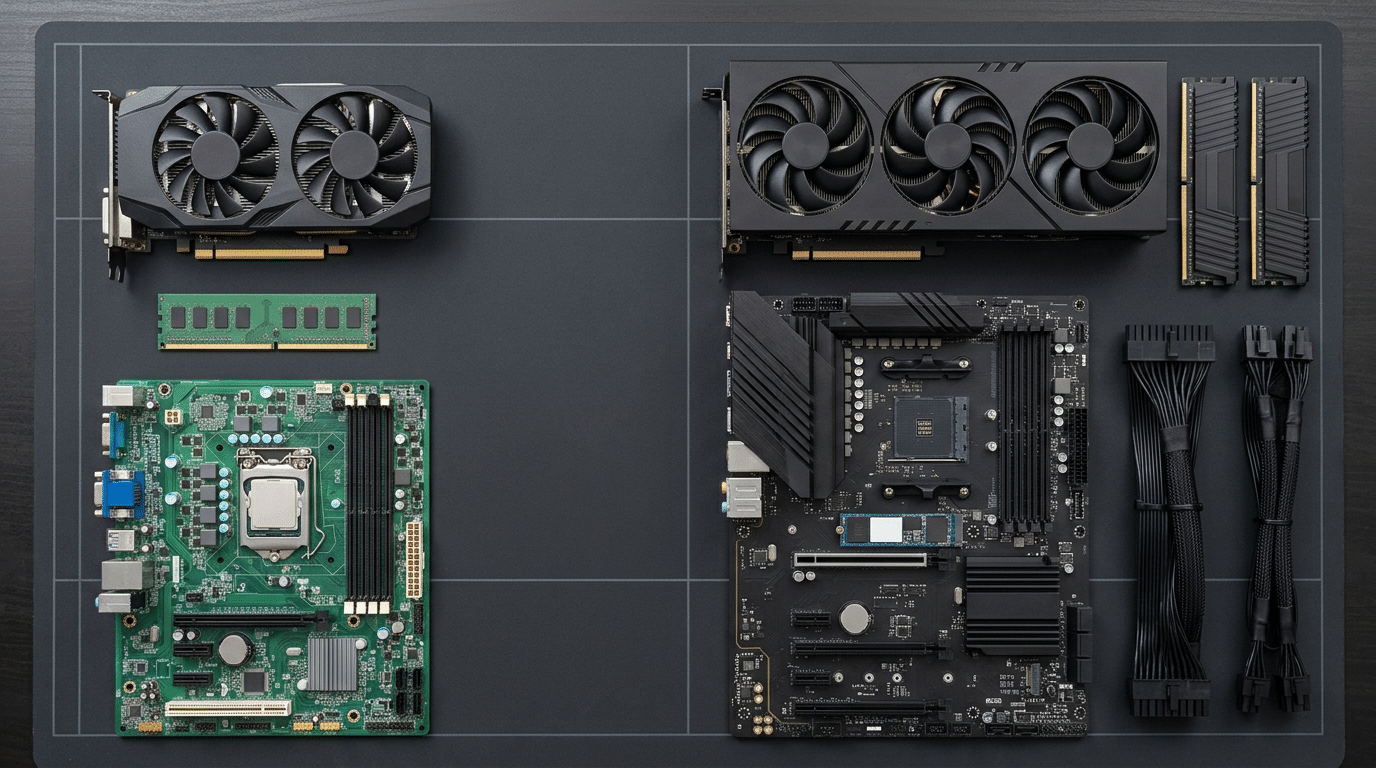
How Amazon Parent ASIN Review Pooling Actually Works on /dp/ Pages
To understand why a 2026 gaming desktop carries customer reviews dated 2020 or 2021, you need to separate two distinct identifiers in Amazon’s catalog database: the Parent ASIN (the non-purchasable container organizing variation selectors) and the Child ASIN (the actual ten-character B0... SKU placed in your cart when you pick a configuration button).
For ordinary consumer goods like T-shirts or USB cables, Amazon’s variation grouping—combining Color or Size under one Parent ASIN—works cleanly because every button represents the same product design. On prebuilt gaming desktops, however, vendors and system integrators attach the variation theme to fields labeled Set name, Style, Configuration, or Processor (processor_description). Every time the integrator retires an older model and attaches a new seasonal configuration to that same family, Amazon’s review engine automatically aggregates star ratings, review counts, buyer photos, and historical Q&A threads across all child variants linked to the parent.
The Live 2026 Catalog Pattern: “2600 | 1660Ti” Sharing a Page With “9850X3D | 9070XT”
Across our November 2026 live catalog inspection of Amazon’s US desktop storefront, this pooling effect surfaced repeatedly on multi-variant pages from mainstream standard-ATX builders. On several multi-tier listings—particularly families modeled like Skytech’s consolidated tower lines—the Set name selector still lists an obsolete “2600 | 1660Ti” configuration (representing a 2018-era Ryzen 5 2600 and GTX 1660 Ti 6GB desktop) inside the exact same dropdown menu as a current “9850X3D | 9070XT” configuration pairing AMD’s January 2026 Ryzen 7 9850X3D ($499 CPU Launch MSRP) with a 16GB Radeon RX 9070 XT ($599 GPU Launch MSRP).
Because both buttons sit under one Parent ASIN, every rating left by a 2019 buyer happy with their 1080p GTX 1660 Ti purchase flows straight into the aggregate 4.5-star badge displayed above the 2026 flagship variant. Meanwhile, other multi-configuration pages—such as certain CyberPowerPC Gamer Master and Gamer Xtreme families—exhibit messy, duplicate processor variation labels right inside the dropdown, displaying overlapping options such as "AMD Ryzen 7", "AMD Ryzen 7 8700 F", and "AMD Ryzen 7 8700F" that split stock levels and confuse shoppers trying to match reviews to exact silicon.
Why Review Pooling Cuts Both Ways for PC Buyers
Many shoppers assume review pooling only inflates bad products, yet in PC hardware the distortion damages buying clarity in two opposite directions:
- Direction 1 — Legacy Goodwill Masking New 2026 Cost Cuts: Suppose a builder sold a well-cooled 2021 RTX 3070 tower with dual-channel RAM and earned 1,400 five-star ratings. Five years later, that builder attaches a new 2026 RTX 5060 Ti 8GB Child ASIN under the same Parent ASIN, silently downgrading wireless networking to Wi-Fi 5, installing single-stick 1x16GB DDR5-4800 memory, and omitting PSU certification. New buyers see a glowing 4.6-star badge and assume the 2026 internals match the historic quality praised in the top reviews.
- Direction 2 — Legacy Trap Variants Hiding Inside Modern Hero Pages: Conversely, an integrator promotes a flagship RTX 5070 Ti or RX 9070 XT build in thumbnails and bullet copy, while cheaper dropdown slots on the same
/dp/page quietly house leftover AM4 DDR4 platforms (Ryzen 5 5500 or Ryzen 7 5700X) or entry RX 6500 XT 4GB, RTX 3050 6GB, and RTX 3060 Ti 8GB cards. Shoppers clicking the lowest-priced button think they are grabbing a smaller tier of the 2026 chassis shown in the hero gallery, only to receive obsolete hardware.
10-Axis Dissection: What the /dp/ Headline Shows vs. Hidden Child Variant Reality
When a Parent ASIN blends multiple hardware generations on a single page, the bullet points and customer review gallery frequently describe a different motherboard, cooler, or power supply than the Child ASIN currently selected in your Buy Box. Cross-check all ten selectable component axes from our 10-axis marketplace component map before trusting any pooled rating.
| Component / Listing Element | What Amazon Headline Shows | What Is Often Hidden / Omitted | How to Verify in 30 Seconds |
|---|---|---|---|
| 1. GPU & VRAM | “RTX 5060 Ti”, “RX 9070”, or sidebar “8 GB & above” | 8GB vs. 16GB split, OEM RX 9070 GRE 12GB cut, legacy 4GB–6GB cards in old Set names, or “Brand may vary” | Click active Child ASIN, read exact GPU VRAM in bullet lines, and filter reviews to “This format only” |
| 2. CPU & Cache | “Ryzen 7”, “Core Ultra 7”, or duplicate “8700 F” / “8700F” tags | Ryzen 7 8700F 16MB L3 cache cut, F-series iGPU removal (265F), or legacy Ryzen 5 5500 AM4 silicon | Confirm full CPU suffix and socket generation in the active title string; reject vague family-only labels |
| 3. Motherboard | Omitted entirely or generic “Gaming Motherboard” | Hidden chipsets on multi-variant pages, bare VRMs, unlocked i9-14900KF on locked B760, or proprietary OEM boards | Verify AMD B850/X870 or Z-series ATX spec in recent child reviews and recent interior customer photos |
| 4. RAM | “16GB DDR5” or “32GB DDR5” in shared bullet copy | Single-stick 1x16GB configurations, slow DDR5-4800 CL42–46, DDR5-5600 drops, or 4-DIMM instability | Inspect recent buyer photos from the last 6 months for two spaced DIMMs; target 32GB (2x16GB) DDR5-6000+ |
| 5. NVMe SSD | “1TB NVMe SSD”, “2TB Gen4 SSD”, or “5TB” hybrids | Cramped 500GB drives on cheaper variants, unstated DRAM-less QLC NAND, or single occupied M.2 slots | Verify minimum 1TB NVMe (2TB ideal) on the exact child SKU and confirm spare M.2 slot availability |
| 6. CPU Cooling | “ARGB Air Cooling” or “Liquid Cooled” | Legacy 92mm coolers or thin 120mm AIOs paired with 170W–250W chips while hero images show 360mm radiators | Match cooler radiator fans in recent format-filtered buyer photos to your CPU’s peak PPT/MTP wattage |
| 7. PSU | Omitted on most $1,000–$1,500 listings or shared across tiers | Missing wattage, non-modular Bronze units, or lack of ATX 3.1 / native 12V-2×6 safety cabling | Do not trust 2021 PSU photos; demand explicit wattage + 80+ Gold minimum and ATX 3.1 compatibility |
| 8. Wi-Fi & LAN | “Wi-Fi Ready” or buried “Wireless AC” | Stealth Wi-Fi 5 (802.11ac) downgrades inside $1,500–$3,000 child SKUs inheriting old 4.5-star badges | Confirm Wi-Fi 6E or Wi-Fi 7 plus 2.5GbE/5GbE Ethernet in specs or factor a $30–$45 adapter upgrade |
| 9. Case & Extras | Panoramic glass, 11.3″ smart LCD, Black/White, KB/Mouse | Solid choked front glass hiding behind newer mesh variants, <35mm GPU cable clearance, or 25%+ markups | Verify front mesh or angled side vents on your exact Style variant and check standard ATX case clearances |
| 10. OS & Condition | “Windows 11” with deal badges and high star counts | Mixed Renewed/Used resellers hijacking one child variant or heavy trial bloatware suites | Confirm Condition reads “New” and Buy Box states “Ships from and sold by Amazon.com” or brand direct |
Six Critical Marketplace Red Flags Exposed When You Unpool a Listing
Review pooling rarely exists in isolation. Once you unpool a Parent ASIN and inspect individual Child ASINs line by line, six recurring Amazon marketplace traps—codified as rules R-AMZ-01 through R-AMZ-06 in The PC Audit’s hardware specification standard—reveal how much risk hides behind an undifferentiated star average.
1. Broken Sidebar Filters That Funnel Shoppers Into Pooled Legacy Listings (R-AMZ-01)
The review-pooling problem begins before you ever click a /dp/ page. Amazon’s left-hand desktop search sidebar suffers from three legacy taxonomy defects documented in our Amazon gaming PC sidebar filter guide:
- Graphics Memory Caps at “8 GB & Above”: Amazon provides no sidebar checkbox to isolate 12GB, 16GB, or 32GB GPUs. Selecting “8 GB & above” dumps entry 8GB RTX 5060 and RTX 3060 Ti 8GB listings right alongside 16GB RX 9070 XT and RTX 5080 desktops—often inside the same multi-variant Parent ASIN.
- Legacy Graphics Processor Labels: The sidebar’s Graphics Processor filter still elevates outdated labels like
RX 500,Vega, andIntel HDwhile mixing current Blackwell and RDNA 4 architectures underneath noisy search indexing. - Overlapping RAM & Mixed Condition Buckets: Memory facets group DDR4 and DDR5 capacities without distinguishing speed or channel count, and unless you explicitly lock Condition: New, Amazon blends Renewed third-party configurations straight onto Page 1 alongside factory-new builds.
2. Parent ASIN Set Name Merging & Duplicate CPU Dropdown Noise (R-AMZ-02)
When a listing merges legacy hardware (such as 2600 | 1660Ti) with modern 2026 silicon (such as 9850X3D | 9070XT) under one Set name control, or duplicates CPU selections as "AMD Ryzen 7", "AMD Ryzen 7 8700 F", and "AMD Ryzen 7 8700F", standard Amazon product pages fail to update every section cleanly when you toggle options. Bullet summaries often retain universal fluff like “High-Speed DDR5 Memory” or “Next-Gen Gaming Graphics” while swapping out the motherboard socket, VRM tier, and power supply beneath the hood.
Notice how this impacts your hardware evaluation rubric: across our 2026 prebuilt gaming PC rankings, we score systems across GPU & VRAM Headroom (35%), CPU & Platform Runway (25%), Memory & Storage Balance (20%), and Cooling, PSU & Warranty Support (20%). Switching a single Set name option inside a pooled listing can simultaneously flip all four weighted pillars—dropping from an AM5 platform with a 360mm AIO down to an obsolete AM4 board with a single-fan cooler—without changing the 4.5-star badge at the top of the page.
3. Silicon Cuts & Platform Mismatches Hidden Inside Dropdown Variants (R-AMZ-03 & R-AMZ-04)
Unpooling Amazon’s mid-range and upper-tier dropdown selectors frequently uncovers four specific silicon traps that historic reviews never warn buyers about:
- AMD Ryzen 7 8700F Cache & Lane Cuts: Extremely common in $1,000–$1,850 Amazon prebuilts, the AM5 Ryzen 7 8700F (8C/16T, up to 5.0 GHz, 65W TDP) derives from AMD’s Phoenix mobile die. That means it ships with 16MB of L3 cache—half the 32MB L3 found on the Ryzen 5 9600X or Ryzen 7 9700X, and one-sixth the 96MB L3 on the Ryzen 7 9800X3D—alongside only 16 usable PCIe 4.0 lanes and no integrated graphics. As detailed in our Ryzen 7 8700F vs. Ryzen 7 9800X3D audit, the 8700F still preserves an upgradeable AM5 socket if paired with a standard B850 board, but buyers expecting full Zen 5 gaming 1% Lows from pooled “Ryzen 7” reviews face an immediate cache ceiling.
- Intel Core Ultra 7 265F iGPU Removal: Prevalent in 2026 OEM desktops such as Alienware Aurora and ASUS ROG G700 models, the 20-core Arrow Lake 265F (8P+12E, up to 5.3 GHz, 65W base / 182W turbo, LGA 1851) drops integrated graphics entirely, removing Intel Quick Sync hardware transcoding for video editors and streamers.
- AMD Radeon RX 9070 GRE (12GB) & 8GB VRAM Ceilings: Watch closely when a variant mentions “RX 9070” without spelling out memory size: OEMs deploy the RX 9070 GRE (12GB GDDR6, 192-bit, 48 CUs, 220W) underneath the full 16GB RX 9070 ($549 GPU Launch MSRP). Similarly, any 8GB GPU—such as an RTX 5060 ($299 Launch MSRP) or RTX 5060 Ti 8GB ($379 Launch MSRP)—inside a prebuilt priced above $1,100 faces tight texture ceilings at 1440p Ultra with ray tracing compared to 16GB RTX 5060 Ti ($429 Launch MSRP) or RX 9060 XT 16GB ($349 Launch MSRP) options. (Also ignore speculative rumors around unreleased models like the RTX 5070 Super or RTX 5080 Super; neither exists as an active 2026 retail variant.)
- Unlocked i9-14900KF on Locked B760 & Legacy Page-1 Junk: Under
R-AMZ-04, flag any variant pairing an unlocked 253W-class Core i9-14900KF with an entry Intel B760 motherboard, which blocks CPU multiplier overclocking and frequently throttles under budget VRMs. Likewise, reject legacy Page-1 variants combining AM4 Ryzen 5 5500 / Ryzen 7 5700X chips with 4GB RX 6500 XT, 6GB RTX 3050, or 8GB RTX 3060 Ti cards priced anywhere near modern DDR5 desktops.
4. Omitted Core Specs, “Brand May Vary” Lotteries & #prodDetails Noise (R-AMZ-05)
When sellers group variants together, critical secondary specifications frequently vanish from the listing or reflect outdated parent data. Across the $1,000–$1,500 Amazon tier, power supply wattage and 80+ efficiency ratings are routinely left completely blank, motherboard chipsets are omitted on multi-tier listings like Skytech Azure 3 variants, CPU cooler dimensions go unstated, and AIB graphics cards carry fine print stating “Brand may vary.”
Never assume a 2022 buyer review praising an EVGA 750W Gold PSU or ASUS TUF motherboard applies to today’s Child ASIN. As we document in our omitted PSU ratings and Brand May Vary decoder and our ATX 3.1 and 12V-2×6 power safety guide, modern RTX 5070 Ti, RX 9070 XT, and RTX 5080 graphics cards exhibit microsecond 200% to 300% transient power excursions and rely on recessed sense pins inside native 12V-2×6 connectors. Older ATX 2.x Bronze units praised in legacy 2020 reviews simply lack that transient protection. Equally important: ignore automated catalog corruption inside Amazon’s collapsed #prodDetails specification table—where desktop towers commonly display nonsensical rows like Screen Size: 0.01 or conflicting Cache Size: 8 and 16 entries scraped from unrelated parent attributes.
5. Stealth $1,500–$3,000 Downgrades Masked by High Parent Star Counts (R-AMZ-06)
Perhaps the subtlest abuse of Parent ASIN review inheritance appears in upper-midrange $1,500–$3,000 systems. Buyers see a familiar chassis with thousands of positive reviews and miss silent downgrades buried on the current SKU: Wi-Fi 5 (802.11ac) adapters instead of Wi-Fi 6E or Wi-Fi 7 (found in select iBUYPOWER Element and Skytech Azure 3 configs), slow 16GB DDR5-4800 (CL42–CL46) or DDR5-5600 memory, and single-stick 1x16GB setups that sacrifice 15% to 30% of 1% Low frame pacing compared to a balanced 32GB (2x16GB) DDR5-6000 CL30 dual-channel kit running AM5’s optimal 1:1 memory controller ratio.
If a pooled listing also hides SSD specifications under a generic “1TB NVMe SSD” label, you risk receiving a DRAM-less QLC drive prone to steep write slowdowns past 70% capacity rather than a durable PCIe 4.0 DRAM+TLC drive like a WD Black SN850X or Samsung 990 Pro. We quantify the hidden post-delivery replacement cost of fixing Wi-Fi 5 and single-channel DDR5-4800 inside our hidden Wi-Fi 5 & DDR5-4800 downgrades audit.
6. Condition & Buy Box Switching Between Variants
Finally, toggling between CPU or storage options inside a Parent ASIN can quietly shift the active Buy Box seller from “Ships from and sold by Amazon.com” to a third-party marketplace reseller—or swap a factory-new desktop for an Amazon Renewed listing carrying only a 90-day warranty instead of 1-year to 3-year OEM coverage, with zero guarantee on SSD wear or thermal paste condition. Always confirm the seller and condition badge after your final variant click.
Launch-Date Cutoffs: When a Pooled Review Cannot Describe Your Configuration
The fastest way to unpool a listing without reading hundreds of reviews is date math. A customer review cannot describe hardware that did not exist when it was written. Match the GPU and CPU in your selected Child ASIN against its official launch date below, then treat any review dated earlier as feedback about a different configuration, no matter how many stars it carries.
| Component in Selected Variant | Official Launch | Spec to Match in Review Text or Photos | Reviews Dated Earlier Describe | Pooling Red-Flag Level |
|---|---|---|---|---|
| NVIDIA RTX 5080 / RTX 5090 | January 30, 2025 | 16GB GDDR7 (256-bit) / 32GB GDDR7 (512-bit), 12V-2×6 input | RTX 40-series or older builds | High if more than 30% of reviews predate 2025 |
| NVIDIA RTX 5070 Ti | February 20, 2025 | 16GB GDDR7, 256-bit, 300W | Older RTX 4070-class or RTX 30-series towers | High |
| NVIDIA RTX 5070 | March 5, 2025 | 12GB GDDR7, 192-bit, 250W | Previous-generation 12GB cards | High |
| AMD RX 9070 XT / RX 9070 | March 2025 | 16GB GDDR6, 256-bit, 304W / 220W | RDNA 3 or RDNA 2 Radeon systems | High; also check for 12GB RX 9070 GRE |
| NVIDIA RTX 5060 Ti (8GB / 16GB) | April 16, 2025 | Exact VRAM size: 8GB vs. 16GB GDDR7, 128-bit | RTX 3060 / RTX 4060 era builds | Critical: same name, two VRAM sizes |
| NVIDIA RTX 5060 | May 19, 2025 | 8GB GDDR7, 128-bit, 145W | GTX 1660 Ti, RTX 3050, RTX 3060 towers | Critical on pages over 1,000 ratings |
| AMD RX 9060 XT (8GB / 16GB) | June 5, 2025 | Exact VRAM size: 8GB vs. 16GB GDDR6 | RX 6600 / RX 7600 class systems | Critical: same name, two VRAM sizes |
| AMD Ryzen 7 9850X3D | January 29, 2026 | 8C/16T, 104MB total cache, up to 5.6 GHz | Ryzen 7 9800X3D, 7800X3D, or AM4 builds | High on any page older than 2026 |
| Intel Core Ultra 7 270K Plus | March 26, 2026 | 24 cores (8P+16E), LGA 1851 | Core Ultra 7 265K or 14th Gen LGA 1700 builds | High |
Apply the table in under a minute. Select your exact configuration, open the review feed, and sort by “Most recent.” Scroll until review dates cross the launch date in the second column. If that crossover happens within the first page of 10 reviews while the listing shows 1,500+ ratings, the vast majority of the star average was earned by older hardware. Next, scan the remaining post-launch reviews for the exact spec in the third column. A review that mentions “16GB” on an RTX 5060 Ti page, or shows a 12V-2×6 cable in an interior photo, is far more trustworthy than a generic “fast PC, great price” comment.
Two rows deserve extra caution. The RTX 5060 Ti and RX 9060 XT each launched in 8GB and 16GB versions on the same day, so even a post-launch review may describe the smaller card. Renewed listings add one more layer of noise, as explained in our Amazon Renewed vs. New gaming PC guide, and the sub-$800 tier is where 2018–2021 configurations most often survive, as documented in our gaming PCs under $800 Amazon audit.
60-Second Pre-Checkout Checklist: How to Isolate Real Reviews on Any Amazon /dp/ Page
Whenever you land on a multi-variant Amazon gaming PC listing, run this seven-step verification sequence before clicking Buy Now. It takes under one minute and strips away every layer of inherited review distortion.
- Select Your Exact Child Variant First & Check the URL ASIN: Click the exact Set name, Style, and Color buttons you intend to purchase, then verify that the ten-character
B0...code in your browser address bar and the Product Information block actually changed to match your chosen hardware. - Lock Condition to “New” & Verify the Buy Box Seller: Check directly below the price box that Condition states New (never blended Renewed or Used) and fulfillment says Ships from and sold by Amazon.com or the official builder storefront.
- Filter Customer Reviews to “This Format Only”: Scroll to Customer Reviews, click See more reviews, open the Format filter dropdown, and switch from All formats to This format only. Watch how fast a 1,500-review rating drops to 12 or 40 reviews—or reveals whether your exact SKU has zero standalone reviews yet.
- Cross-Check Review Dates Against Hardware Release Windows: Verify review timestamps against official component launch dates. Current RTX 50-series Blackwell GPUs, AMD RDNA 4 RX 9070/9060 cards, and Ryzen 7 9850X3D processors launched across 2025 and 2026; any review dated 2020–2024 on that page belongs to older legacy inventory, regardless of how Amazon labels it.
- Inspect Only Customer Photos From the Past 6 Months: Open the customer image gallery and sort by Most recent. Look specifically for two spaced RAM sticks in slots A2/B2 (never one bare stick), a standard rectangular ATX power supply bay with clean cables, perforated front mesh or open angled side vents rather than choked solid glass, and a dual-tower air cooler or 240mm/360mm AIO radiator.
- Audit Omitted Specs & Ignore #prodDetails Catalog Garbage: Skip corrupted automated rows like
Screen Size: 0.01or ambiguousCache Size: 8/16lines. Instead, search Q&A and recent verified-purchase reviews for exact motherboard chipset (AMD B850/X870 or Intel Z890), PSU wattage + 80+ Gold / ATX 3.1 status, SSD capacity, and Wi-Fi 6E/7 support. - Check Build Cost Parity & Day-One BIOS Settings: Compare the prebuilt total against equivalent DIY retail parts (a fair builder premium is 5%–12%; reject 25%+ markups hiding weak parts). Once delivered, confirm your monitor cable plugs directly into the discrete GPU, enable AMD EXPO or Intel XMP plus Resizable BAR in BIOS, verify monitor refresh rate in Windows, and check HWiNFO64 thermal and clock behavior during initial workloads.
Clean Alternatives: 4 Specification-Transparent 2026 Amazon Builds
The fastest way to neutralize Parent ASIN guesswork is choosing builds whose Child ASIN listings disclose real platform, power, cooling, and connectivity specs upfront using off-the-shelf standard ATX components. Below are four verified 2026 Amazon US gaming desktops spanning flagship 4K through mainstream 1080p budgets—alongside transparent caveats noting every remaining compromise so you can make an informed upgrade or purchase decision.
1. STORMCRAFT Phantom — Ryzen 7 9800X3D & RTX 5080 (Flagship Specification Transparency)

Budget Tier: Flagship tier (over $3,500) | Audited Specs: AMD Ryzen 7 9800X3D (8C/16T, up to 5.2 GHz, 96MB L3 3D V-Cache) | NVIDIA GeForce RTX 5080 16GB GDDR7 | 32GB DDR5-6000 RGB | 2TB NVMe Gen4 SSD | AMD B850 Chipset | 360mm AIO Liquid Cooler + 7x ARGB Fans | 850W 80+ Gold PSU | 2-Yr Parts / 3-Yr Labor Warranty.
Why It Beats Pooled Listing Ambiguity: Where many flagship Amazon pages bury chipset and memory timings beneath old multi-gen reviews, the STORMCRAFT Phantom prints virtually every critical hardware tier in black and white. You get a genuine AMD B850 AM5 motherboard rather than a vague placeholder, fast 32GB DDR5-6000 matching AM5’s 1:1 UCLK sweet spot, a generous 2TB Gen4 NVMe SSD, proper 360mm AIO liquid cooling with seven airflow fans, and an 850W 80+ Gold power supply backing the 16GB RTX 5080 ($999 GPU Launch MSRP) and Ryzen 7 9800X3D ($479 CPU Launch MSRP).
Audit Passes: Explicit AMD B850 AM5 chipset; 32GB DDR5-6000 speed; 2TB NVMe storage; 360mm AIO cooling; 850W 80+ Gold PSU; 2-Yr Parts / 3-Yr Labor coverage.
Honest Caveats: Header bullets omit wireless adapter generation and exact CAS latency, and extreme 4K overclockers may prefer 1000W ATX 3.1 headroom over 850W—confirm Wi-Fi spec and native 12V-2×6 cable clearance on delivery.
2. Lenovo Legion Tower 5 (2026) — Ryzen 7 9800X3D & RX 9070 XT 16GB (Clean 1440p/4K & Wi-Fi 7 Pick)

Budget Tier: Enthusiast tier (around $2,250–$2,350) | Audited Specs: AMD Ryzen 7 9800X3D (8C/16T, 96MB L3 3D V-Cache, AM5) | AMD Radeon RX 9070 XT 16GB GDDR6 | 32GB DDR5 | 1TB NVMe SSD | 850W PSU | Wi-Fi 7 (802.11be) + 2.5GbE LAN | Eclipse Black Tower 5 Chassis | Windows 11 Home.
Why It Beats Pooled Listing Ambiguity: Many $2,000–$3,000 desktops tied to multi-generation Parent ASINs conceal stealth Wi-Fi 5 adapters and undersized power supplies behind eye-catching GPU names. Lenovo’s 2026 Tower 5 revision cleanly separates itself by pairing the 16GB Radeon RX 9070 XT ($599 GPU Launch MSRP) and Ryzen 7 9800X3D with 32GB DDR5, an explicit 850W PSU, and built-in Wi-Fi 7 + 2.5GbE Ethernet—sidestepping both VRAM limits and legacy wireless downgrades without proprietary dead-end layout lock-in.
Audit Passes: True 16GB RDNA 4 VRAM + 9800X3D 3D V-Cache; 32GB DDR5; 850W power capacity; Wi-Fi 7 + 2.5GbE LAN.
Honest Caveats: A 1TB primary NVMe SSD fills quickly with modern 150GB+ releases, so plan to populate the spare M.2 slot with a 2TB PCIe 4.0 DRAM+TLC drive later and verify exact DDR5 kit speed in BIOS.
3. MSI Codex Z2 (A8NVP-436US) — Ryzen 7 8700F & RTX 5070 12GB (Upgradeable AM5 1440p Option)

Budget Tier: Upper Prebuilt Tier (Under $1,850) | Audited Specs: AMD Ryzen 7 8700F (8C/16T, 16MB L3, 16 Usable PCIe 4.0 Lanes, AM5) | NVIDIA GeForce RTX 5070 12GB GDDR7 | 32GB DDR5 | 2TB NVMe SSD | Standard MSI ATX AM5 Motherboard | 4-Fan Airflow + ARGB Air Cooler | Windows 11 Home, USB Type-C.
Why It Beats Pooled Listing Ambiguity: This specific MSI Codex Z2 SKU demonstrates how to apply R-AMZ-03 and R-GPU-01 accurately under $1,850. Instead of trapping you on 8GB VRAM or an end-of-life AM4 board, MSI delivers a 12GB RTX 5070 ($549 GPU Launch MSRP), generous 32GB DDR5, a full 2TB NVMe SSD, and a 100% standard MSI ATX AM5 motherboard housed in a four-fan airflow tower.
Audit Passes: 12GB GDDR7 RTX 5070 clears 8GB limits; 32GB DDR5 + 2TB NVMe upfront; standard off-the-shelf MSI ATX AM5 board.
Honest Caveats: As required under rule R-AMZ-03, note that the Ryzen 7 8700F carries 16MB L3 cache, 16 usable PCIe 4.0 lanes, and no iGPU, and the listing leaves exact PSU wattage and ATX 3.1 spec unprinted—yet standard AM5 ATX geometry makes a future X3D CPU or ATX 3.1 PSU swap completely straightforward.
4. ZOTAC MEK Gaming PC White — Ryzen 5 9600X & RTX 5060 (Highest Sub-$1,350 Spec Clarity)
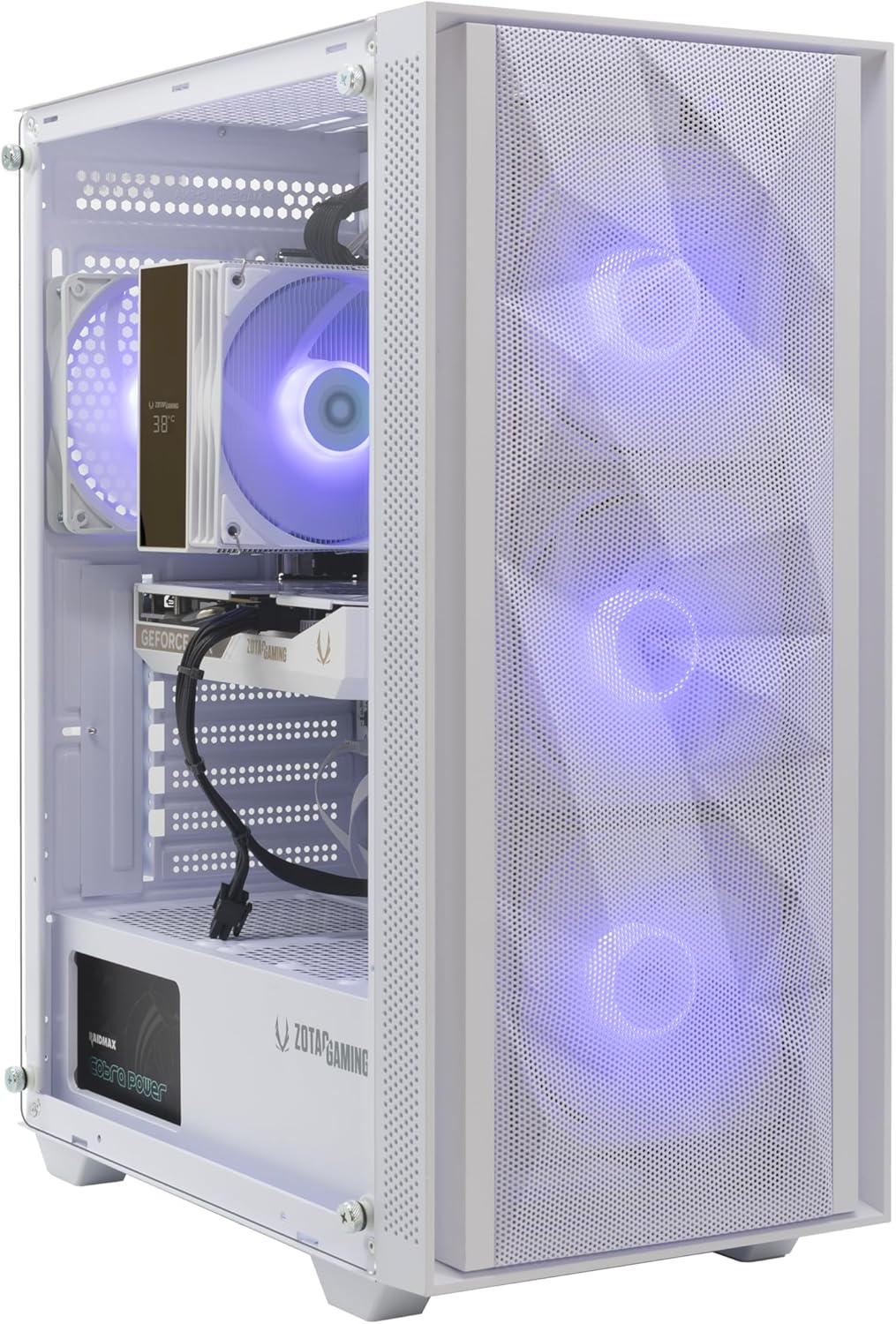
Budget Tier: Mid-upper tier (roughly $1,200-$1,350) | Audited Specs: AMD Ryzen 5 9600X (6C/12T Zen 5, up to 5.4 GHz, 32MB L3, AM5) | ZOTAC GAMING GeForce RTX 5060 8GB GDDR7 | 16GB Dual-Channel DDR5-5200 RGB | 1TB NVMe M.2 SSD | 650W 80+ Gold PSU | Mesh Front, 4x 120mm RGB Fans, Temp Display | Wi-Fi 6E, 5GbE LAN | 1-Yr System + 3-Yr ZOTAC GPU Warranty.
Why It Beats Pooled Listing Ambiguity: Most $1,200–$1,350 Amazon prebuilts conceal power supplies, omit Wi-Fi generations, ship 1x16GB RAM, and slap “Brand may vary” on graphics cards. ZOTAC eliminates nearly every guessing game: the listing declares an explicit Dual-Channel DDR5 kit (no single-stick bottleneck), a full-cache Zen 5 Ryzen 5 9600X (32MB L3 on AM5, avoiding 8700F cache cuts), a verified 650W 80+ Gold PSU, perforated mesh front airflow with four 120mm fans, a 1TB NVMe SSD, Wi-Fi 6E + 5GbE LAN, and a named ZOTAC GAMING RTX 5060 GPU ($299 GPU Launch MSRP) with a 3-year GPU warranty.
Audit Passes: Explicit Dual-Channel RAM; 650W 80+ Gold PSU; full-cache Zen 5 AM5 CPU; mesh front intake; Wi-Fi 6E + 5GbE LAN; named AIB GPU.
Honest Caveats: Under rule R-GPU-01, an 8GB VRAM card suits 1080p High/Ultra gaming rather than maxing 1440p Ultra ray-traced textures, and 16GB DDR5-5200 leaves straightforward headroom to drop in a 32GB (2x16GB) DDR5-6000 CL30 kit later.
Decision Matrix & Post-Purchase Upgrade Bridge
Maximum Upfront Spec Transparency
- ZOTAC MEK White ($1,200–$1,350 Tier): Best sub-$1,350 transparency with Dual-Channel DDR5, 650W 80+ Gold PSU, full-cache Ryzen 5 9600X, mesh intake, and Wi-Fi 6E + 5GbE.
- STORMCRAFT Phantom ($3,500+ Tier): Prints explicit AMD B850 chipset, 32GB DDR5-6000, 2TB Gen4 NVMe, 360mm AIO, and 850W 80+ Gold for 4K RTX 5080 builds.
1440p / 4K VRAM & AM5 Runway
- Lenovo Legion Tower 5 (~$2,250–$2,350 Tier): Pairs 9800X3D + 16GB RX 9070 XT with 32GB DDR5, 850W PSU, and Wi-Fi 7 + 2.5GbE without wireless downgrades.
- MSI Codex Z2 (Under $1,850): Gives 12GB RTX 5070, 32GB DDR5, and 2TB NVMe on a standard MSI AM5 ATX board ready for future X3D upgrades.
Ready to compare additional audited builds or plan targeted post-purchase upgrades? Return to our main 10-axis Amazon PC component audit hub, check tier-wide desktop winners in our Best Prebuilt Gaming PC (2026) hub and Best Prebuilt Gaming PC Under $1,500 guide, study builder-by-builder parts habits in CyberPowerPC vs. iBUYPOWER vs. Skytech, eliminate remaining storefront blind spots with our Amazon sidebar filter breakdown and 10 prebuilt gaming PC red flags audit, and map out affordable RAM, SSD, Wi-Fi 7, and ATX 3.1 power swaps inside our Upgrading an Amazon Prebuilt PC Roadmap.
How We Audited This Guide
- Steps were validated against official BIOS, driver, and platform vendor documentation and ordered from lowest-risk to highest-risk so readers can stop as soon as the issue is resolved.
- Every specification claim was cross-checked against official OEM datasheets, platform vendor documentation, and published industry standards (PCI-SIG, JEDEC, VESA, Intel ATX) rather than marketplace listing copy.
- Recommendations were evaluated against our weighted audit rubric and documented compatibility rules; we do not publish fabricated FPS, thermal, or acoustic numbers.
Frequently Asked Questions
How does Amazon Parent ASIN review pooling affect prebuilt gaming PCs?
Amazon links multiple Child ASINs under one Parent ASIN variation family using Set name or Style selectors. When builders attach 2026 RTX 50 or RX 9070 XT configs to older pages, thousands of legacy reviews from discontinued GTX 1660 Ti or RTX 3060 systems pool onto the same star rating.
How do I view reviews for only the exact PC configuration I want to buy?
First click your exact CPU, GPU, and RAM variant button above Add to Cart. Scroll down to Customer Reviews, click See more reviews, change the Format dropdown from All formats to “This format only,” and inspect timestamps and interior buyer photos from the last six months.
Why do duplicate CPU names like “AMD Ryzen 7” and “8700 F” appear in Amazon dropdowns?
Marketplace sellers and system integrators submit inconsistent attribute strings when adding new Child ASINs over time. Duplicate labels like “AMD Ryzen 7”, “8700 F”, and “8700F” scatter inventory across nearly identical buttons—always confirm the exact full SKU code in the active title and bullet copy.
What hidden downgrades does Parent ASIN review pooling commonly hide in 2026?
Pooled listings often mask current cost cuts under historic 4.5-star badges, including stealth Wi-Fi 5 adapters inside $1,500–$3,000 towers, single-stick 1x16GB DDR5-4800 memory, omitted PSU wattage or ATX 3.1 status, Ryzen 7 8700F 16MB L3 cuts, and unlocked i9-14900KF pairings on B760 boards.
Should I ignore Amazon’s collapsed #prodDetails rows like Screen Size: 0.01?
Yes. Automated catalog scraping frequently injects corrupted values such as “Screen Size: 0.01” or conflicting “Cache Size: 8” and “16” rows into desktop tables. Rely instead on active Child ASIN bullet specs, recent format-filtered reviews, interior customer photos, and official component documentation.
Official Standards & Technical References
- AMD Ryzen Desktop Processors & AM5 Architecture Specifications: amd.com/en/products/processors/desktops/ryzen.html
- NVIDIA GeForce RTX 50-Series Blackwell Specifications: nvidia.com/en-us/geforce/graphics-cards/50-series/
- Intel Core Ultra Desktop Processors Series 2 Documentation: intel.com/content/www/us/en/products/details/processors/core-ultra.html
- PCI-SIG PCIe CEM 5.1 & 12V-2×6 Connector Specifications: pcisig.com/specifications
- Cybenetics PSU ETA Efficiency & Lambda Acoustic Database: cybenetics.com
- Wi-Fi Alliance Wi-Fi 7 (802.11be) Technical Overview: wi-fi.org/discover-wi-fi/wi-fi-7


