
Disclosure: As an Amazon Associate, The PC Audit earns from qualifying purchases. If you buy through links on this page, we may earn a small commission at no extra cost to you.
Comparing ryzen 9 9900x3d vs 9800x3d on paper creates one of the sharpest architectural traps in modern desktop PC building. Looking purely at top-line retail bullets, the 12-core, 24-thread AMD Ryzen 9 9900X3D ($599 Launch MSRP; $500-$550 street tier) reads like an automatic upgrade over the 8-core, 16-thread AMD Ryzen 7 9800X3D ($479 Launch MSRP). You appear to gain 50% more cores, a 300 MHz higher peak boost clock (5.5 GHz versus 5.2 GHz), and 140 MB of total cache (versus 104 MB) inside the exact same 120W TDP and 162W PPT power ceiling.
Examine the underlying Zen 5 chiplet layout, however, and that apparent advantage flips upside down for gaming builds. While the Ryzen 7 9800X3D houses all eight cores on one unified 8-core die sharing 96 MB of L3 3D V-Cache, the Ryzen 9 9900X3D splits its twelve cores across two asymmetric 6-core Core Complex Dies (CCDs)—only one of which receives stacked V-Cache. Because game threads must stay parked on that single V-Cache chiplet to avoid cross-die Infinity Fabric latency, the 9900X3D becomes an effective 6-core X3D gaming processor priced above an 8-core X3D pure gaming king and uncomfortably close to the 16-core Ryzen 9 9950X3D flagship. This deep-dive architectural audit clarifies how both chips fit into our best gaming CPUs hub.
In This Hardware Audit
Summary Verdict & Weighted Scorecard
Across 2026 desktop silicon, the Ryzen 9 9900X3D occupies a narrow commercial corridor squeezed from both ends. Beneath it, the single-CCD Ryzen 7 9800X3D delivers two extra V-Cache gaming cores (8 versus 6), higher base clocks (4.7 GHz versus 4.4 GHz), and zero core-parking scheduler complexity for less money. Above it, the Ryzen 9 9950X3D ($699 Launch MSRP; $550-$600 tier) upgrades both halves of the package—delivering a full 8-core X3D gaming chiplet alongside an 8-core frequency chiplet—leaving the 9900X3D viable strictly when heavily discounted for hybrid creators capped below 170W TDP.
Weighted CPU Audit Scorecard — Ryzen 9 9900X3D (8.8 / 10) vs. Ryzen 7 9800X3D (9.0 / 10)
| Evaluation Criterion (Weight) | Ryzen 9 9900X3D | Ryzen 7 9800X3D | Architectural Audit Summary |
|---|---|---|---|
| Gaming Frame Rate & 1% Lows (35%) | 8.4 / 10 | 9.8 / 10 | 9800X3D runs all 8 cores on one 96 MB L3 CCD with zero scheduler overhead; 9900X3D parks CCD1 and restricts V-Cache games to 6 cores. |
| Platform Longevity & PCIe I/O (25%) | 9.2 / 10 | 9.2 / 10 | Both share Socket AM5 multi-generation upgrade longevity, 24 usable PCIe 5.0 CPU lanes, and 1:1 DDR5-6000 CL30 memory scaling. |
| Multi-Core Creator Headroom (20%) | 8.8 / 10 | 7.3 / 10 | 9900X3D gains 50% more threads (12C/24T vs. 8C/16T) for Blender and compiles, though 9950X3D (16C) and Quick Sync rivals sit close. |
| Power Efficiency & Thermal Behavior (20%) | 9.0 / 10 | 9.1 / 10 | Both enforce a 120W TDP / 162W PPT ceiling with 2nd Gen under-CCD V-Cache cooling, trailing only slightly in 9900X3D idle dual-CCD draw. |
Ryzen 9 9900X3D Pros (vs. 9800X3D)
- 12 Zen 5 cores / 24 threads accelerate Blender rendering, code builds, and shader compilation noticeably faster than 8-core chips
- Maintains the same cool 120W TDP / 162W PPT socket budget as the 9800X3D—far leaner than 230W PPT or 250W MTP flagships
- Unlocked Precision Boost Overdrive (PBO) and Curve Optimizer enabled via 2nd Gen under-CCD V-Cache cooling
- Full 24 usable PCIe 5.0 lanes and long-lived AM5 socket drop-in compatibility on affordable B850 motherboards
Ryzen 9 9900X3D Cons (vs. 9800X3D & 9950X3D)
- Asymmetric 6+6 dual-CCD layout limits V-Cache gaming workloads to 6 cores (12 threads), trailing the 8-core 9800X3D in multi-thread games
- Depends on Windows Game Mode, Xbox Game Bar, and AMD PPM core-parking drivers to avoid cross-CCD Infinity Fabric latency penalties
- Squeezed by street pricing: sits right below the 16-core Ryzen 9 9950X3D ($550-$600 tier) while costing more than the faster-gaming 9800X3D
Buy It If / Skip It If: Buy the Ryzen 9 9900X3D only if you catch a steep retail discount separating it cleanly from the 9950X3D AND split your daily workload evenly between 3D V-Cache gaming and 24-thread compiling, CPU encoding, or 3D rendering inside a 162W thermal ceiling. Skip it in favor of the Ryzen 7 9800X3D for pure or competitive gaming—where 8 unified V-Cache cores deliver simpler scheduling and stronger 1% Lows—or step directly up to the Ryzen 9 9950X3D for uncompromised 8+8 hybrid performance.
Verified Technical Specifications & Silicon Architecture
Cross-referencing official datasheets for the AMD Ryzen 9 9900X3D, AMD Ryzen 7 9800X3D, and AMD Ryzen 9 9950X3D alongside Intel’s LGA 1851 flagship exposes why core count alone never tells the full gaming story.
| Audited Specification | AMD Ryzen 9 9900X3D | AMD Ryzen 7 9800X3D | AMD Ryzen 7 9850X3D | AMD Ryzen 9 9950X3D | Intel Core Ultra 9 285K |
|---|---|---|---|---|---|
| Socket & Architecture | AM5 (Zen 5 + 2nd Gen V-Cache) | AM5 (Zen 5 + 2nd Gen V-Cache) | AM5 (Zen 5 + 2nd Gen V-Cache) | AM5 (Zen 5 + 2nd Gen V-Cache) | LGA 1851 (Arrow Lake) |
| CCD / Tile Topology | Dual 6+6 CCD (V-Cache on CCD0) | Single 8-Core CCD | Single 8-Core CCD | Dual 8+8 CCD (V-Cache on CCD0) | Multi-Tile (Compute / SoC / GPU) |
| Cores / Threads | 12C / 24T | 8C / 16T | 8C / 16T | 16C / 32T | 24C / 24T (8P + 16E, No HT) |
| Active V-Cache Gaming Cores | 6 Cores / 12 Threads | 8 Cores / 16 Threads | 8 Cores / 16 Threads | 8 Cores / 16 Threads | N/A (Standard Smart Cache) |
| Base / Max Boost Clock | 4.4 GHz / Up to 5.5 GHz | 4.7 GHz / Up to 5.2 GHz | 4.7 GHz / Up to 5.6 GHz | 4.3 GHz / Up to 5.7 GHz | 3.7 GHz P / Up to 5.7 GHz |
| L2 + L3 Cache Breakdown | 12 MB L2 + 128 MB L3 (140 MB) | 8 MB L2 + 96 MB L3 (104 MB) | 8 MB L2 + 96 MB L3 (104 MB) | 16 MB L2 + 128 MB L3 (144 MB) | 40 MB L2 + 36 MB L3 (76 MB) |
| Base TDP / Max Power | 120W TDP / 162W PPT | 120W TDP / 162W PPT | 120W TDP / ~162W PPT | 170W TDP / 230W PPT | 125W Base / 250W MTP |
| Integrated Media Engine | 2-CU Radeon Graphics | 2-CU Radeon Graphics | 2-CU Radeon Graphics | 2-CU Radeon Graphics | 4 Xe-Core GPU (Quick Sync) |
| CPU PCIe Lanes | 24 Usable PCIe 5.0 | 24 Usable PCIe 5.0 | 24 Usable PCIe 5.0 | 24 Usable PCIe 5.0 | 24 Lanes (PCIe 5.0/4.0) |
| Target DDR5 Sweet Spot | DDR5-6000 CL30 (1:1 UCLK) | DDR5-6000 CL30 (1:1 UCLK) | DDR5-6000 CL30 (1:1 UCLK) | DDR5-6000 CL30 (1:1 UCLK) | DDR5-6400 / CUDIMM 7200+ |
| Launch MSRP / Street Tier | $599 Launch MSRP ($500-$550 tier) | $479 Launch MSRP ($400-$450 tier) | $499 Launch MSRP ($400-$450 tier) | $699 Launch MSRP ($550-$600 tier) | $589 Launch MSRP ($350-$400 tier) |
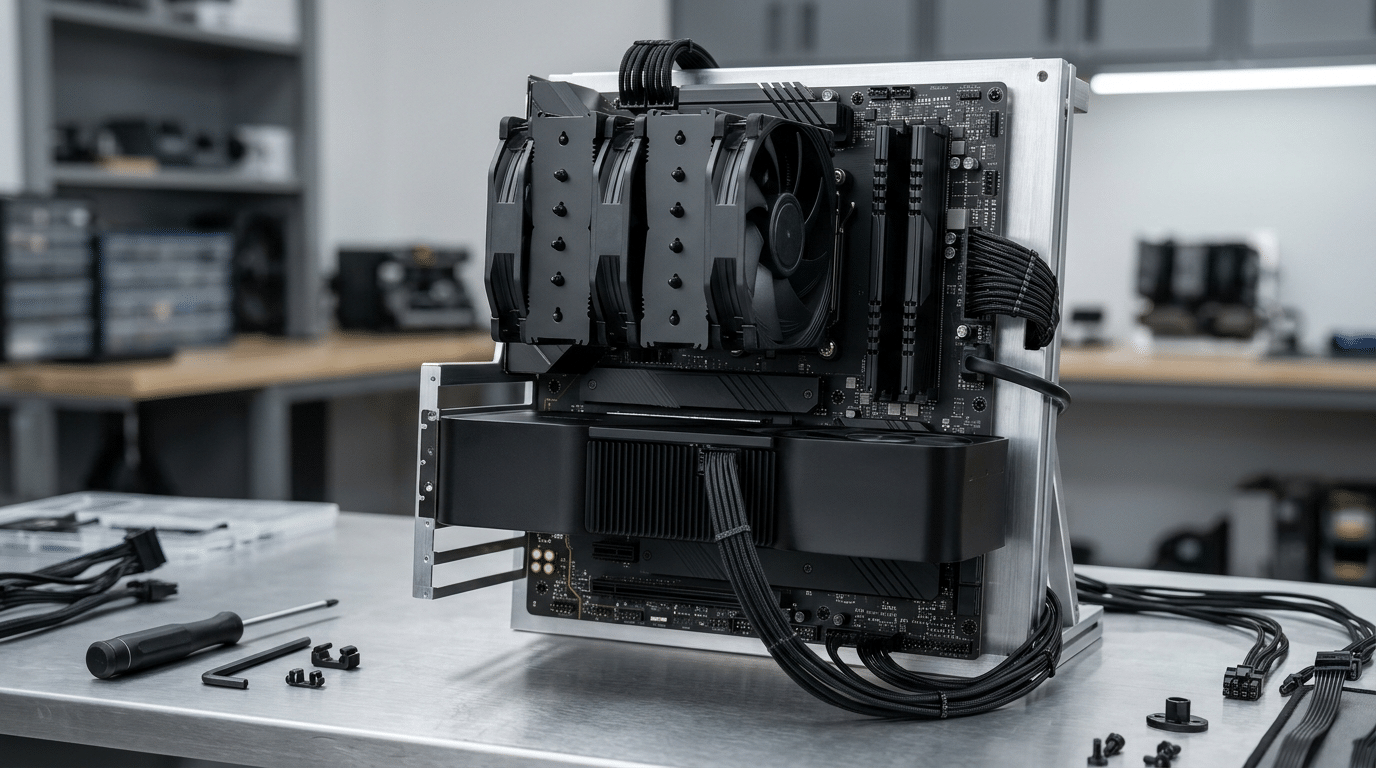
1. Single-CCD 8-Core Uniformity vs. Asymmetric Dual-CCD (6+6) Topology
Understanding ryzen 9 9900x3d vs 9800x3d starts beneath the heatspreader. AMD constructs Granite Ridge desktop processors using 4nm Zen 5 Core Complex Dies (CCDs) paired with a centralized 6nm I/O Die handling memory controllers and PCIe lanes. Every desktop Zen 5 CCD physically houses up to eight cores sharing a unified 32 MB L3 cache slice. On the Ryzen 7 9800X3D, AMD uses one fully enabled 8-core CCD bonded to a 64 MB 3D V-Cache SRAM chiplet, giving all eight cores equal, single-hop access to 96 MB of L3 cache.
By contrast, the Ryzen 9 9900X3D uses two partially salvaged 6-core CCDs (six active cores on CCD0 and six active cores on CCD1). Only CCD0 carries the 64 MB stacked 3D V-Cache chiplet (96 MB L3 total on CCD0), whereas CCD1 retains the standard 32 MB L3 cache while boosting higher up to 5.5 GHz. As explained in our dedicated breakdown of how AMD 3D V-Cache works, placing extra SRAM on only one chiplet creates an asymmetric processor: CCD0 acts as the low-latency gaming die, while CCD1 acts as the high-frequency productivity die.
That 6+6 split carries an unavoidable gaming consequence. When a game launches on the 9900X3D, AMD’s scheduler intentionally parks CCD1 so game threads stay inside the 96 MB L3 cache boundary on CCD0. As a result, modern game engines receive six V-Cache cores (12 threads) on the 9900X3D versus eight V-Cache cores (16 threads) on both the Ryzen 7 9800X3D and the flagship Ryzen 9 9950X3D. Whenever a heavily threaded game engine—such as large-map battle royales, simulation sandboxes, or background-heavy streaming builds—pushes past six cores, threads either contend for SMT execution slots on CCD0 or cross the Infinity Fabric I/O die to CCD1, introducing inter-CCD latency spikes that never occur on the 9800X3D.
2. Second-Generation Under-CCD 3D V-Cache & Base Clock Headroom
Both chips benefit enormously from AMD’s architectural redesign in 2nd Generation 3D V-Cache. On older Zen 4 chips like the Ryzen 7 7800X3D and Ryzen 9 7900X3D, AMD stacked the structural silicon and 64 MB SRAM cache on top of the compute cores, insulating the hottest transistors from the nickel-plated copper integrated heatspreader (IHS) and forcing conservative voltage and frequency locks.
On Ryzen 9000X3D, AMD inverted the stack: the 64 MB V-Cache chiplet sits underneath the 4nm Zen 5 compute die, placing the active cores directly beneath the solder thermal interface material and IHS. That single physical change dramatically slashes core-to-cooler thermal resistance on both processors, delivering two wins:
- Higher Sustained Base & Boost Clocks: Combined with Zen 5’s roughly 16% generational IPC uplift over Zen 4, the 9800X3D lifts its base frequency to 4.7 GHz (500 MHz higher than the 7800X3D) with a 5.2 GHz boost, while the 9900X3D clocks its base at 4.4 GHz and peaks at 5.5 GHz on its frequency-optimized CCD1.
- Full Overclocking & PBO Unlock: Both the 9900X3D and 9800X3D unlock full Precision Boost Overdrive (PBO), multiplier tuning, and Curve Optimizer per-core undervolting. Applying a negative Curve Optimizer offset lowers operating voltage and allows sustained all-core frequencies without hitting the 95°C Tjmax ceiling.
3. Decoding the 140 MB vs. 104 MB Cache Marketing Headline
Retail product summaries advertise “140 MB cache” on the Ryzen 9 9900X3D compared with “104 MB cache” on the Ryzen 7 9800X3D, tempting shoppers into assuming the 12-core model holds a 35% larger gaming cache buffer. Technically, that 140 MB figure adds three physically separate pools together: 12 MB of L2 cache (1 MB per core across 12 cores), 96 MB of L3 cache on CCD0 (32 MB on-die plus 64 MB stacked V-Cache), and 32 MB of standard L3 cache on CCD1.
In real gameplay, cache pools across separate CCDs do not merge into one shared 128 MB gaming bucket. Threads executing inside CCD0 see 96 MB of unified L3 cache—the exact same 96 MB L3 slice feeding the Ryzen 7 9800X3D. In fact, because CCD0 on the 9800X3D gives eight cores shared access to that 96 MB slice alongside 8 MB of local L2, single-die data locality stays simpler and avoids any cross-CCD coherence traffic.
4. Core Parking, Scheduler Dependency & Platform Contrast vs. Arrow Lake
Because the Ryzen 7 9800X3D contains only one homogeneous CCD, every core carries identical cache depth and latency. You drop it into an AM5 motherboard, enable AMD EXPO, and receive 100% deterministic scheduling out of the box—no game-detection heuristics or background core-parking services required.
The Ryzen 9 9900X3D, sharing the dual-CCD scheduler architecture of the 9950X3D, requires AMD’s unified software stack to operate properly in Windows 11. Specifically, the AMD PPM Provisioning File Driver and AMD 3D V-Cache Performance Optimizer Driver (bundled inside the AMD Chipset Driver package) partner with Windows Game Mode and the Xbox Game Bar database to detect active games, dynamically park CCD1’s six frequency cores, and steer game engines onto CCD0’s six V-Cache cores. For most popular titles, AMD’s 2025–2026 driver updates manage parking cleanly, yet obscure indie releases, heavy multi-process workloads, or unmaintained Windows installations can still misroute threads across CCDs.
Contrasting AMD’s topology against Intel’s LGA 1851 flagship, the Core Ultra 9 285K ($589 Launch MSRP; $350-$400 street tier), illustrates why AM5 leads pure gaming. Intel’s Arrow Lake architecture eliminates Hyper-Threading in favor of 24 physical cores (8 Lion Cove P-cores + 16 Skymont E-cores) across a TSMC N3B multi-tile package. While the 285K crushes both 9800X3D and 9900X3D in multi-threaded CPU rendering and retains Intel Quick Sync 4:2:2 video acceleration, its 36 MB L3 Smart Cache and inter-tile memory fabric latency trail AMD’s 96 MB 3D V-Cache chiplets in frame pacing—while LGA 1851 offers a much shorter socket upgrade roadmap than AM5.
5. Shared 120W TDP / 162W PPT Power Envelope & Full 24 PCIe 5.0 Lanes
One bright engineering detail favors the Ryzen 9 9900X3D over its 16-core big sibling: power behavior. Whereas the Ryzen 9 9950X3D operates at a 170W TDP and 230W PPT (and Intel’s Core Ultra 9 285K pushes up to 250W MTP), AMD holds both the 9900X3D and 9800X3D strictly inside a 120W TDP / 162W PPT ceiling. Even under heavy 24-thread rendering, the 9900X3D draws dramatically less wall power and rejects far less heat into your room than 230W–250W flagships. Both processors also expose 28 total CPU PCIe 5.0 lanes (24 usable lanes configured as x16 for your primary graphics card plus dual x4 M.2 NVMe connections) compliant with PCI-SIG PCI Express 5.0 32 GT/s signaling standards.
Real-World Workload & Resolution Ceiling (1080p / 1440p / 4K + Creator)
Choosing intelligently between these two Zen 5 processors requires matching your monitor resolution, frame-rate ceiling, and non-gaming applications against the 6-core versus 8-core V-Cache divide.
- 1080p High-Refresh Esports & CPU-Heavy Simulations: At 1080p targeting 240Hz to 540Hz OLED panels, the GPU finishes geometry shading quickly and waits directly on CPU draw calls, physics, and NPC AI. In lighter esports titles that fit comfortably within six cores, both chips run closely together—with the 9800X3D holding an edge through single-die cache locality. In CPU-demanding engines that scale cleanly across eight cores (such as modern Unreal Engine 5 multiplayer shooters, massive city builders, or open-world ray-traced scenes), the Ryzen 7 9800X3D’s eight V-Cache cores deliver noticeably cleaner frametime consistency and superior 1% Lows than the 9900X3D’s 6-core gaming island. As covered in our 1% Lows vs. average FPS engineering guide, eliminating cross-die cache misses is where 8-core single-CCD silicon proves its worth—and enthusiasts chasing maximum single-CCD clocks can also compare the Ryzen 7 9800X3D vs. 9850X3D audit.
- 1440p Ultra & 4K AAA Gaming: Once your display climbs to 1440p Ultra or 4K paired with an RTX 5070 Ti, RX 9070 XT, RTX 5080, or RTX 5090, pixel shading and ray tracing shift the bottleneck squarely onto the graphics card (98–100% GPU utilization). Average frame-rate deltas between the 9900X3D and 9800X3D narrow substantially in GPU-bound showcases, though the 9800X3D still prevents occasional background parking hiccups during traversal asset streaming.
- Shader Compilation, Streaming & Heavy Creator Workloads: Here the 9900X3D fights back decisively against the 8-core 9800X3D. Twelve cores and 24 threads cut through initial Unreal Engine 5 shader compilation, large C++/Rust code builds, Blender CPU path tracing, and simultaneous high-bitrate x264 software streaming with roughly 40–50% more multi-core headroom than the 9800X3D. Even so, serious hybrid buyers face a sharp reality check: if video timelines rely on Intel Quick Sync 4:2:2 hardware decoding, the Core Ultra 9 285K wins workflow responsiveness; if you want peak AM5 creator speed without giving up two gaming V-Cache cores, the 16-core Ryzen 9 9950X3D sits just one small retail tier above the 9900X3D.
Compatibility, Scheduler Traps & Buyer Alerts
Critical Buyer Alert — 4 Mandatory Platform & Value Checks Before Ordering
- Verify the Narrow Street Gap Against Ryzen 9 9950X3D: While the Ryzen 9 9900X3D launched at $599 Launch MSRP versus $699 Launch MSRP for the 9950X3D, street pricing frequently compresses them into adjacent brackets ($500-$550 tier vs. $550-$600 tier). Never buy a 9900X3D within ~$50 of the 9950X3D: paying a small step-up secures both 8 X3D gaming cores (matching the 9800X3D) and 16 total creator cores.
- Mandatory 9900X3D BIOS, Chipset Driver & Game Bar Hygiene: Dual-CCD X3D chips require current AGESA motherboard BIOS firmware, UEFI CPPC Dynamic Preferred Cores left on Auto/Driver, the latest AMD Chipset Drivers (containing PPM Provisioning and 3D V-Cache Performance Optimizer), Windows Game Mode enabled, and an updated Xbox Game Bar. If upgrading an existing Windows drive from a single-CCD Ryzen CPU, perform a fresh chipset driver install and verify CCD1 parking in Resource Monitor or Game Mode telemetry.
- Lock AM5 Memory to 2 DIMMs at DDR5-6000 CL30 (1:1 UCLK:MCLK): Both Zen 5 processors hit optimal latency (~10ns) using a matched 2-stick 32GB (2x16GB) or 64GB (2x32GB) DDR5-6000 CL30 AMD EXPO kit running a synchronized 1:1 memory controller ratio. Pushing past DDR5-6400 drops the IMC to a 2:1 divider, while populating four DDR5 sticks forces steep speed reductions—as detailed in our DDR5-6000 CL30 vs. 6400 CUDIMM comparison.
- Avoid X870/X870E PCIe x8 Lane-Sharing Traps & 120mm AIOs: Many mid-range X870 boards steal lanes from the primary PCIe 5.0 x16 GPU slot (dropping your graphics card to x8) when you populate secondary M.2 NVMe bays. Unless you strictly need dual rear 40Gbps USB4 ports, choose a well-VRM’d AMD B850 board with zero GPU lane cuts—review our AMD B850 vs. X870 vs. X870E breakdown and best B850 motherboards roundup. Pair either 162W PPT processor with a dual-tower air cooler or 240mm/360mm AIO (check our best coolers for Ryzen 7 9800X3D guide); skip noisy 120mm single-fan liquid coolers.
Audited & Disqualified Configurations (Rejected Picks)
Applying our processor vertical rejection rules disqualifies four common AM5 pairings that waste budget or introduce avoidable performance bottlenecks:
- Buying the Ryzen 9 9900X3D Strictly for Pure Gaming or Esports: Pays more than the Ryzen 7 9800X3D while capping active V-Cache gaming threads to a 6-core CCD and adding dual-CCD scheduler dependency.
- Buying the Ryzen 9 9900X3D Close to Ryzen 9 9950X3D Street Pricing: Giving up two gaming V-Cache cores plus four creator cores makes poor architectural sense whenever both sit within ~$50.
- Four-DIMM DDR5 Kits or Loose CL42-46 Memory on X3D Builds: Forces AM5 memory controllers into degraded frequencies and undercuts frame pacing whenever workloads spill out of L3 cache.
- 120mm Liquid Coolers or Bare-VRM Entry Motherboards on 162W PPT Chips: Compromises sustained boost behavior and acoustic comfort compared with $35-$55 dual-tower air coolers and 12+2+2 60A DrMOS B850 boards.
Best System Pairings & Audited Alternatives
Whether you settle on the 8-core pure gaming champion or a dual-CCD hybrid processor, anchor your AM5 platform around proven, zero-compromise supporting parts: an AMD B850 ATX motherboard with at least 12+2+2 60A DrMOS VRMs and unshared PCIe 5.0 x16 routing, 32GB (2x16GB) DDR5-6000 CL30 (or 64GB 2x32GB for multi-app creation), a 2TB PCIe 4.0 DRAM+TLC NVMe SSD (matching PCIe 5.0 load speeds at lower heat), a dual-tower air cooler or 360mm AIO rated well past 162W PPT, and an 850W–1000W ATX 3.1 80+ Gold PSU with native 12V-2×6 power delivery for RTX 5070 Ti, RX 9070 XT, or RTX 5080 GPUs.
Note that pure esports builders seeking the highest single-CCD clock ceiling can also look at the January 2026 AMD Ryzen 7 9850X3D ($499 Launch MSRP, boosting up to 5.6 GHz across 8 V-Cache cores), while heavy video editors needing Intel Quick Sync 4:2:2 acceleration and 24 physical cores should cross-shop the Intel Core Ultra 9 285K ($589 Launch MSRP; $350-$400 tier). Below are the four verified Amazon US components covering the audited Ryzen 9 9900X3D, the Ryzen 7 9800X3D, the flagship 9950X3D step-up, and the top unshared-lane B850 motherboard match.
1. AMD Ryzen 9 9900X3D 12-Core Processor — Audited Hybrid Contender

Budget Tier: $500-$550 tier ($599 Launch MSRP) | Audited Specs: Socket AM5 (Zen 5) | 12 Cores / 24 Threads (Dual 6+6 CCD; 6 Cores with 2nd Gen 3D V-Cache) | 4.4 GHz Base / Up to 5.5 GHz Boost | 140 MB Combined Cache (12 MB L2 + 96 MB L3 on CCD0 + 32 MB L3 on CCD1) | 120W TDP / 162W PPT | 24 Usable PCIe 5.0 Lanes | Integrated 2-CU Radeon Graphics.
Audit Summary: The Ryzen 9 9900X3D combines strong 24-thread compiling, rendering, and streaming speed with cool 162W PPT efficiency. However, because V-Cache resides on only one 6-core CCD, pure gamers spend more for two fewer V-Cache gaming cores than the 9800X3D. Buy only when meaningfully discounted below the 16-core 9950X3D and paired with clean chipset core-parking drivers.
Pros: 50% more threads than 9800X3D for workstation tasks; disciplined 120W TDP / 162W PPT ceiling; unlocked PBO and AM5 longevity.
Cons: 6-core V-Cache gaming island trails 8-core X3D rivals in heavily threaded engines; relies on core-parking drivers; squeezed by 9950X3D pricing.
2. AMD Ryzen 7 9800X3D — Pure Gaming King & Best Overall Value

Budget Tier: $400-$450 / Enthusiast Tier ($479 Launch MSRP) | Audited Specs: Socket AM5 (Zen 5) | 8 Cores / 16 Threads (Single Unified CCD) | 4.7 GHz Base / Up to 5.2 GHz Boost | 104 MB Combined Cache (8 MB L2 + 96 MB L3) | 120W TDP / 162W Max PPT | 24 Usable PCIe 5.0 Lanes | Integrated 2-CU Radeon Graphics.
Audit Summary: For 90% of high-refresh PC gaming builds, the Ryzen 7 9800X3D decisively wins the ryzen 9 9900x3d vs 9800x3d matchup. Putting all eight Zen 5 cores inside one 96 MB L3 V-Cache chiplet eliminates cross-die Infinity Fabric delays and core-parking edge cases, delivering unmatched 1% Lows, unlocked PBO headroom, and lower platform cost.
Pros: All 8 cores share 96 MB L3 cache with zero cross-CCD latency; zero core-parking driver dependency; beats 9900X3D in multi-core-hungry games for less money.
Cons: 8 cores / 16 threads trail 12-core and 16-core Ryzen 9 chips in prolonged Blender renders and heavy parallel compiles.
3. AMD Ryzen 9 9950X3D 16-Core Processor — Best No-Compromise Hybrid Upgrade

Budget Tier: $550-$600 tier ($699 Launch MSRP) | Audited Specs: Socket AM5 (Zen 5) | 16 Cores / 32 Threads (Dual 8+8 CCD; 8 Cores with 2nd Gen 3D V-Cache) | 4.3 GHz Base / Up to 5.7 GHz Boost | 144 MB Combined Cache (16 MB L2 + 128 MB L3) | 170W TDP / 230W Max PPT | 24 Usable PCIe 5.0 Lanes | Integrated 2-CU Radeon Graphics.
Audit Summary: Whenever street pricing puts the 9950X3D within one small tier of the 9900X3D, stepping up solves the 9900X3D’s core architectural compromise completely. You gain a full 8-core 3D V-Cache CCD (identical gaming topology to the 9800X3D) paired with a second 8-core CCD boosting to 5.7 GHz for full workstation throughput—just budget a 360mm AIO or flagship air cooler for its 230W PPT load.
Pros: Combines full 8-core V-Cache gaming parity with 16-core / 32-thread creator dominance; highest 5.7 GHz Zen 5 boost clocks.
Cons: Higher 170W TDP / 230W PPT thermal envelope requires heavier cooling than 162W PPT chips; still relies on Windows core-parking hygiene.
4. GIGABYTE B850 AORUS Elite WIFI7 — Recommended Unshared-Lane AM5 Motherboard

Budget Tier: $200-$250 tier (~$230 Launch MSRP) | Audited Specs: Socket AM5 (AMD B850 Chipset) | ATX Form Factor | 14+2+2 Digital Twin VRM (60A DrMOS) | 1x PCIe 5.0 x16 GPU Slot (Zero Lane Sharing) | 3x M.2 Slots (1x Gen 5 x4, 2x Gen 4 x4) | Wi-Fi 7 + 2.5GbE LAN | Q-Flash Plus & EZ-Latch Plus.
Audit Summary: Per GIGABYTE’s B850 AORUS Elite WIFI7 specifications, this ATX motherboard powers both 162W PPT X3D chips effortlessly via 14+2+2 60A DrMOS phases while avoiding the x8 GPU lane-sharing trap common on pricier X870 models. Populating all three M.2 NVMe bays keeps your PCIe 5.0 x16 graphics slot at full bandwidth, complemented by Wi-Fi 7 and tool-less EZ-Latch hardware.
Pros: Zero GPU x8 lane sharing across all three M.2 slots; strong 14+2+2 60A VRM headroom; native Wi-Fi 7, 2.5GbE LAN, and Q-Flash Plus.
Cons: Omits rear 40Gbps USB4 ports reserved for X870/X870E chipsets; three M.2 bays instead of four.
How We Audited This Guide
- Processors, motherboards, memory, and storage were compared by socket longevity, chipset lane allocation, VRM design, DDR5 EXPO/XMP support, and PCIe generation.
- Every specification claim was cross-checked against official OEM datasheets, platform vendor documentation, and published industry standards (PCI-SIG, JEDEC, VESA, Intel ATX) rather than marketplace listing copy.
- Recommendations were evaluated against our weighted audit rubric and documented compatibility rules; we do not publish fabricated FPS, thermal, or acoustic numbers.
Frequently Asked Questions: Ryzen 9 9900X3D vs. 9800X3D
Why does the Ryzen 7 9800X3D beat or match the Ryzen 9 9900X3D in gaming?
The Ryzen 7 9800X3D places all eight Zen 5 cores on a single chiplet with 96 MB L3 cache, eliminating cross-chiplet latency. By contrast, the 9900X3D splits twelve cores into two six-core CCDs with 3D V-Cache on only one, capping cache-accelerated games to six cores.
Does the Ryzen 9 9900X3D give games a unified 140 MB L3 cache pool?
No. Its 140 MB total includes 12 MB L2 cache, 96 MB L3 on the V-Cache CCD, and 32 MB L3 on the standard CCD. Game threads parked on the primary cache chiplet access 96 MB L3 directly, matching the 9800X3D rather than combining both pools.
When should you choose the Ryzen 9 9900X3D over the 9800X3D or 9950X3D?
Choose the Ryzen 9 9900X3D only when heavily discounted well below the 16-core 9950X3D and your daily workflow combines demanding gaming with heavy code compiles, Blender renders, or CPU streaming that meaningfully saturate twelve cores and twenty-four threads within a 162W PPT ceiling.
Do the Ryzen 9 9900X3D and 9800X3D need an X870E motherboard or 360mm AIO?
Neither processor requires X870E silicon or a 360mm radiator. Both share a 120W TDP and 162W PPT envelope cooled easily by quality dual-tower air coolers or 240mm AIOs, and run unthrottled on a well-specced AMD B850 board featuring 60A VRM stages and PCIe 5.0 routing.
What DDR5 memory configuration is optimal for Ryzen 9 9900X3D vs 9800X3D?
Both Zen 5 processors hit their latency sweet spot with a matched two-stick 32GB (2x16GB) or 64GB (2x32GB) DDR5-6000 CL30 AMD EXPO kit running in a synchronized 1:1 UCLK:MCLK ratio. Avoid four-DIMM kits or loose CL42 timings that degrade 1% Lows.
Final Audit Verdict: Ryzen 9 9900X3D vs. Ryzen 7 9800X3D
Evaluating the complete silicon breakdown of ryzen 9 9900x3d vs 9800x3d reveals why bigger core-and-cache numbers on a retail box do not guarantee superior gaming performance. While the Ryzen 9 9900X3D handles 24-thread rendering, compiling, and background encoding admirably inside a cool 162W PPT ceiling, its asymmetric 6+6 dual-CCD split turns gaming workloads into a 6-core V-Cache experience reliant on Windows core-parking drivers—while sitting dangerously close to 16-core Ryzen 9 9950X3D street pricing.
For gamers, esports competitors, and mainstream builders pairing an RTX 5070 Ti, RX 9070 XT, or RTX 5080 with an unshared-lane AMD B850 board and 32GB DDR5-6000 CL30 memory, the AMD Ryzen 7 9800X3D remains the cleaner, faster, and higher-value Socket AM5 purchase. For true dual-threat creators who refuse to compromise on either 8-core V-Cache gaming or workstation thread count, bypass the 9900X3D unless deeply discounted and step straight to the Ryzen 9 9950X3D—or explore all verified AM5 and LGA 1851 contenders inside our Best Gaming CPUs pillar guide.
Official Standards & Technical References
- AMD Ryzen 9 9900X3D Official Specifications: amd.com/en/products/processors/desktops/ryzen/9000-series/amd-ryzen-9-9900x3d.html
- AMD Ryzen 7 9800X3D Official Specifications: amd.com/en/products/processors/desktops/ryzen/9000-series/amd-ryzen-7-9800x3d.html
- AMD Ryzen 9 9950X3D Official Specifications: amd.com/en/products/processors/desktops/ryzen/9000-series/amd-ryzen-9-9950x3d.html
- GIGABYTE B850 AORUS ELITE WIFI7 Specifications: gigabyte.com/Motherboard/B850-AORUS-ELITE-WIFI7
- PCI-SIG PCI Express Architecture Specifications: pcisig.com


