
Disclosure: As an Amazon Associate, I earn from qualifying purchases. If you buy through links on this page, we may earn a small commission at no extra cost to you.
Choosing the best gaming cpu in late 2026 comes down to one architectural divide: AMD’s inverted 2nd Gen 3D V-Cache on the AM5 socket versus Intel’s multi-core Arrow Lake tile design on LGA 1851. Modern engines punish weak memory subsystems with jarring frame spikes, making 1% Lows and sustained boost behavior far more decisive than box-art clock claims.
Across The PC Audit hardware hub, we audited live Amazon US listings, official silicon datasheets, platform chipset rules, and peak wattage limits to select the 10 strongest retail desktop processors spanning budget starter rigs under $200 to 16-core creator flagships. Along the way, we isolated cache-cut OEM pitfalls like the Ryzen 7 8700F, iGPU-less creator compromises, and legacy LGA 1700 dead ends so your motherboard, cooler, and DDR5 budget land cleanly on the first build.
In This Guide
Quick Picks: Best Gaming CPU Options at a Glance
#1 Best Overall Gaming CPU
AMD Ryzen 7 9800X3D
Inverted 96MB 3D V-Cache, unlocked Precision Boost Overdrive, and easy 162W PPT cooling starting at $479 Launch MSRP. (Audit #1)
Best Value AM5 Starter (#4)
AMD Ryzen 5 9600X
Cool 88W PPT Zen 5 gaming speed with 32MB L3 cache and full AM5 X3D upgrade runway in the $200–$250 tier. (Audit #4)
Best Flagship Hybrid (#3)
AMD Ryzen 9 9950X3D
16 Zen 5 cores, 5.7 GHz peak boost, and 144MB total cache bridging 4K gaming and workstation renders. (Audit #3)
Side-by-Side Comparison: Top 10 Best Gaming CPUs
| CPU & Award | Socket & Cores | Boost & Total Cache | TDP / Max Power & Tier | Link |
|---|---|---|---|---|
| AMD Ryzen 7 9800X3D Best Overall Gaming CPU | AM5 | 8C / 16T (Zen 5) | 5.2 GHz | 104MB (96MB L3) | 120W / 162W PPT (starting at $479 Launch MSRP) | View on Amazon |
| AMD Ryzen 7 9850X3D Fastest Pure Gaming CPU | AM5 | 8C / 16T (Zen 5) | 5.6 GHz | 104MB (96MB L3) | 120W / ~162W PPT (starting at $499 Launch MSRP) | View on Amazon |
| AMD Ryzen 9 9950X3D Best Flagship Gaming & Creator | AM5 | 16C / 32T (Zen 5) | 5.7 GHz | 144MB (128MB L3) | 170W / 230W PPT ($550–$600 street tier) | View on Amazon |
| AMD Ryzen 5 9600X Best Value AM5 Gaming CPU | AM5 | 6C / 12T (Zen 5) | 5.4 GHz | 38MB (32MB L3) | 65W / 88W PPT (around $200–$250 tier) | View on Amazon |
| AMD Ryzen 7 7800X3D Best Previous-Gen X3D Value | AM5 | 8C / 16T (Zen 4) | 5.0 GHz | 104MB (96MB L3) | 120W / 162W PPT (Upper-Mid AM5 tier) | View on Amazon |
| AMD Ryzen 7 9700X Best Cool 8-Core CPU | AM5 | 8C / 16T (Zen 5) | 5.5 GHz | 40MB (32MB L3) | 65W / 88W PPT (105W Opt) ($250–$300 tier) | View on Amazon |
| AMD Ryzen 9 9900X3D Best 12-Core Hybrid AM5 | AM5 | 12C / 24T (Zen 5) | 5.5 GHz | 140MB (128MB L3) | 120W / 162W PPT ($500–$550 street tier) | View on Amazon |
| Intel Core Ultra 9 285K Best Intel Creator Flagship | LGA 1851 | 24C (8P+16E) | 5.7 GHz | 76MB (36MB Smart) | 125W / 250W MTP ($350–$400 street tier) | View on Amazon |
| Intel Core Ultra 7 265K Best Mid-Range Intel Hybrid | LGA 1851 | 20C (8P+12E) | 5.5 GHz | 66MB (30MB Smart) | 125W / 250W MTP ($300–$350 tier) | View on Amazon |
| Intel Core Ultra 5 245K Best Budget Intel Arrow Lake | LGA 1851 | 14C (6P+8E) | 5.2 GHz | 50MB (24MB Smart) | 125W / 159W MTP (under $200 street tier) | View on Amazon |
Match Your Use Case: Which Gaming CPU Fits Your Workload?
| Buyer Scenario | Best Match | Why & Expected Outcome |
|---|---|---|
| Competitive 1440p & flagship GPU gaming | AMD Ryzen 7 9800X3D (#1) | Delivers top 1% Lows stability via 96MB inverted 3D V-Cache, unlocked PBO tuning, and simple air cooling. |
| 360Hz–540Hz OLED esports peak clocks | AMD Ryzen 7 9850X3D (#2) | Pushes single-CCD V-Cache frequencies +400 MHz higher to 5.6 GHz when street pricing tracks close to 9800X3D. |
| 4K gaming + heavy Blender / 3D / OBS | AMD Ryzen 9 9950X3D (#3) | Pairs 16 Zen 5 cores (32 threads) with an 8-core V-Cache gaming CCD and 144MB total cache. |
| Budget AM5 entry + future X3D upgrade | AMD Ryzen 5 9600X (#4) | Keeps CPU + cooling budget lean at 88W PPT so more cash flows into a 16GB GPU on an upgradeable B850 board. |
| Premiere / DaVinci + gaming under $400 | Intel Core Ultra 9 285K (#8) | Delivers 24 Arrow Lake cores, Quick Sync media engines, and NPU acceleration at discounted street brackets. |
| Sub-$200 hybrid gaming & editing | Intel Core Ultra 5 245K (#10) | Brings 14 physical cores, Quick Sync, and modest 159W MTP cooling below traditional budget 6-core chips. |
Detailed Gaming CPU Audits (Ranks 1–10)
1. AMD Ryzen 7 9800X3D — Best Overall Gaming CPU

Quick Specs: Zen 5 + 2nd Gen 3D V-Cache | Socket AM5 | 8 Cores / 16 Threads (4.7 GHz Base / 5.2 GHz Boost) | 104MB Total Cache (8MB L2 + 96MB L3) | 120W TDP / 162W Max PPT | 24 Usable PCIe 5.0 Lanes | 2-CU Radeon iGPU | Price Tier: Enthusiast (starting at $479 Launch MSRP)
Audit Score: 9.4 / 10
- Gaming Frame Rate & 1% Lows (35%): 9.7 / 10
- Platform Longevity & PCIe I/O (25%): 9.6 / 10
- Multi-Core Creator Headroom (20%): 8.2 / 10
- Power Efficiency & Thermal Behavior (20%): 9.6 / 10
AMD solved the structural weakness of first-generation X3D chips when designing the Ryzen 7 9800X3D. According to AMD Ryzen desktop processor specifications, 2nd Gen 3D V-Cache flips the stacked 64MB L3 SRAM slice underneath the Zen 5 compute die rather than sitting on top as an insulator. Because the silicon cores now contact the integrated heatspreader directly, the 9800X3D holds higher boost frequencies, stays dramatically cooler under sustained loads, and unlocks full multiplier overclocking plus Precision Boost Overdrive tuning.
In real gaming workloads, its 96MB L3 pool absorbs draw calls and AI simulation data on chip before slow system-memory trips stall your GPU, elevating 1% Lows across competitive shooters and Unreal Engine 5 releases. Compared with the #2 Ryzen 7 9850X3D, the 9800X3D gives up 400 MHz peak boost while preserving identical cache architecture and 162W PPT cooling ease at a friendlier Launch MSRP—see our Ryzen 7 9800X3D vs. Ryzen 7 9850X3D comparison for exact clock break-even math. Pair it with one of our audited AM5 B850, X870, and X870E motherboards and 32GB DDR5-6000 CL30 memory.
Buyer Verification Alert: Watch out for third-party Amazon scalpers marking the 9800X3D far above roughly $479 Launch MSRP during tight inventory cycles. If the #2 Ryzen 7 9850X3D drops within $20–$30 of the 9800X3D in live listings, grab the faster 9850X3D instead.
Pros
- Inverted 2nd Gen 3D V-Cache lets Zen 5 cores touch the heatspreader directly for cooler boost behavior
- Fully unlocked multiplier and Precision Boost Overdrive Curve Optimizer support unlike 7800X3D (#5)
- 96MB L3 cache keeps 1% Lows silky smooth at <=162W PPT on affordable dual-tower air coolers
Cons
- Eight cores lag 16-core and 24-core workstation chips (#3 9950X3D, #8 285K) in sustained video renders
- 5.2 GHz boost ceiling trails the #2 Ryzen 7 9850X3D by 400 MHz
Verdict: Buy it if you want the #1 sweet spot for competitive 1080p/1440p frame pacing and 4K GPU feeding on an upgradeable AM5 socket. Skip it if you run daily 3D/Premiere workstation renders (#3 9950X3D or #8 285K) or want a sub-$250 starter build (#4 9600X). Cooling note: A midrange dual-tower air cooler handles 162W PPT effortlessly.
2. AMD Ryzen 7 9850X3D Desktop Processor — Fastest Pure Gaming CPU

Quick Specs: Zen 5 + 2nd Gen 3D V-Cache | Socket AM5 | 8 Cores / 16 Threads (4.7 GHz Base / 5.6 GHz Boost) | 104MB Total Cache (8MB L2 + 96MB L3) | 120W TDP / ~162W Max PPT | 24 Usable PCIe 5.0 Lanes | Price Tier: Upper-Enthusiast (starting at $499 Launch MSRP; around $400–$450 street tier)
Audit Score: 9.2 / 10
- Gaming Frame Rate & 1% Lows (35%): 9.9 / 10
- Platform Longevity & PCIe I/O (25%): 9.4 / 10
- Multi-Core Creator Headroom (20%): 8.2 / 10
- Power Efficiency & Thermal Behavior (20%): 8.9 / 10
Introduced on January 29, 2026 around $499 Launch MSRP, the AMD Ryzen 7 9850X3D claims the single-CCD clock speed throne. It preserves the exact 8-core Zen 5 layout, 104MB total cache (96MB L3), and 120W base TDP of the #1 Ryzen 7 9800X3D while raising peak boost clocks by 400 MHz to 5.6 GHz. Unlike dual-CCD Ryzen 9 chips, every thread shares the giant 3D V-Cache pool directly with zero core-parking latency across chiplets.
Why does it rank #2 behind the 9800X3D? In 1440p Ultra and 4K builds where your RTX 5070 Ti or RTX 5080 becomes GPU-bound, that extra 400 MHz shrinks to small single-digit frame margins, though competitive CS2, Valorant, and simulation players on 360Hz–540Hz OLED displays extract every millisecond from 5.6 GHz single-thread IPC. Note that Amazon street promos sometimes push the 9850X3D into the $400–$450 tier—at parity pricing with #1 9800X3D, the 9850X3D becomes an easy upgrade.
Buyer Verification Alert: Because the Ryzen 7 9850X3D launched in January 2026, older-stock AM5 B650 and early B850 motherboards need updated AGESA firmware to POST cleanly. Confirm your board features USB BIOS Flashback before assembly.
Pros
- Highest single-CCD 3D V-Cache boost ceiling (5.6 GHz, +400 MHz over 9800X3D)
- Zero dual-CCD scheduling quirks because all 8 cores share one 96MB L3 cache slice
- Retains 120W TDP efficiency and full AM5 PCIe 5.0 connectivity for future GPU generations
Cons
- Modest real-world 1440p/4K GPU-bound uplift over #1 9800X3D when 9850X3D commands full premium pricing
- Requires recent 2026 AGESA BIOS firmware on older retail motherboard stock
Verdict: Buy it if you play ultra-high-refresh 1080p/1440p esports or catch live Amazon pricing near the $400–$450 bracket. Skip it if #1 Ryzen 7 9800X3D undercuts it steeply or you need 16 creator cores (#3 9950X3D). BIOS note: Flash updated AGESA before dropping the chip into early B650/B850 boards.
3. AMD Ryzen 9 9950X3D 16-Core Processor — Best Flagship Gaming & Creator CPU

Quick Specs: Zen 5 Dual-CCD + 2nd Gen 3D V-Cache | Socket AM5 | 16 Cores / 32 Threads (4.3 GHz Base / 5.7 GHz Boost) | 144MB Total Cache (16MB L2 + 128MB L3) | 170W TDP / 230W Max PPT | 24 Usable PCIe 5.0 Lanes | Price Tier: Flagship ($550–$600 street tier; starting at $699 Launch MSRP)
Audit Score: 9.1 / 10
- Gaming Frame Rate & 1% Lows (35%): 9.4 / 10
- Platform Longevity & PCIe I/O (25%): 9.2 / 10
- Multi-Core Creator Headroom (20%): 9.9 / 10
- Power Efficiency & Thermal Behavior (20%): 7.7 / 10
Dual-threat workstation builders once had to choose between 8-core gaming dominance or 16-core production throughput. AMD’s Ryzen 9 9950X3D removes that compromise by pairing two full 8-core Zen 5 chiplets—one topped by 5.7 GHz frequency bins and the other stacked beneath 2nd Gen 3D V-Cache—for 144MB combined cache (128MB L3) per official AMD Ryzen specifications. That means games stay pinned on a complete 8-core V-Cache die while Blender renders, code compiles, or OBS video encoding saturate all 32 threads.
Compared with the #7 Ryzen 9 9900X3D, the 9950X3D refuses to trim each chiplet to six cores and adds higher 5.7 GHz clock headroom—making it noticeably cleaner in games that saturate 8 full threads. Against the #8 Intel Core Ultra 9 285K, AMD commands clear advantages in gaming 1% Lows and AM5 socket longevity, while demanding a 360mm AIO liquid cooler (or flagship dual-tower air heatsink) sized for its 230W PPT ceiling.
Buyer Verification Alert: Dual-CCD X3D chips rely on AMD Provisioning Package and chipset drivers to park background tasks onto the non-V-Cache CCD automatically. Keep AMD chipset drivers current and leave Windows Game Mode enabled.
Pros
- Uncompromised 16 cores / 32 threads at up to 5.7 GHz with 144MB total cache
- Full 8-core V-Cache gaming CCD rivals #1 9800X3D smoothness in heavy 2026 titles
- Unlocked Precision Boost Overdrive and full PCIe 5.0 x16 + NVMe expansion on Socket AM5
Cons
- 230W max PPT heat load favors a 360mm AIO cooler and 14+2 VRM motherboard
- Steep budget jump over #1 Ryzen 7 9800X3D and #8 Core Ultra 9 285K street pricing
Verdict: Buy it if your rig earns its keep in 3D rendering, software builds, or 4K video editing while refusing any sacrifice in gaming 1% Lows. Skip it if you only game (#1 9800X3D saves serious cash) or rely heavily on Intel Quick Sync codecs under $400 (#8 285K). Power note: Pair with an ATX 3.1 PSU and 14+2 80A+ VRM board.
4. AMD Ryzen 5 9600X 6-Core Desktop Processor — Best Value AM5 Gaming CPU

Quick Specs: Zen 5 (Granite Ridge) | Socket AM5 | 6 Cores / 12 Threads (3.9 GHz Base / 5.4 GHz Boost) | 38MB Total Cache (6MB L2 + 32MB L3) | 65W TDP / 88W Max PPT | 24 Usable PCIe 5.0 Lanes | 2-CU Radeon iGPU | Price Tier: Budget-to-Mid AM5 (around $200–$250 tier)
Audit Score: 8.8 / 10
- Gaming Frame Rate & 1% Lows (35%): 8.4 / 10
- Platform Longevity & PCIe I/O (25%): 9.6 / 10
- Multi-Core Creator Headroom (20%): 7.6 / 10
- Power Efficiency & Thermal Behavior (20%): 9.8 / 10
Smart midrange system builders allocate roughly half of total PC cash toward the graphics card—and the AMD Ryzen 5 9600X makes that balance effortless. Pumping 6 Zen 5 cores up to 5.4 GHz inside an ultra-lean 88W max PPT envelope, it runs quietly on budget single-tower air coolers while preserving full PCIe 5.0 x16 + x4 NVMe lane routing per PCI-SIG architecture guidelines. Even better, its 32MB L3 cache doubles the cache-starved Ryzen 7 8700F prebuilt chip while retaining a 2-CU integrated GPU for troubleshooting.
Compared with the #10 Intel Core Ultra 5 245K (which packs 14 cores under $200), the Ryzen 5 9600X concedes multi-core rendering speed in exchange for half the peak power draw and entry onto AMD’s upgradeable AM5 socket. Start with the 9600X on an affordable B850 motherboard today, then drop in a future X3D chip years from now. Check our best gaming CPUs under $300 guide for deeper budget matchups.
Pros
- Tiny 88W max PPT eliminates expensive liquid coolers and runs quiet in compact cases
- Entry ticket onto long-runway AM5 with full 24 usable PCIe 5.0 lanes and 2-CU backup iGPU
- 32MB L3 cache and 5.4 GHz Zen 5 IPC pair smoothly with 1440p midrange GPUs
Cons
- Six cores compress multitasking headroom compared with 8-core #6 9700X or 14-core #10 245K
- Trails X3D siblings noticeably in CPU-bound 1080p esports 1% Lows
Verdict: Buy it if you are building a balanced $1,000–$1,500 1440p rig and want an affordable AM5 starter chip with zero cooling drama. Skip it if you render heavy timelines (#10 245K / #9 265K) or target 360Hz+ esports monitors (#1 9800X3D). Upgrade path: Pair with a B850 board and 2x16GB DDR5-6000 CL30 RAM.
5. AMD Ryzen 7 7800X3D 8-Core Desktop Processor — Best Previous-Gen X3D Value
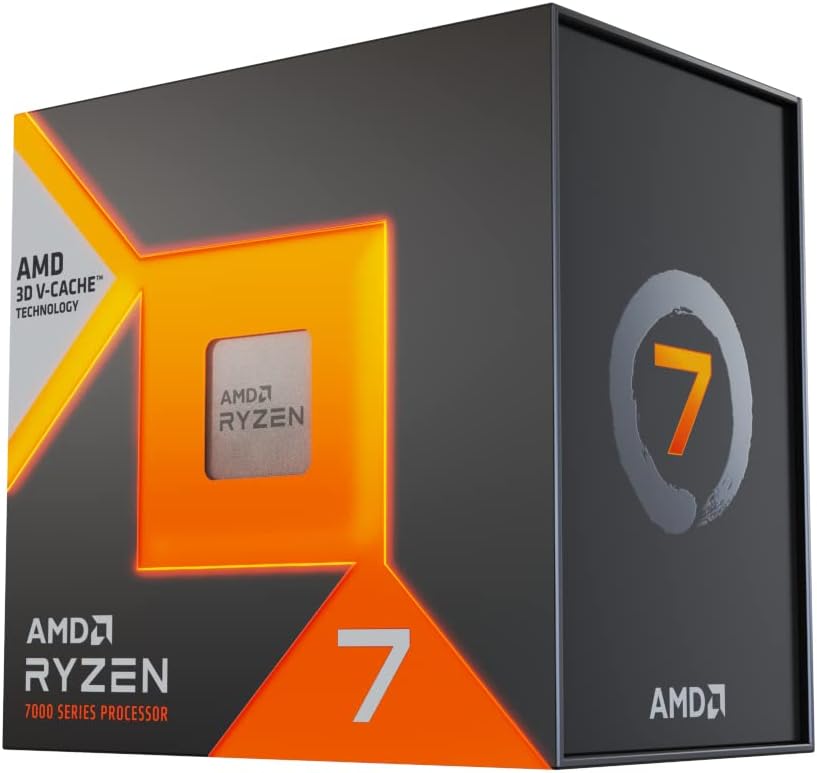
Quick Specs: Zen 4 + 1st Gen 3D V-Cache | Socket AM5 | 8 Cores / 16 Threads (4.2 GHz Base / 5.0 GHz Boost) | 104MB Total Cache (8MB L2 + 96MB L3) | 120W TDP / 162W Max PPT | 24 Usable PCIe 5.0 Lanes | 2-CU Radeon iGPU | Price Tier: Upper-Mid AM5 Tier
Audit Score: 8.7 / 10
- Gaming Frame Rate & 1% Lows (35%): 9.1 / 10
- Platform Longevity & PCIe I/O (25%): 9.1 / 10
- Multi-Core Creator Headroom (20%): 7.5 / 10
- Power Efficiency & Thermal Behavior (20%): 8.8 / 10
Even with Zen 5 chips sitting above it, the Zen 4 Ryzen 7 7800X3D refuses to fade quietly because 96MB of stacked L3 cache remains a massive equalizer in CPU-bound simulations, MMOs, and shooters. Plugging cleanly into modern B850 and X870 AM5 motherboards with full PCIe 5.0 connectivity, it continues outperforming non-X3D chips like #6 Ryzen 7 9700X whenever frame consistency and 1% Lows matter most.
That older 1st Gen cache stack carries two clear trade-offs compared with #1 Ryzen 7 9800X3D: the cache sits on top of the CPU cores (adding mild thermal insulation), and AMD locks manual multiplier overclocking—leaving Curve Optimizer undervolts as your primary tuning lever. Keep a close eye on live Amazon pricing: when discounts separate the 7800X3D cleanly from the 9800X3D, it shines in $1,500–$1,800 gaming builds; when street prices converge, step up to #1 9800X3D.
Buyer Verification Alert: Compare live cart pricing against #1 Ryzen 7 9800X3D before clicking buy. Only choose the 7800X3D when at least $80 in promotional savings opens up; narrow gaps favor the cooler, unlocked 9800X3D.
Pros
- 104MB total cache (96MB L3) beats non-X3D processors in CPU-bound 1% Lows
- Drops onto modern AM5 B850/X870 boards with full PCIe 5.0 GPU and NVMe lanes
- Low real-world gaming wattage requires no bulky 360mm liquid radiator
Cons
- Top-mounted 1st Gen V-Cache locks manual multiplier overclocking and limits 5.0 GHz clocks
- Weaker Zen 4 multi-core productivity compared with #6 9700X and #9 265K
Verdict: Buy it if promotional Amazon pricing puts meaningful cash back into your GPU fund while delivering true X3D frame pacing. Skip it if street prices creep near #1 Ryzen 7 9800X3D or you prioritize video exports (#9 265K). BIOS note: Apply a conservative negative Curve Optimizer offset for cooler sustained boosts.
6. AMD Ryzen 7 9700X 8-Core, 16-Thread Unlocked Desktop Processor — Best Cool & Efficient 8-Core CPU

Quick Specs: Zen 5 (Granite Ridge) | Socket AM5 | 8 Cores / 16 Threads (3.8 GHz Base / 5.5 GHz Boost) | 40MB Total Cache (8MB L2 + 32MB L3) | 65W TDP / 88W Max PPT (105W Mode Supported) | 24 Usable PCIe 5.0 Lanes | 2-CU iGPU | Price Tier: Mid-Range ($250–$300 tier)
Audit Score: 8.6 / 10
- Gaming Frame Rate & 1% Lows (35%): 8.1 / 10
- Platform Longevity & PCIe I/O (25%): 9.1 / 10
- Multi-Core Creator Headroom (20%): 8.2 / 10
- Power Efficiency & Thermal Behavior (20%): 9.4 / 10
Positioned squarely in the $250–$300 tier, the AMD Ryzen 7 9700X serves Small Form Factor (SFF) and whisper-quiet ATX builders who want eight Zen 5 cores without high-wattage radiator noise. Defaulting to a 65W TDP (88W PPT) while still supporting an official 105W TDP BIOS toggle, it accelerates background Discord streams, heavy shader compilation passes, and 5.5 GHz boost bursts cleanly—verified on AMD’s desktop Ryzen portal.
Compared with the 6-core #4 Ryzen 5 9600X, stepping up to the 9700X adds two extra Zen 5 cores and 100 MHz higher boost for multitasking durability over the next four years. Compared with the #9 Intel Core Ultra 7 265K, AMD gives away raw core count (8 vs 20) while cutting peak package wattage by well over 140W and retaining the upgradeable AM5 socket.
Pros
- Default 88W PPT runs remarkably cool inside tight Mini-ITX and low-RPM airflow builds
- Optional 105W TDP BIOS setting unlocks bonus multi-core rendering speed when paired with stronger coolers
- Eight Zen 5 cores up to 5.5 GHz speed up shader compilation and multitasking over #4 9600X
Cons
- 32MB L3 cache falls behind 96MB X3D chips (#1, #2, #5) in cache-heavy games
- 20-core and 24-core Arrow Lake models in the $280–$350 bracket outmuscle it in heavy creator exports
Verdict: Buy it if you want a cool, efficient 8-core AM5 processor inside an SFF rig or quiet 1440p work-and-play desktop. Skip it if you want maximum gaming cache (#5 7800X3D / #1 9800X3D) or maximum thread count near $300 (#9 265K). BIOS note: Leave 65W mode on compact low-profile coolers, or enable 105W TDP mode with dual-tower air cooling.
7. AMD Ryzen 9 9900X3D 12-Core Processor — Best 12-Core Hybrid AM5 CPU

Quick Specs: Zen 5 Dual-CCD + 2nd Gen 3D V-Cache | Socket AM5 | 12 Cores / 24 Threads (4.4 GHz Base / 5.5 GHz Boost) | 140MB Total Cache (12MB L2 + 128MB L3) | 120W TDP / 162W Max PPT | 24 Usable PCIe 5.0 Lanes | Price Tier: Upper-Enthusiast ($500–$550 tier; starting at $599 Launch MSRP)
Audit Score: 8.5 / 10
- Gaming Frame Rate & 1% Lows (35%): 8.7 / 10
- Platform Longevity & PCIe I/O (25%): 8.8 / 10
- Multi-Core Creator Headroom (20%): 8.6 / 10
- Power Efficiency & Thermal Behavior (20%): 7.7 / 10
Understanding chiplet layout is essential before buying the AMD Ryzen 9 9900X3D. Rather than placing eight cores on one die, this 12-core Zen 5 flagship splits into two 6-core CCDs—with 2nd Gen 3D V-Cache beneath just one chiplet—for 140MB combined cache and a cool 120W TDP (162W PPT). That keeps cooling demands identical to the 8-core #1 Ryzen 7 9800X3D while giving streamers and developers 24 threads.
However, that 6+6 layout creates an awkward middle position in our ranking. Games pinned onto the V-Cache CCD can access six cores directly rather than all eight on #1 Ryzen 7 9800X3D or #3 Ryzen 9 9950X3D—and street pricing in the $500–$550 tier frequently creeps close to the 16-core 9950X3D ($550–$600 tier). Grab the 9900X3D only when discounted noticeably below the 9950X3D and when 24 threads actively speed up your day job.
Buyer Verification Alert: Check the live street gap between the 9900X3D and #3 Ryzen 9 9950X3D before checkout. When the 16-core 9950X3D sells within $50–$60, upgrading gains four full cores and removes the 6-core V-Cache CCD limit.
Pros
- 120W TDP / 162W max PPT keeps acoustic profiles calmer than 230W #3 9950X3D
- 140MB total cache pairs with 24 threads for streaming, OBS, and compile multitasking
- AM5 compatibility and unlocked Precision Boost Overdrive preserve future upgrade options
Cons
- Asymmetric 6+6 CCD topology limits direct V-Cache access to six cores vs eight on 9800X3D/9950X3D
- Street pricing sits dangerously close to superior 16-core #3 Ryzen 9 9950X3D
Verdict: Buy it if you catch a substantial discount below #3 9950X3D and want 24 threads capped at 162W PPT on AM5. Skip it for pure gaming (#1 9800X3D) or full 8-core V-Cache + 16-core workstation performance (#3 9950X3D). Driver note: Install current AMD AM5 chipset software for proper CCD core parking.
8. Intel Core Ultra 9 285K Desktop Processor (Series 2) — Best Intel Flagship for Creators & Gaming

Quick Specs: Arrow Lake-S (TSMC N3B) | Socket LGA 1851 | 24 Cores (8P + 16E) / 24 Threads (3.7 GHz P-Base / 5.7 GHz Turbo) | 76MB Total Cache (36MB Smart Cache L3 + 40MB L2) | 125W Base / 250W MTP | Xe-LPG iGPU (Quick Sync) + AI Boost NPU | Price Tier: Mid-Upper Street Tier ($350–$400 tier; starting at $589 Launch MSRP)
Audit Score: 8.4 / 10
- Gaming Frame Rate & 1% Lows (35%): 8.3 / 10
- Platform Longevity & PCIe I/O (25%): 7.8 / 10
- Multi-Core Creator Headroom (20%): 9.6 / 10
- Power Efficiency & Thermal Behavior (20%): 8.1 / 10
Repositioned well below roughly $589 Launch MSRP into the $350–$400 Amazon street tier, the Intel Core Ultra 9 285K becomes a productivity powerhouse for hybrid builders. Verified via Intel Core Ultra 9 285K ARK specifications, its TSMC N3B chiplet tile architecture sheds legacy Raptor Lake Hyper-Threading in favor of 24 dedicated physical cores (8 P-cores boosting to 5.7 GHz plus 16 E-cores), 76MB total cache, an integrated AI Boost NPU, and 4-core Xe-LPG graphics supporting hardware Quick Sync.
Compared with #3 Ryzen 9 9950X3D, the 285K saves considerable upfront CPU cash and shines inside Premiere Pro, DaVinci Resolve, and Thunderbolt 4 / Z890 workstation setups. However, tile interconnect latency and a 36MB L3 cache keep pure gaming 1% Lows distinctly behind AMD 3D V-Cache silicon (#1–#3, #5), while Socket LGA 1851 trails AM5 in multi-generation CPU upgrade longevity.
Buyer Verification Alert: Ignore the 125W base power rating when choosing cooling—full-core creator workloads draw up to 250W MTP. Pair this chip with a quality 360mm AIO and a Z890 motherboard if you want CPU multiplier tuning.
Pros
- 24 physical Arrow Lake cores deliver fierce rendering and compiling value in the $350–$400 tier
- Integrated Xe-LPG graphics unlock Intel Quick Sync scrubbing and diagnostic video output
- Noticeably cooler and more power-efficient in gaming than 14th Gen i9-14900K silicon
Cons
- Chiplet latency and 36MB Smart Cache trail AMD 3D V-Cache chips in competitive gaming 1% Lows
- LGA 1851 platform carries a shorter upgrade roadmap than Socket AM5 and draws up to 250W MTP under load
Verdict: Buy it if Premiere/DaVinci editing, Quick Sync, and 24-core rendering share equal billing with gaming under $400. Skip it if competitive gaming smoothness (#1 9800X3D) or future drop-in CPU upgrades on one motherboard (AM5) top your checklist. Memory note: Use two DDR5-6400 CL32 or CUDIMM 7200+ modules.
9. Intel Core Ultra 7 Desktop Processor 265K — Best Mid-Range Intel Hybrid CPU

Quick Specs: Arrow Lake-S (TSMC N3B) | Socket LGA 1851 | 20 Cores (8P + 12E) / 20 Threads (3.9 GHz P-Base / 5.5 GHz Turbo) | 66MB Total Cache (30MB Smart Cache L3 + 36MB L2) | 125W Base / 250W MTP | Xe-LPG iGPU (Quick Sync) + AI Boost NPU | Price Tier: Mid-Range ($300–$350 tier; starting at $394 Launch MSRP)
Audit Score: 8.3 / 10
- Gaming Frame Rate & 1% Lows (35%): 8.2 / 10
- Platform Longevity & PCIe I/O (25%): 7.8 / 10
- Multi-Core Creator Headroom (20%): 9.2 / 10
- Power Efficiency & Thermal Behavior (20%): 8.2 / 10
Per Intel Core Ultra 7 265K ARK specifications, this 20-core processor trims four E-cores and 6MB Smart Cache from the flagship 285K while retaining all eight Performance cores boosting up to 5.5 GHz. Crucially, unlike OEM 265F or KF SKUs, the unlocked 265K keeps Intel’s 4-core Xe-LPG graphics engine intact—giving editors hardware Quick Sync decoding alongside 36MB L2 cache and 20 CPU PCIe lanes.
In the $300–$350 tier, it soundly beats 8-core non-X3D chips like #6 Ryzen 7 9700X in heavy video exports and multi-track audio projects. Still, shoppers must check two sibling realities before ordering: compare live Amazon promos directly against #8 Core Ultra 9 285K ($350–$400 tier), and read our Ryzen 7 9800X3D vs. Core Ultra 7 270K Plus breakdown covering Intel’s Q1 2026 24-core refresh (around $299 Launch MSRP) that undercuts original 265K pricing.
Buyer Verification Alert: Verify two platform checks before buying: Intel B860 boards allow DDR5 XMP tuning but lock K-series CPU multiplier overclocking (choose Z890 for manual OC), and verify 265K street pricing sits comfortably below #8 285K and the Core Ultra 7 270K Plus.
Pros
- 20 Arrow Lake cores (8P + 12E) outpace #6 Ryzen 7 9700X in multi-threaded content creation
- Preserves Xe-LPG graphics with Quick Sync and AI Boost NPU over cut-down F/KF models
- Native DDR5-6400 and CUDIMM high-speed memory support with Thunderbolt 4 / Z890 I/O
Cons
- Squeezed closely on street value by #8 Core Ultra 9 285K and 24-core 270K Plus refresh stock
- 250W peak MTP demands strong cooling, and LGA 1851 lags AM5 upgrade longevity
Verdict: Buy it if you find an attractive discount on an Intel Z890/B860 hybrid creator build needing 20 cores and Quick Sync. Skip it if #8 Core Ultra 9 285K or Core Ultra 7 270K Plus sits within $30–$40, or if pure gaming 1% Lows rule your list (#5 7800X3D / #1 9800X3D). Cooler note: Size for 250W MTP rather than 125W base TDP.
10. Intel Core Ultra 5 Desktop Processor 245K — Best Budget Intel Arrow Lake CPU

Quick Specs: Arrow Lake-S (TSMC N3B) | Socket LGA 1851 | 14 Cores (6P + 8E) / 14 Threads (4.2 GHz P-Base / 5.2 GHz Turbo) | 50MB Total Cache (24MB Smart Cache L3 + 26MB L2) | 125W Base / 159W MTP | Xe-LPG iGPU (Quick Sync) + AI Boost NPU | Price Tier: Budget (under $200 street tier; starting at $309 Launch MSRP)
Audit Score: 8.1 / 10
- Gaming Frame Rate & 1% Lows (35%): 7.9 / 10
- Platform Longevity & PCIe I/O (25%): 7.6 / 10
- Multi-Core Creator Headroom (20%): 8.4 / 10
- Power Efficiency & Thermal Behavior (20%): 8.8 / 10
When it launched around $309 Launch MSRP, the Intel Core Ultra 5 245K struggled to justify LGA 1851 platform costs—but steep 2026 retail discounts under $200 have transformed its value equation. Verified on Intel ARK 245K specifications, it pairs 6 P-cores (boosting up to 5.2 GHz) with 8 E-cores, 50MB combined L2+Smart Cache, Quick Sync graphics, and a notably restrained 159W MTP ceiling that runs effortlessly under midrange tower air coolers.
In budget hybrid builds, those 14 physical cores comfortably out-encode the 6-core #4 Ryzen 5 9600X in OBS recording, Blender previews, and batch photo edits. The catch remains platform math: factor in LGA 1851 B860 motherboard pricing versus AM5 B850 boards, and recognize that #4 Ryzen 5 9600X still wins on lower 88W gaming power and future drop-in AM5 CPU upgrades.
Pros
- 14 physical cores under $200 crush 6-core chips in background streaming and rendering
- 159W MTP runs calmly on affordable air coolers without requiring 250W flagship radiators
- Integrated Xe-LPG graphics retain Intel Quick Sync and diagnostic display output
Cons
- LGA 1851 offers shorter multi-generation upgrade longevity than Socket AM5 (#4 9600X)
- 24MB Smart Cache and Arrow Lake latency place high-refresh esports 1% Lows behind X3D models
Verdict: Buy it if you spot sub-$200 street pricing for a budget work-and-play build that values 14 cores and Quick Sync over long-term socket swaps. Skip it if you want AM5 upgrade headroom and cooler 88W gaming efficiency (#4 Ryzen 5 9600X). RAM note: Run 2x16GB DDR5-6400 CL32 in dual-channel slots.
Buying Guide: How to Choose the Best Gaming CPU
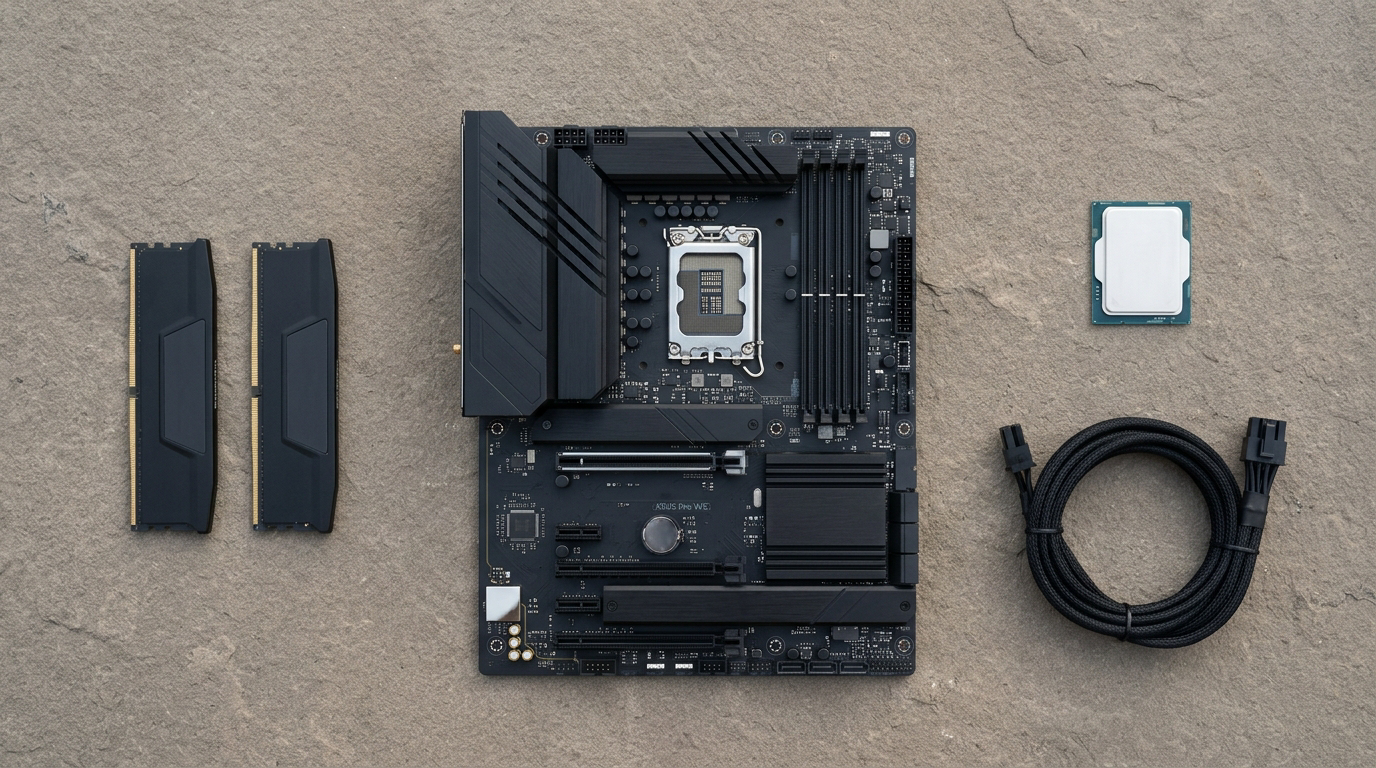
Core counts and maximum boost numbers printed on retail boxes rarely tell the real story inside modern game engines. Evaluating the best gaming cpu for your monitor and GPU budget requires looking past raw gigahertz into platform lifespan, cache architecture, real power envelopes, and total platform cost.
1. Platform Longevity: Socket AM5 vs. Intel LGA 1851 (Total Cost of Ownership)
Never evaluate a processor price in isolation—always add motherboard and memory costs into Total Cost of Ownership (TCO). AMD’s AM5 socket spans multiple processor waves from Ryzen 7000 through Ryzen 9000X3D and upcoming drop-in upgrades, meaning an entry B850 board paired with a #4 Ryzen 5 9600X today can smoothly accept a flagship X3D chip years later without touching RAM or reinstalling Windows. For mainstream builds, default to AMD B850 (mandatory PCIe 5.0 M.2, CPU/RAM overclocking, and 12+2 60A+ VRM stages) rather than overspending on X870E unless you require dual native USB4 ports—explore full VRM comparisons in our best AM5 motherboards guide.
By contrast, Intel’s LGA 1851 socket supporting Core Ultra 200S Arrow Lake and the Q1 2026 refresh line (such as the 24-core Core Ultra 7 270K Plus around $299 Launch MSRP) offers a shorter upgrade horizon. Furthermore, Intel reserves CPU multiplier overclocking exclusively for Z890 boards while locking CPU multiplier tuning on B860—so pairing an unlocked K-series chip like the #9 265K with B860 surrenders manual clock tuning despite retaining XMP memory control. Compare both platforms side by side in our Ryzen 7 9800X3D vs. Core Ultra 7 270K Plus audit.
2. Why 3D V-Cache Elevates 1% Lows, Draw Calls & Shader Compilation
Before your graphics card shades a single pixel, the CPU computes game physics, NPC AI, spatial audio, and GPU draw calls. Whenever CPU logic falls behind, GPU utilization drops below 95% and players experience micro-stuttering even if average framerates look high. Stacked 3D V-Cache (96MB L3 on single-CCD chips like #1 Ryzen 7 9800X3D and #2 Ryzen 7 9850X3D) keeps massive working game datasets directly on the die—slashing slow system-memory trips and lifting 1% Lows dramatically in esports, MMOs, and city-simulation titles.
Meanwhile, moving into new maps triggers rapid shader compilation and asset decompression bursts that benefit heavily from strong per-core IPC and 8 to 24 physical cores (#3 Ryzen 9 9950X3D, #6 Ryzen 7 9700X, #8 Core Ultra 9 285K). Relocating 2nd Gen 3D V-Cache underneath the Zen 5 CCD also fixed the thermal barrier of the older #5 Ryzen 7 7800X3D, unlocking full Precision Boost Overdrive tuning.
3. Real TDP vs. PPT / MTP Power Limits & Integrated Quick Sync Caveats
Two silent traps trip up DIY builders and prebuilt shoppers alike: misleading base TDP numbers and missing integrated graphics. Retail labels often list a gentle “125W TDP” on Core Ultra 7/9 chips or “120W–170W TDP” on Ryzen processors, yet actual sustained boost loads pull far higher PPT (Package Power Tracking: 162W on 9800X3D/9850X3D, 230W on 9950X3D) and MTP (Maximum Turbo Power: up to 250W on Core Ultra 7 265K and Core Ultra 9 285K). Always size dual-tower air coolers or 360mm AIO liquid coolers to peak PPT/MTP wattage—and skip undersized 120mm AIOs completely.
Equally important, pay close attention to suffix letters on Intel and AMD boxes. Choosing an iGPU-less “F” or “KF” model (such as Core Ultra 7 265F or 245KF) removes Intel’s Xe-LPG graphics engine—eliminating hardware Quick Sync video timeline acceleration in Premiere Pro and stripping away your backup video output if you ever need to diagnose a discrete GPU issue. Only accept F/KF parts in pure gaming rigs with sizable discounts.
4. DDR5 Sweet Spots & PCIe 5.0 Lane Budgets
DDR5 speed tuning splits sharply between platforms. On Socket AM5, target a 2-stick 32GB (2x16GB) DDR5-6000 CL30 kit with AMD EXPO certification—running at DDR5-6000 preserves a synchronous 1:1 UCLK:MCLK memory controller ratio near 10.0ns latency, whereas pushing above 6400 MT/s drops the controller into a half-rate 2:1 divider unless heavily tuned. On Intel LGA 1851, Arrow Lake prefers 2-stick DDR5-6400 CL32 or high-frequency CUDIMM 7200+ kits to offset tile interconnect latency. On both platforms, strictly avoid single-stick 1x16GB setups (which cripple bandwidth and 1% Lows) and 4-stick configurations (which force memory controllers down to sluggish speeds), and double-check that secondary M.2 slots on your motherboard do not steal PCIe 5.0 lanes and drop your primary GPU slot from x16 to x8.
5. Why “Bottleneck Percentage Calculators” Are Fiction & How to Audit GPU Pairing
Ignore online websites claiming your CPU and GPU suffer an “18.5% bottleneck”—no static percentage exists for any hardware pairing. The exact same Ryzen 5 9600X paired with an RTX 5080 behaves completely differently across workloads: playing Counter-Strike 2 at 1080p Low puts load squarely on the CPU (leaving GPU usage around 50%–60% at 400+ FPS), while playing Cyberpunk 2077 at 4K Ultra with Path Tracing flips the rig 99%–100% GPU-bound, where upgrading from a 9600X to a 9850X3D adds only single-digit average frames. Instead of guessing percentages, watch live GPU utilization inside MSI Afterburner, NVIDIA Overlay, or PresentMon at your target resolution: sustained 95%–100% GPU usage means your system extracts full graphics value, whereas sub-80% GPU load without frame caps points directly to a CPU cache, core, or single-channel memory limit.
6. Upgrade Roadmap, Hidden Ownership Costs & Sub-$300 Options
Factor three ancillary costs into your CPU shopping cart so checkout brings zero surprises: motherboard VRM adequacy (avoid bare-heatsink entry boards if running 170W–250W PPT/MTP parts), CPU cooler clearance (dual-tower air coolers work cleanly on 88W–162W AM5 chips, while 230W–250W flagships run quieter under 360mm AIOs), and fast two-DIMM DDR5 memory. Shopping strictly below $300? Compare our best gaming CPUs under $300 guide weighing Ryzen 5 9600X (#4), Ryzen 7 9700X (#6), Core Ultra 5 245K (#10), and the Core Ultra 7 270K Plus refresh, or check our Ryzen 7 9800X3D vs. 9850X3D clock audit before choosing your flagship.
How We Audited, Scored & Filtered These Gaming CPUs
Every processor above was verified in stock on Amazon US during November 2026 and scored strictly via technical specification and architecture audits against official AMD Ryzen, Intel ARK, and PCI-SIG engineering disclosures—never paid manufacturer placements. Read our full Editorial Evaluation Methodology and review our 100% weighted rubric below.
| Evaluation Criterion | Weight | What We Audited |
|---|---|---|
| Gaming Frame Rate & 1% Lows | 35% | 1080p/1440p throughput, 3D V-Cache size and stacking topology, shader compilation, and frametime consistency. |
| Platform Longevity & PCIe I/O | 25% | Socket AM5 multi-generation runway vs LGA 1851, DDR5 controller ratios, and usable CPU PCIe 5.0 lanes. |
| Multi-Core Creator Headroom | 20% | Thread count, simultaneous streaming/rendering speed, Intel Quick Sync acceleration, and integrated NPU features. |
| Power Efficiency & Thermal Behavior | 20% | Sustained PPT and MTP peak wattage, Precision Boost Overdrive undervolting potential, and cooler budget requirements. |
Models We Audited & Rejected (And Why)
- AMD Ryzen 7 8700F (OEM / Budget AM5): Frequently appears in budget prebuilts and low-cost Amazon listings, yet slices L3 cache down to 16MB (half of #4 Ryzen 5 9600X and one-sixth of X3D CPUs), trims usable PCIe 4.0 lanes to 16, and removes integrated graphics—making 9600X a vastly stronger DIY purchase.
- Legacy LGA 1700 CPUs (Intel Core i9-14900KF & Core i5-14600K): Despite sharp clearance discounts, LGA 1700 offers zero future CPU upgrade path, while the 14900KF pulls brutal 253W+ loads and frequently lands in prebuilt traps bolted onto under-spec B760 boards.
- iGPU-Less F & KF Chips for Hybrid Creators (e.g., Core Ultra 7 265F): Dropping integrated Xe-LPG graphics forfeits Intel Quick Sync hardware encoding in video editors and leaves builders without backup video troubleshooting if a discrete GPU fails to POST.
- Locked Intel B860 Motherboards Paired With K-Series CPUs: B860 locks CPU multiplier overclocking on unlocked K processors—buy Z890 if manual core overclocking matters on Intel Arrow Lake.
Frequently Asked Questions About Gaming CPUs
What is the best gaming CPU overall in 2026?
The AMD Ryzen 7 9800X3D is our #1 best gaming CPU overall thanks to its 96MB inverted 3D V-Cache, unlocked Precision Boost Overdrive headroom, and 162W PPT efficiency. Buyers chasing peak 5.6 GHz clocks for 360Hz+ esports can step up to the Ryzen 7 9850X3D.
Is AMD AM5 or Intel LGA 1851 better for gaming upgrades?
AMD Socket AM5 wins decisively for platform longevity because AMD supports multiple processor generations on B850 and X870 boards. You can start with a budget Ryzen 5 9600X today and drop in a flagship X3D chip years later without replacing your motherboard or DDR5 RAM.
Do I need a Ryzen 9000X3D CPU if I play games at 4K?
At 4K Ultra with heavy graphics settings, your GPU hits 95% to 100% usage first, narrowing average frame gaps between CPUs. However, 3D V-Cache processors like the Ryzen 7 9800X3D still protect 1% Lows and smooth out traversal and shader compilation stutters.
What DDR5 speed works best on Ryzen 9000 vs. Intel Core Ultra 200S?
Pair AMD Ryzen 9000 and X3D CPUs with a 2-stick 32GB (2x16GB) DDR5-6000 CL30 kit to hold a 1:1 UCLK:MCLK ratio near 10ns latency. Intel Core Ultra 200S on LGA 1851 scales cleanly with DDR5-6400 CL32 or high-speed CUDIMM 7200+ kits.
Why should I watch CPU PPT and MTP instead of base TDP when buying a cooler?
Base TDP (65W to 125W) only reflects sustained base clocks, whereas real gaming and rendering loads push Package Power Tracking (162W to 230W PPT on AM5) or Maximum Turbo Power (up to 250W MTP on Intel). Always size air coolers or 360mm AIOs to peak PPT/MTP.
Are online bottleneck percentage calculators reliable for pairing a CPU and GPU?
No—percentage bottleneck calculators are misleading because CPU versus GPU load shifts dynamically by game engine, resolution, and graphics settings. Monitor live GPU utilization instead: 95% to 100% GPU usage means balanced GPU-bound performance, whereas low GPU load signals a CPU or memory limit.
Final Verdict: Choosing the Best Gaming CPU for Your Build
Selecting the best gaming cpu in 2026 starts with matching your silicon to your refresh target and motherboard runway. Pure gamers and high-refresh esports players should buy our #1 AMD Ryzen 7 9800X3D—or grab the #2 Ryzen 7 9850X3D whenever promos narrow the price gap for 5.6 GHz peak clocks—while uncompromised 4K creators justify the 16-core #3 Ryzen 9 9950X3D. Value builders seeking upgradeable AM5 balance win with the #4 Ryzen 5 9600X, whereas multi-core Premiere editors wanting Quick Sync under $400 get standout horsepower from the #8 Intel Core Ultra 9 285K and sub-$200 #10 Core Ultra 5 245K.


