
Disclosure: As an Amazon Associate, I earn from qualifying purchases. If you buy through links on this page, we may earn a small commission at no extra cost to you.
Finding the best gaming SSD NVMe drive in 2026 requires separating real-world load behavior from inflated sequential marketing numbers. While next-generation PCIe 5.0 x4 controllers now push sequential reads close to 15,000 MB/s, a well-built PCIe 4.0 x4 drive equipped with 3D TLC NAND and dedicated DRAM cache delivers virtually identical game launch times and zero frame-rate penalty—while running cooler underneath standard motherboard thermal shields. Conversely, cutting corners on a DRAM-less QLC budget stick or an undersized 500GB module invites severe sustained write slowdowns during 150GB AAA patches.
Across The PC Audit hardware hub, we evaluated live November 2026 Amazon US inventory, OEM controller datasheets, endurance ratings, and heatsink compatibility across seven proven 2TB M.2 2280 contenders spanning mainstream gaming rigs and hybrid 4K/8K creator workstations. If you are debating whether to pay extra for Gen 5 bandwidth, start with our dedicated PCIe 5.0 vs. PCIe 4.0 SSD for gaming breakdown before picking your drive below.
In This Guide
Quick Picks: Best Gaming SSD NVMe Drives at a Glance
#1 Best Overall Gaming NVMe SSD
WD_BLACK 2TB SN850X NVMe SSD
7,300 MB/s PCIe 4.0 speed, 2GB LPDDR4 DRAM cache, 3D TLC NAND, and cool thermals with zero FPS deficit versus Gen 5. (Audit #1)
#2 Best PCIe 4.0 OS & Random IOPS SSD
Samsung SSD 990 PRO 2TB PCIe 4.0 M.2 2280
Up to 1.4M/1.55M random 4K IOPS, high Gen 4 power efficiency, and Samsung Magician firmware control. (Audit #2)
#4 Best Flagship PCIe 5.0 NVMe SSD
Samsung SSD 9100 PRO 2TB PCIe 5.0×4 M.2 2280
5nm Presto controller hitting 14,700 / 13,400 MB/s for hybrid gamers, 8K editors, and AI workflows. (Audit #4)
Side-by-Side Comparison: Best Gaming SSD NVMe Lineup
| NVMe SSD & Award | Best For | Interface & Peak Speed | NAND, DRAM & TBW | Link |
|---|---|---|---|---|
| WD_BLACK 2TB SN850X Best Overall | 95% of gaming builds | PCIe 4.0 x4 | 7,300 / 6,600 MB/s | 3D TLC | 2GB DRAM | 1,200 TBW | View on Amazon |
| Samsung SSD 990 PRO 2TB Best OS & Random IOPS | Combined OS + game drives | PCIe 4.0 x4 | 7,450 / 6,900 MB/s | V-NAND TLC | 2GB DRAM | 1,200 TBW | View on Amazon |
| Crucial T500 2TB Best Single-Sided Gen 4 | Mini-ITX rear slots & laptops | PCIe 4.0 x4 | 7,400 / 7,000 MB/s | 232L TLC | 2GB DRAM | 1,200 TBW | View on Amazon |
| Samsung SSD 9100 PRO 2TB Best Flagship PCIe 5.0 | Gaming + 8K video & AI datasets | PCIe 5.0 x4 | 14,700 / 13,400 MB/s | V-NAND TLC | 2GB LPDDR4X | 1,200 TBW | View on Amazon |
| WD_Black SN8100 2TB Fastest Read PCIe 5.0 | Single-sided 14,900 MB/s Gen 5 | PCIe 5.0 x4 | 14,900 / 11,000 MB/s | 3D CBA TLC | LPDDR4X DRAM | 1,200 TBW | View on Amazon |
| Crucial T705 2TB Best E26 Workstation Gen 5 | Heavy Gen 5 scratch with armor | PCIe 5.0 x4 | 14,500 / 12,700 MB/s | 232L TLC | 2GB DRAM | 1,200 TBW | View on Amazon |
| Corsair MP700 PRO 2TB Best High-TBW Creator Gen 5 | High-write 1,400 TBW discounts | PCIe 5.0 x4 | 12,400 / 11,800 MB/s | 232L TLC | 4GB DRAM | 1,400 TBW | View on Amazon |
Match Your Use Case: Which Gaming NVMe SSD Fits Your Rig?
| Buyer Scenario | Best Match | Why & Expected Outcome |
|---|---|---|
| Best value-per-TB gaming rig (1080p / 1440p / 4K) | WD_BLACK 2TB SN850X | Saves budget for your GPU while delivering full 7,300 MB/s PCIe 4.0 speed, 2GB DRAM cache, and zero FPS drop against Gen 5. |
| Primary Windows 11 OS + game boot drive | Samsung SSD 990 PRO 2TB | Maximizes PCIe 4.0 random 4K IOPS (up to 1.4M/1.55M) and pairs cleanly with Samsung Magician telemetry. |
| Mini-ITX rear M.2 slot or thin gaming laptop | Crucial T500 2TB | Single-sided 2TB M.2 2280 PCB avoids underside component clearance snags and runs cool under compact shields. |
| 4K/8K video editing, Unreal Engine & AI + gaming | Samsung SSD 9100 PRO 2TB | 5nm Presto controller sustains 14,700 / 13,400 MB/s transfers with cleaner thermal discipline than older Gen 5 chips. |
| Peak sequential read throughput on AM5 / Z890 | WD_Black SN8100 2TB | Silicon Motion SM2508 controller hits 14,900 MB/s sequential reads on a single-sided layout drawing ~6.4W–7.0W active power. |
| Heavy scratch workloads demanding 1,400 TBW | Corsair MP700 PRO 2TB | Stacks 4GB LPDDR4 DRAM cache and 1,400 TBW endurance rating for intense write cycles beneath robust motherboard cooling. |
Detailed Audits: Top 7 Gaming NVMe SSDs (2026)
1. WD_BLACK 2TB SN850X NVMe SSD — Best Overall Gaming NVMe SSD

Quick Specs: 2TB M.2 2280 (Bare / No Factory Heatsink) | PCIe 4.0 x4 NVMe | Up to 7,300 MB/s Read, 6,600 MB/s Write | 1,200K / 1,100K Random 4K IOPS | 3D TLC NAND + 2GB LPDDR4 DRAM Cache | 1,200 TBW | 5-Year Limited Warranty (WDS200T2X0E) | Price Tier: High-value mid-range
Audit Score: 9.5 / 10
- Sustained Random I/O & Load Realities (30%): 9.3 / 10
- NAND Flash Type & DRAM Cache (30%): 9.6 / 10
- Thermal Control & Heatsink Design (20%): 9.5 / 10
- Endurance (TBW) & Cost per TB (20%): 9.6 / 10
Smart storage allocation means refusing to pay enthusiast Gen 5 tax for zero framerate benefit, and the WD_BLACK 2TB SN850X NVMe SSD (WDS200T2X0E) remains the undisputed value king for 2026 gaming builds. Pairing Western Digital and SanDisk 3D TLC NAND with 2GB of dedicated LPDDR4 DRAM cache, the SN850X pushes up to 7,300 MB/s sequential reads, 6,600 MB/s writes, and 1.2 million random 4K IOPS. Crucially, it supports Microsoft DirectStorage decompression cleanly, keeping level streaming and shader caches fast without the thermal headaches of 14,000+ MB/s Gen 5 controllers.
Against #2 Samsung 990 PRO (7,450 MB/s read, up to 1.55M write IOPS), the SN850X trails slightly in synthetic mixed-IOPS ceilings and Samsung Magician tooling, yet wins first place overall because it regularly offers a friendlier cost per terabyte while delivering identical real-world game load timers. Compared directly with our #4 flagship PCIe 5.0 pick in our Samsung 9100 Pro vs. WD Black SN850X head-to-head comparison, keeping a 2TB SN850X leaves budget headroom for a stronger GPU or 32GB DDR5-6000 CL30 memory kit with zero frame-rate compromise.
Buyer Verification Alert: ASIN B0B7CMZ3QH is the bare M.2 2280 variant without a pre-installed heatsink. That fits desktop AMD B850, X870, and Intel B860/Z890 motherboards equipped with integrated M.2 shields—if your motherboard or PS5 lacks a heatsink, select the separate heatsink SKU.
Pros
- Unmatched cost-per-terabyte value among flagship 2TB PCIe 4.0 x4 DRAM+TLC drives
- Cool thermal footprint under basic motherboard M.2 armor without thermal throttling
- 1,200 TBW endurance and 5-year limited warranty handle years of heavy AAA patching
Cons
- PCIe 4.0 x4 bus trails Gen 5 picks (#4–#7) during 100GB+ raw video file copies
- Random 4K IOPS top out below #2 Samsung 990 PRO under heavy OS multitasking
Verdict: Buy it if you want the smartest overall 2TB gaming SSD balancing cool thermals, true 3D TLC + 2GB DRAM durability, and zero-FPS-loss parity with costly Gen 5 models. Skip it only if you regularly ingest massive 8K media or AI datasets (#4 Samsung 9100 PRO). Setup tip: Seat it inside your CPU-wired primary M.2 slot under motherboard armor and preserve ~20% free capacity.
2. Samsung SSD 990 PRO 2TB PCIe 4.0 M.2 2280 — Best PCIe 4.0 OS & Random IOPS SSD

Quick Specs: 2TB M.2 2280 (MZ-V9P2T0B/AM) | PCIe 4.0 x4 NVMe 2.0 | Up to 7,450 MB/s Read, 6,900 MB/s Write | 1,400K / 1,550K Random 4K IOPS | Samsung V-NAND TLC + 2GB LPDDR4 DRAM Cache | 1,200 TBW | 5-Year Limited Warranty | Price Tier: High-value mid-range
Audit Score: 9.4 / 10
- Sustained Random I/O & Load Realities (30%): 9.5 / 10
- NAND Flash Type & DRAM Cache (30%): 9.6 / 10
- Thermal Control & Heatsink Design (20%): 9.4 / 10
- Endurance (TBW) & Cost per TB (20%): 9.0 / 10
When a single 2TB SSD handles both Windows 11 OS background workloads and an active AAA library simultaneously, random 4K IOPS responsiveness matters far more than sequential headline throughput. According to official Samsung Semiconductor storage specifications, the Samsung SSD 990 PRO 2TB (MZ-V9P2T0B/AM) saturates the PCIe 4.0 x4 bus up to 7,450 MB/s read and 6,900 MB/s write while pushing an exceptional 1,400K random read and 1,550K random write IOPS. A nickel-coated in-house controller paired with a copper rear heatspreader label keeps operating power remarkably lean.
Backing up that speed is 2GB of low-power LPDDR4 DRAM cache and V-NAND TLC NAND rated for 1,200 TBW endurance, plus easy microcode updates and SMART health verification inside Samsung Magician. Compared directly with #1 WD_BLACK SN850X, the 990 PRO hits higher random I/O numbers and stronger power efficiency, ranking second solely because WD often undercuts it on street discounts. Against #3 Crucial T500, Samsung retains superior sustained write recovery and software polish.
Buyer Verification Alert: Check firmware version inside Samsung Magician immediately after installing Windows—keeping current controller firmware guarantees accurate SMART wear telemetry across multi-year ownership.
Pros
- Class-leading PCIe 4.0 random I/O (1,400K read / 1,550K write IOPS) for snappy OS + game multitasking
- High Gen 4 power efficiency paired with nickel-plated controller thermal control
- Polished Samsung Magician utility for one-click firmware patches and drive diagnostics
Cons
- Typically costs slightly more per gigabyte than #1 WD_BLACK SN850X with identical gaming load timers
- Requires running Samsung Magician out of the box to verify latest production firmware
Verdict: Buy it if you want the sharpest all-in-one PCIe 4.0 OS and gaming drive with best-in-class random IOPS and Magician firmware management. Skip it if #1 WD_BLACK SN850X sits noticeably cheaper on checkout day or you want single-sided clearances for a tight rear ITX slot (#3 Crucial T500). Install note: Mount beneath your motherboard’s M.2 thermal shield after peeling the thermal pad film.
3. Crucial T500 2TB PCIe Gen4 NVMe M.2 SSD — Best Single-Sided Gen 4 Gaming SSD
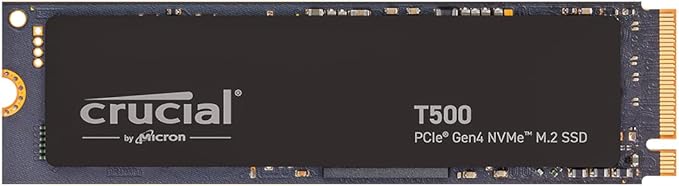
Quick Specs: 2TB M.2 2280 Single-Sided (CT2000T500SSD8) | PCIe 4.0 x4 NVMe 2.0 | Up to 7,400 MB/s Read, 7,000 MB/s Write | Phison PS5025-E25 | Micron 232-Layer 3D TLC + 2GB LPDDR4 DRAM Cache | 1,200 TBW | 5-Year Limited Warranty | Price Tier: High-value mid-range
Audit Score: 9.3 / 10
- Sustained Random I/O & Load Realities (30%): 9.2 / 10
- NAND Flash Type & DRAM Cache (30%): 9.4 / 10
- Thermal Control & Heatsink Design (20%): 9.5 / 10
- Endurance (TBW) & Cost per TB (20%): 9.1 / 10
Compact Mini-ITX motherboards and slim gaming laptops frequently punish thick double-sided NVMe modules that press awkwardly against rear standoffs or battery brackets. Engineered by Crucial on a clean single-sided M.2 2280 PCB, the Crucial T500 2TB (CT2000T500SSD8) eliminates back-side component interference while pushing full Gen 4 performance: up to 7,400 MB/s sequential read and 7,000 MB/s sequential write speeds.
Inside, Crucial pairs a power-frugal Phison PS5025-E25 controller with high-density Micron 232-layer TLC NAND, 2GB of LPDDR4 DRAM cache, and a 1,200 TBW endurance ceiling. While its peak 7,400 / 7,000 MB/s ratings edge #1 WD_BLACK SN850X on paper, #1 SN850X and #2 Samsung 990 PRO retain noticeably stronger post-pSLC cache write speeds during uninterrupted 200GB+ transfers. For pure game loading, OS boot responsiveness, and tight SFF thermal envelopes, however, the T500 stands among the cleanest PCIe 4.0 engineering packages sold.
Buyer Verification Alert: Verify the exact CT2000T500SSD8 SKU (non-heatsink) when installing into laptops, Mini-ITX rear slots, or motherboards with factory M.2 shields—Crucial sells a thicker heatsink variant separately.
Pros
- True single-sided 2TB M.2 2280 layout clears tight rear ITX M.2 bays and slim laptop brackets
- Full 7,400 / 7,000 MB/s Gen 4 throughput backed by 232-layer Micron TLC and 2GB LPDDR4 DRAM
- Efficient Phison E25 controller keeps operating temperatures low under passive cooling
Cons
- Post-pSLC sustained sequential writes slow down more noticeably than #1 SN850X and #2 990 PRO
- Software suite lacks specialized latency presets like WD Dashboard’s Game Mode 2.0
Verdict: Buy it if you are outfitting a Mini-ITX rear M.2 slot, gaming laptop, or power-sensitive desktop where single-sided 2TB fit and cool efficiency shine. Skip it if your workflow regularly fills huge multi-hundred-gigabyte write queues in one sitting (#1 SN850X / #2 990 PRO). Upgrade tip: Ideal secondary 2TB library drive on crowded SFF boards.
4. Samsung SSD 9100 PRO 2TB PCIe 5.0×4 M.2 2280 — Best Flagship PCIe 5.0 NVMe SSD

Quick Specs: 2TB M.2 2280 (MZ-VAP2T0B/AM) | PCIe 5.0 x4 NVMe 2.0 | Up to 14,700 MB/s Read, 13,400 MB/s Write | 1,850K / 2,600K Random 4K IOPS | Samsung 5nm Presto Controller | V-NAND TLC + 2GB LPDDR4X DRAM | 1,200 TBW | 5-Year Limited Warranty | Price Tier: Enthusiast tier
Audit Score: 9.1 / 10
- Sustained Random I/O & Load Realities (30%): 9.8 / 10
- NAND Flash Type & DRAM Cache (30%): 9.6 / 10
- Thermal Control & Heatsink Design (20%): 8.4 / 10
- Endurance (TBW) & Cost per TB (20%): 7.8 / 10
First-wave Gen 5 drives earned a reputation for scorching hot temperatures and loud miniature cooling fans, which is why Samsung engineered its 5nm Presto controller for the Samsung SSD 9100 PRO 2TB (MZ-VAP2T0B/AM). Built to harness the 32 GT/s signaling ceiling defined in the PCI-SIG PCIe 5.0 architecture specification, the 9100 PRO delivers up to 14,700 MB/s sequential reads, 13,400 MB/s sequential writes, and towering random 4K throughput up to 1,850K read and 2,600K write IOPS while consuming dramatically less power than older 12nm Gen 5 designs.
Why does a 14,700 MB/s powerhouse finish fourth behind three PCIe 4.0 drives in a gaming guide? Economics and diminishing returns. As detailed in our Samsung 9100 Pro vs. WD Black SN850X audit, Gen 5 throughput adds 0 FPS in rasterization or ray tracing and trims game loads by roughly 0 to 2 seconds—meaning pure gamers see better returns keeping #1 SN850X. Against Gen 5 rivals, however, Samsung takes the top Gen 5 crown: its 5nm Presto chip runs noticeably cooler than #6 Crucial T705 and #7 Corsair MP700 PRO, while outrating #5 WD_BLACK SN8100 on sequential writes (13,400 vs. 11,000 MB/s on this retail SKU).
Buyer Verification Alert: Do not run the bare MZ-VAP2T0B/AM module exposed without a motherboard M.2 heatsink, and double-check your B850, X870, or Z890 motherboard block diagram so secondary Gen 5 M.2 slots never force your GPU x16 slot down to x8.
Pros
- 5nm Presto controller achieves 14,700 / 13,400 MB/s speeds with markedly improved Gen 5 thermal efficiency
- Massive 1,850K / 2,600K random 4K IOPS accelerate Unreal Engine builds, 8K scrubbing, and AI model loading
- 2GB LPDDR4X DRAM cache, V-NAND TLC, 1,200 TBW rating, and Samsung Magician firmware diagnostics
Cons
- Enthusiast cost per TB adds zero extra FPS and minimal real-world load advantage over #1 SN850X
- Still relies on solid motherboard Gen 5 M.2 thermal armor during sustained multi-hundred-gigabyte writes
Verdict: Buy it if you want the strongest all-around PCIe 5.0 NVMe SSD for a hybrid high-end gaming + 8K video or AI workstation on AM5 B850/X870E or Intel Z890. Skip it if your PC is strictly for gaming (#1 WD_BLACK SN850X / #2 Samsung 990 PRO). Install note: Populate only the primary CPU-direct PCIe 5.0 x4 M.2 slot.
5. WD_Black SN8100 2TB NVMe SSD PCIe 5.0×4 M.2 2280 — Fastest Peak Read PCIe 5.0 SSD

Quick Specs: 2TB M.2 2280 Single-Sided (WDS200T1X0M) | PCIe 5.0 x4 NVMe 2.0 | Up to 14,900 MB/s Read, 11,000 MB/s Write | Silicon Motion SM2508 Controller | TLC 3D CBA NAND + LPDDR4X DRAM | 6.4W Avg. Active Read / 7.0W Write | 1,200 TBW | 5-Year Limited Warranty | Price Tier: Enthusiast tier
Audit Score: 9.0 / 10
- Sustained Random I/O & Load Realities (30%): 9.7 / 10
- NAND Flash Type & DRAM Cache (30%): 9.5 / 10
- Thermal Control & Heatsink Design (20%): 8.5 / 10
- Endurance (TBW) & Cost per TB (20%): 7.7 / 10
Built on Silicon Motion’s modern 6nm SM2508 controller and Western Digital / SanDisk 3D CBA TLC NAND, the WD_Black SN8100 2TB (WDS200T1X0M) pushes the highest sequential read speed in this entire guide—reaching 14,900 MB/s right up against the practical ceiling of a PCIe 5.0 x4 link. Even more impressive for builders tired of double-sided thermal nightmares, the SN8100 achieves 2TB capacity on a single-sided M.2 2280 PCB sipping roughly 6.4W average read power and 7.0W average write power with dedicated LPDDR4X DRAM cache.
Squaring off against #4 Samsung 9100 PRO, the WD_Black SN8100 claims a narrow 200 MB/s edge in peak sequential reads (14,900 vs. 14,700 MB/s) and cleaner single-sided rear thermal clearance, while clearly besting hot first-gen Phison E26 drives (#6 Crucial T705 and #7 Corsair MP700 PRO) on power-per-watt thermals. Samsung holds fourth place overall thanks to higher listed sequential write speeds (13,400 vs. 11,000 MB/s on this specific Amazon SKU) and Magician software management—though price swings on Amazon can easily tip enthusiast buyers either way.
Buyer Verification Alert: Check your motherboard manual before mounting: plugging the SN8100 into a secondary chipset M.2 slot wired at PCIe 4.0 x4 immediately caps its 14,900 MB/s interface at ~7,400 MB/s.
Pros
- Top 14,900 MB/s sequential read ceiling leads every drive audited in this lineup
- 6nm SM2508 controller keeps active power disciplined (~6.4W read / 7.0W write) vs. older Gen 5 chips
- Single-sided 2TB PCB with LPDDR4X DRAM seats flush beneath motherboard M.2 thermal armor
Cons
- Enthusiast Gen 5 cost yields practically zero real-world gaming load speed edge over #1 SN850X
- This SKU rates sequential write speed at 11,000 MB/s versus 13,400 MB/s on #4 Samsung 9100 PRO
Verdict: Buy it if you want cool-running single-sided PCIe 5.0 architecture with the highest 14,900 MB/s read ceiling for read-heavy AI datasets, asset streaming, or creator rigs when priced below #4 Samsung 9100 PRO. Skip it for pure gaming value (#1 SN850X / #2 990 PRO). Cooling note: Still pair with your motherboard’s factory M.2 shield.
6. Crucial T705 2TB PCIe Gen5 NVMe M.2 SSD — Best Phison E26 Workstation Gen 5 SSD
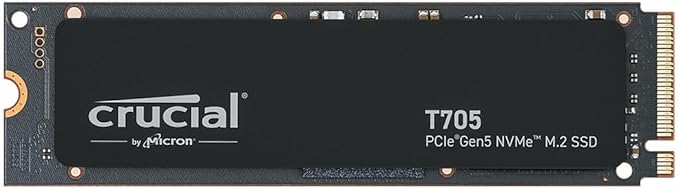
Quick Specs: 2TB M.2 2280 Bare (CT2000T705SSD3) | PCIe 5.0 x4 NVMe 2.0 | Up to 14,500 MB/s Read, 12,700 MB/s Write | Phison PS5026-E26 Controller | Micron 232-Layer 3D TLC + 2GB LPDDR4 DRAM Cache | 1,200 TBW | 5-Year Limited Warranty | Price Tier: Enthusiast tier
Audit Score: 8.6 / 10
- Sustained Random I/O & Load Realities (30%): 9.4 / 10
- NAND Flash Type & DRAM Cache (30%): 9.4 / 10
- Thermal Control & Heatsink Design (20%): 7.2 / 10
- Endurance (TBW) & Cost per TB (20%): 7.8 / 10
Before 5nm and 6nm controllers arrived, the Crucial T705 2TB (CT2000T705SSD3) pushed Phison’s E26 Gen 5 platform to its absolute peak, pairing Micron 232-layer 3D TLC NAND and 2GB LPDDR4 DRAM cache to deliver 14,500 MB/s sequential reads and 12,700 MB/s sequential writes. That aggressive tuning outpaces our #7 Corsair MP700 PRO by 2,100 MB/s on sequential reads while delivering 1,200 TBW endurance and full Microsoft DirectStorage compatibility.
However, the Phison PS5026-E26 controller pays a steep thermal tax under sustained high-queue workloads. Without a thick motherboard M.2 armor block or active chassis airflow sweeping across the primary slot, E26 drives hit thermal throttling thresholds far earlier than #4 Samsung 9100 PRO or #5 WD_BLACK SN8100. Because this exact ASIN (B0CTRVZKG7 / CT2000T705SSD3) is the bare version without Crucial’s tall finned heatsink, it fits seamlessly under massive X870E/Z890 motherboard heatsinks without blocking dual-tower CPU air coolers—making it a viable workstation buy primarily when retail discounts drop it meaningfully below newer 5nm/6nm Gen 5 competition.
Buyer Verification Alert: Crucial explicitly requires cooling for CT2000T705SSD3—never install this bare E26 module without attaching your motherboard’s M.2 heatsink (and avoid Crucial’s separate tall SSD5 heatsink model if running a wide dual-tower air cooler).
Pros
- Blistering 14,500 / 12,700 MB/s Gen 5 throughput outperforms #7 Corsair MP700 PRO by over 2,000 MB/s read
- Proven Micron 232-layer 3D TLC NAND paired with 2GB LPDDR4 DRAM and 1,200 TBW warranty
- Bare CT2000T705SSD3 form factor avoids tall-heatsink clearance collisions near CPU air coolers
Cons
- Phison E26 controller runs hot under heavy writes and throttles fast if motherboard armor is weak
- Trails #4 Samsung 9100 PRO and #5 WD_BLACK SN8100 in power efficiency unless steeply discounted
Verdict: Buy it if you spot an aggressive sale well below #4 Samsung 9100 PRO and your ATX motherboard features an oversized M.2 Gen 5 heatsink block for heavy dataset transfers. Skip it for typical gaming builds (#1 SN850X) or thermally constrained compact cases (#3 Crucial T500 / #5 SN8100). Thermal tip: Verify solid thermal pad contact on both top and bottom faces.
7. Corsair MP700 PRO 2TB M.2 PCIe Gen5 x4 NVMe 2.0 SSD — Best High-TBW Creator Gen 5 SSD

Quick Specs: 2TB M.2 2280 Bare (CSSD-F2000GBMP700PNH) | PCIe 5.0 x4 NVMe 2.0 | Up to 12,400 MB/s Read, 11,800 MB/s Write | 1,500K / 1,600K Random 4K IOPS | Phison PS5026-E26 | Micron 232-Layer 3D TLC + 4GB LPDDR4 DRAM | 1,400 TBW | 5-Year Limited Warranty | Price Tier: Enthusiast tier
Audit Score: 8.5 / 10
- Sustained Random I/O & Load Realities (30%): 9.0 / 10
- NAND Flash Type & DRAM Cache (30%): 9.6 / 10
- Thermal Control & Heatsink Design (20%): 7.1 / 10
- Endurance (TBW) & Cost per TB (20%): 7.7 / 10
Rounding out our seven audited drives is the Corsair MP700 PRO 2TB (ASIN B0CM42DVBR), which distinguishes itself from standard 2TB Gen 5 specifications in two endurance-focused ways per Corsair storage specifications. First, Corsair doubles standard LPDDR4 DRAM cache allocation to a spacious 4GB (2GB per terabyte), keeping FTL mapping rapid under multi-stream workloads. Second, it carries a standout 1,400 TBW endurance rating—200 TBW higher than every other 2TB contender in this roundup.
Still, the MP700 PRO places seventh because its 12,400 MB/s read and 11,800 MB/s write ceilings trail #4 Samsung 9100 PRO (14,700 / 13,400 MB/s), #5 WD_BLACK SN8100 (14,900 MB/s read), and #6 Crucial T705 (14,500 / 12,700 MB/s) while inheriting the same demanding Phison E26 heat profile as the T705. For standard gaming rigs, #1 WD_BLACK SN850X remains vastly smarter; consider the MP700 PRO primarily when deep retail markdowns make it an affordable entry point into high-endurance PCIe 5.0 scratch storage.
Buyer Verification Alert: ASIN B0CM42DVBR ships as the bare drive without Corsair’s active air cooler fan or Hydro X liquid block—do not install it into an uncooled motherboard slot.
Pros
- Oversized 4GB LPDDR4 DRAM cache enhances heavy random lookup consistency
- 1,400 TBW endurance ceiling beats every 1,200 TBW 2TB drive in this audit
- Strong 1.5M / 1.6M random 4K IOPS paired with Microsoft DirectStorage support
Cons
- 12,400 / 11,800 MB/s bandwidth trails newer 14,500+ MB/s Gen 5 flagships (#4–#6)
- Phison E26 power draw demands stout motherboard M.2 armor to avoid thermal throttling
Verdict: Buy it if you heavily churn through raw video scratch writes, value 4GB DRAM + 1,400 TBW longevity, and catch it priced meaningfully below #4 Samsung 9100 PRO and #5 SN8100. Skip it at full enthusiast pricing or for pure gaming (#1 SN850X). Install note: Mount directly under a heavy motherboard Gen 5 heatsink with clean airflow across the slot.
Buying Guide: How to Choose the Best Gaming SSD NVMe Drive
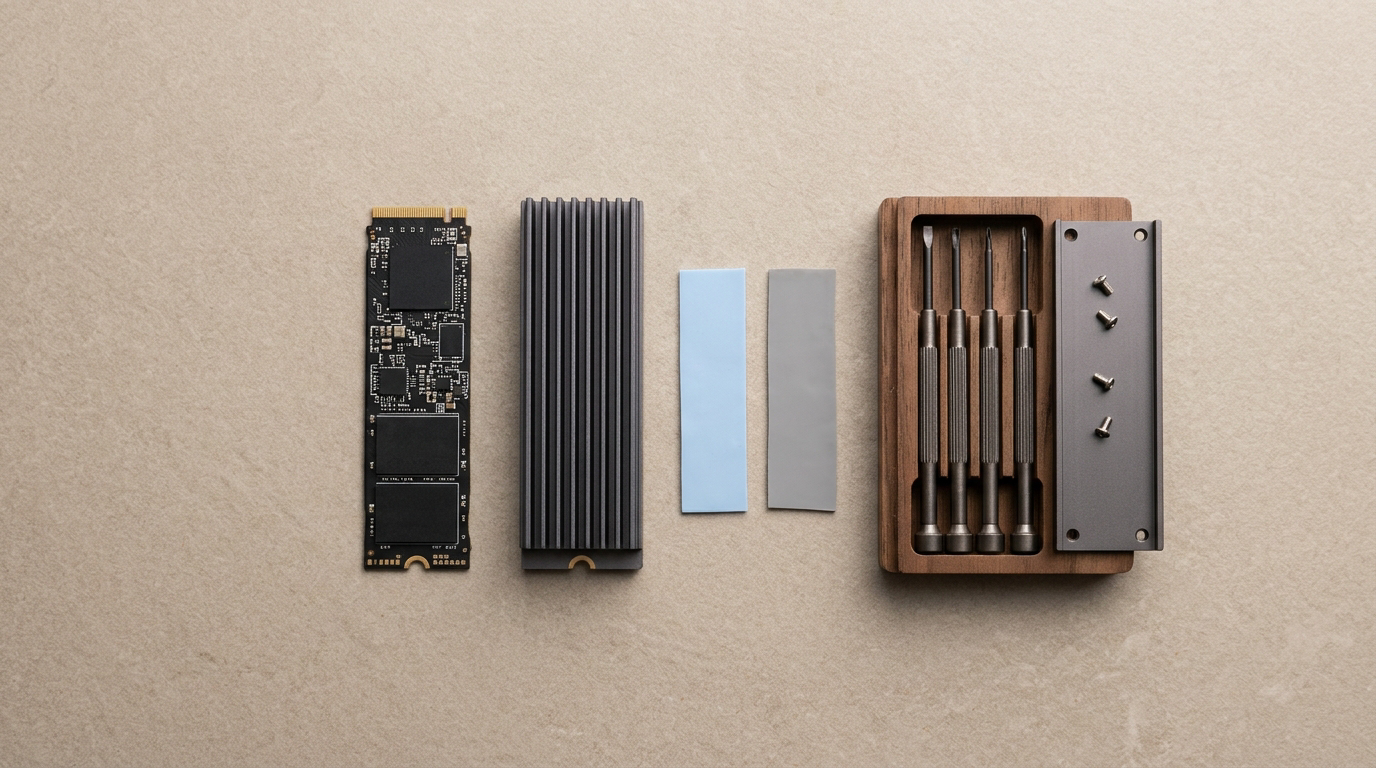
Storage rarely prints flashy “+30 FPS” benchmark numbers on a chart like a graphics card upgrade, yet picking the wrong solid-state drive quietly cripples your gaming experience with slow patch installs, hitching shader compilations, and premature flash wear. Evaluating the best gaming SSD NVMe hardware in 2026 comes down to six technical rules.
1. PCIe 5.0 vs. PCIe 4.0 in Real-World Gaming (And DirectStorage)
Although PCIe 5.0 x4 doubles per-lane electrical signaling over PCIe 4.0 x4 (allowing #4 Samsung 9100 PRO and #5 WD_BLACK SN8100 to hit 14,700–14,900 MB/s), real-world PC games almost never read data in continuous multi-gigabyte sequential blocks. Instead, game engines stream thousands of tiny compressed assets, shaders, and audio banks via random 4K IOPS. As documented in our PCIe 5.0 vs. PCIe 4.0 SSD for gaming comparison, moving from a 7,300 MB/s Gen 4 drive (#1 SN850X) to a 14,700 MB/s Gen 5 drive yields 0 FPS difference and trims typical level loads by roughly 0 to 2 seconds.
Even with Microsoft DirectStorage offloading compressed texture decompression straight to GPU VRAM, both Gen 4 x4 and Gen 5 x4 NVMe drives feed the pipeline effortlessly. Save PCIe 5.0 budgets for hybrid rigs regularly copying 100GB+ 4K/8K timelines or loading local AI weights.
2. DRAM Cache vs. DRAM-Less HMB: Why Your OS Drive Needs DRAM
Every solid-state drive relies on a Flash Translation Layer (FTL) map tracking where scattered data blocks reside across physical NAND cells. Flagship drives like all seven models audited above include dedicated LPDDR4 or LPDDR4X DRAM cache right on the SSD PCB—delivering nanosecond map lookups that keep Windows 11 updates, Steam patching, and background telemetry smooth. Budget DRAM-less drives rely instead on Host Memory Buffer (HMB), borrowing a tiny slice of system RAM over the PCIe bus. While DRAM-less HMB drives work acceptably as cheap secondary game vaults, read our DRAM cache vs. DRAM-less HMB SSDs explainer to see why dedicated DRAM remains the gold standard for primary OS + game installations.
3. 3D TLC vs. QLC NAND, pSLC Caching & TBW Endurance
Never judge an SSD solely by its shiny box speed before checking what happens once its dynamic pSLC cache fills up during a 150GB game download. Modern TLC NAND (3 bits per cell) delivers two to three times the write-erase longevity (TBW endurance) of QLC NAND (4 bits per cell)—hitting 1,200 to 1,400 TBW across every 2TB drive ranked here. When QLC drives exceed 70% full and exhaust their temporary pSLC write buffer, sustained write speeds frequently collapse down to ~100–200 MB/s—slower than a decade-old mechanical hard disk. Dive deeper into endurance curves in our TLC vs. QLC NAND SSDs for gaming guide.
4. Thermal Throttling, M.2 Armor Fit & Lane-Sharing Traps
Notice that all seven SKUs recommended in this roundup are bare M.2 2280 sticks without tall factory coolers attached. Almost every modern AMD B850, X870/X870E, and Intel B860/Z890 motherboard already includes machined aluminum M.2 thermal armor with pre-applied thermal pads. Buying a drive with a bulky factory heatsink creates instant interference against motherboard shields or wide twin-tower CPU air coolers—whereas mounting a bare drive underneath your board’s shield prevents controller thermal throttling cleanly, especially on hot Phison E26 Gen 5 models (#6 T705 and #7 MP700 PRO).
Also inspect your motherboard manual’s block diagram before filling secondary M.2 bays: several X870 and B850 layouts share CPU PCIe 5.0 lanes between secondary M.2 slots and the top graphics card slot, silently cutting GPU bandwidth from PCIe x16 down to x8 when an extra M.2 drive is seated.
5. Capacity Planning: 500GB vs. 1TB vs. 2TB vs. 4TB
Modern AAA PC releases regularly demand 100GB to 180GB each alongside uncompressed audio and high-resolution texture packs. A 500GB drive chokes almost immediately after Windows 11 plus two or three major games; treat 1TB strictly as a minimum floor for tight entry builds under $1,000. Two terabytes (2TB) hits the 2026 gaming sweet spot—storing Windows, creative apps, and 10 to 15 blockbuster titles while preserving the crucial ~20% free-space buffer (~400GB) that keeps pSLC caching and wear-leveling healthy. Step up to 4TB only when archiving sprawling simulation libraries or raw 4K/8K footage locally.
6. Upgrade Roadmap & Secondary Intent: 2TB PCIe 4.0 vs. 1TB PCIe 5.0
A common upgrade dilemma catches builders spending inside a fixed storage budget: should you buy a 1TB PCIe 5.0 flagship or a 2TB PCIe 4.0 DRAM+TLC drive for roughly similar money? Always choose the 2TB PCIe 4.0 DRAM+TLC option (#1 WD_BLACK SN850X, #2 Samsung 990 PRO, or #3 Crucial T500). Doubling usable capacity eliminates constant game uninstalls while giving you zero gaming framerate disadvantage and cooler operation.
Over time, the cleanest multi-drive upgrade roadmap pairs a fast 2TB DRAM+TLC primary drive (#1 or #2) inside your CPU-wired primary M.2 slot for Windows 11 and active competitive/AAA titles, then adds a secondary 2TB–4TB M.2 SSD later into a chipset-wired slot (checking your manual to avoid GPU lane-sharing) as your Steam and Epic Games backlog grows.
How We Audited, Scored & Filtered These Gaming NVMe SSDs
Every NVMe drive featured above was verified in active November 2026 US retail stock and audited strictly against manufacturer architecture datasheets, endurance specs, and motherboard clearance constraints—never sponsored placements or paid rankings. We cross-checked controller nodes, DRAM allocations, NAND cell tiers, and protocol specs against Samsung Semiconductor datasheets, PCI-SIG PCIe 5.0 specifications, Microsoft DirectStorage documentation, and OEM product portals from SanDisk / WD, Crucial, and Corsair. Read our full Editorial Evaluation Methodology and weighted scoring rubric below.
| Evaluation Criterion | Weight | What We Audited |
|---|---|---|
| Sustained Random I/O & Load Realities | 30% | Random 4K IOPS throughput, Microsoft DirectStorage readiness, and real-world Windows responsiveness and game load speed. |
| NAND Flash Type & DRAM Cache | 30% | 3D TLC NAND endurance versus QLC write cliffs, plus dedicated LPDDR4/LPDDR4X DRAM cache for FTL address stability. |
| Thermal Control & Heatsink Design | 20% | Controller active power draw (5nm/6nm vs. 12nm E26), sustained thermal throttling margin, and clean motherboard M.2 armor fit. |
| Endurance (TBW) & Cost per TB | 20% | Rated TBW warranty coverage (1,200 to 1,400 TBW), 5-year brand warranty, and practical 2TB value across PCIe 4.0 vs. 5.0. |
Drives We Audited & Rejected (And Why)
- DRAM-less QLC NVMe SSDs Pitched as Primary OS + Gaming Drives: QLC flash combined with Host Memory Buffer (HMB) delivers roughly half to one-third the TBW endurance of TLC and collapses toward mechanical hard-drive speeds (~100–200 MB/s) once pSLC buffers fill past 70% drive capacity.
- 500GB NVMe SSDs in 2026 Desktop Builds: With single AAA games routinely claiming 100GB to 180GB, 500GB drives fill almost immediately and lack the 20% empty reserve needed to keep wear-leveling and garbage collection healthy.
- Oversized Factory-Heatsink Gen 5 Drives in Air-Cooled Rigs: Tall active or finned retail coolers often collide with dual-tower CPU heatsinks or force builders to discard motherboard M.2 armor plates—bare M.2 2280 models install cleaner underneath modern board shields.
- Legacy PCIe 3.0 Drives Priced Near Mainstream PCIe 4.0 TLC Units: Capped near 3,500 MB/s without meaningful retail savings, legacy Gen 3 drives are easily outclassed on speed and longevity by #1–#3 7,000+ MB/s Gen 4 DRAM+TLC picks.
Frequently Asked Questions About Gaming SSD NVMe Drives
Is a PCIe 5.0 NVMe SSD actually faster for gaming than a PCIe 4.0 SSD in 2026?
For 95% of PC gamers, a quality PCIe 4.0 DRAM+TLC drive loads games within 0 to 2 seconds of a PCIe 5.0 flagship and produces zero FPS difference. Both generations support Microsoft DirectStorage smoothly, so Gen 5 only pays off if you regularly transfer 100GB+ video or AI datasets.
Does an NVMe SSD need dedicated DRAM cache for PC gaming?
Dedicated DRAM cache is strongly recommended for your primary Windows OS and main game drive. DRAM holds the Flash Translation Layer (FTL) mapping table at nanosecond speeds, sustaining snappy random 4K IOPS and write longevity compared with budget DRAM-less HMB drives suited mainly for secondary game storage.
Should I buy TLC or QLC NAND for a gaming NVMe SSD?
Always prioritize 3D TLC NAND for your primary OS and active game drive. TLC delivers two to three times higher TBW endurance than QLC and avoids severe write-speed collapses down to ~100–200 MB/s once pSLC caches saturate during large 100GB+ game patches and installs.
What SSD capacity is best for a 2026 gaming PC: 1TB, 2TB, or 4TB?
Two terabytes (2TB) is the 2026 gaming sweet spot. Modern AAA titles consume 100GB to 180GB each, meaning 500GB chokes immediately and 1TB fills within four to five big releases, whereas 2TB holds 10–15 titles comfortably while keeping ~20% free space for SSD health.
Should I buy an NVMe SSD with or without a pre-installed heatsink?
Buy a bare M.2 2280 drive without a factory heatsink if your AMD B850/X870 or Intel B860/Z890 motherboard already includes built-in M.2 thermal armor. Oversized retail heatsinks often clash with motherboard shields or overhanging dual-tower CPU air coolers.
Can installing a second PCIe 5.0 M.2 SSD slow down my graphics card?
Yes—on certain motherboards, populating extra PCIe 5.0 M.2 slots shares CPU lanes and drops your primary graphics card slot from PCIe x16 down to x8. Always consult your motherboard manual’s block diagram before choosing which M.2 slot houses a secondary SSD.
Final Verdict: Picking the Best Gaming SSD NVMe Drive
Choosing the best gaming SSD NVMe drive in 2026 comes down to prioritizing 3D TLC NAND, dedicated DRAM cache, and practical 2TB capacity over headline Gen 5 megabytes-per-second numbers. Most desktop gamers should buy our #1 WD_BLACK 2TB SN850X NVMe SSD for its winning balance of 7,300 MB/s throughput, cool behavior beneath motherboard shields, 1,200 TBW endurance, and unbeatable frames-per-dollar value—or step to #2 Samsung SSD 990 PRO 2TB for peak Gen 4 random 4K IOPS and Magician tooling, and #3 Crucial T500 2TB for single-sided Mini-ITX or laptop clearances. Creators and no-compromise workstations needing 14,700+ MB/s sustained scratch transfers get cleaner 5nm/6nm efficiency from #4 Samsung SSD 9100 PRO 2TB and #5 WD_Black SN8100 2TB, while discounted #6 Crucial T705 and 1,400 TBW #7 Corsair MP700 PRO remain viable options underneath stout motherboard cooling.


