
Disclosure: As an Amazon Associate, I earn from qualifying purchases. If you buy through links on this page, we may earn a small commission at no extra cost to you.
Choosing between the best gaming IEMs and wireless headsets comes down to a clear hardware trade-off in 2026: pinpoint competitive spatial imaging versus untethered all-in-one convenience. Traditional over-ear headsets trap ear heat, compress eyeglass arms against your temples, and often disguise mediocre 40mm drivers behind bloated Virtual 7.1 reverb filters. Meanwhile, modern hybrid in-ear monitors pair dynamic subwoofers with fast balanced armature, planar magnetic, and piezoelectric tweeters to isolate footstep cues cleanly—even under $25.
Across this specification audit on The PC Audit, we evaluated ten verified Amazon US contenders spanning multi-driver FPS IEMs, dual-dynamic budget monitors, and low-latency 2.4GHz wireless headsets built for PC, PS5, and Discord marathon sessions. If you are still weighing form factors before setting a budget, read our companion breakdown on Gaming IEMs vs. Wireless Headsets: Why FPS Players Are Switching in 2026, then jump straight to our ranked hardware picks below.
In This Guide
- Quick Picks at a Glance
- Side-by-Side Comparison (All 10 Picks)
- Match Your Use Case
- Detailed Product Audits (1–10)
- 1. Linsoul SIMGOT EM6L — Best Overall Gaming IEM
- 2. SteelSeries Arctis Nova 7 Wireless Gen 2 — Best Overall Wireless Headset
- 3. Moondrop CHU II — Best Ultra-Budget Gaming IEM
- 4. Linsoul ZiiGaat x Fresh Reviews Arete — Best Premium Competitive FPS IEM
- 5. HyperX Cloud III S Wireless — Best Battery & Comfort Wireless Headset
- 6. Linsoul SIMGOT SuperMix 4 — Best Quad-Driver Hybrid IEM
- 7. TRUTHEAR x Crinacle Zero: RED — Best Mid-Budget Dual-Dynamic IEM
- 8. KZ ZAR 7BA+1DD — Best Multi-BA Detail IEM Under $100
- 9. Linsoul KZ ZS10 Pro — Best Budget 5-Driver IEM With Inline Mic
- 10. CCA CRA Dynamic Driver — Best Entry V-Shaped Single-Dynamic IEM
- Buying Guide: Driver Topology, DAC Matching & Upgrade Roadmap
- Scoring Rubric & Rejected Models
- Frequently Asked Questions
- Final Verdict
Quick Picks: Best Gaming IEMs and Wireless Headsets at a Glance
#1 Best Overall Gaming IEM
Linsoul SIMGOT EM6L
Balanced 1DD + 4BA Harman-inspired tuning delivers crisp FPS spatial imaging and fatigue-free comfort in the $90-$115 tier. (Jump to audit)
#2 Best Overall Wireless Headset
SteelSeries Arctis Nova 7 Wireless Gen 2
Simultaneous 2.4GHz USB-C plus Bluetooth audio, a retractable boom microphone, and 50+ hours of runtime. (Jump to audit)
#3 Best Ultra-Budget Gaming IEM
Moondrop CHU II
Metal zinc-alloy shells, CNC brass nozzles, and detachable 0.78mm cables elevate entry gaming audio under $25. (Jump to audit)
Side-by-Side Comparison: Top 10 Gaming IEMs and Wireless Headsets
| Product & Award | Best For | Drivers & Impedance | Connectivity & Mic | Action |
|---|---|---|---|---|
| Linsoul SIMGOT EM6L Best Overall Gaming IEM ($90-$115 tier) | All-around competitive FPS imaging | 1DD + 4BA Hybrid (26 ohm) | Wired QDC 2-pin 3.5mm (No mic) | Check Amazon |
| SteelSeries Arctis Nova 7 Gen 2 Best Overall Wireless ($150-$175 tier) | PC + PS5 + mobile Discord mixing | 40mm Neodymium (36 ohm) | Simultaneous 2.4GHz + BT (50h+, ClearCast mic) | Check Amazon |
| Moondrop CHU II Best Ultra-Budget IEM (under $25) | First modular IEM upgrade on a budget | 10mm Al-Mg Dynamic (18 ohm) | Wired 0.78mm 2-pin 3.5mm (No mic) | Check Amazon |
| ZiiGaat x Fresh Reviews Arete Best Premium FPS IEM ($150-$250 tier) | Tournament FPS depth & verticality | 1DD + 4 Knowles BA (9 ohm) | Wired 0.78mm 2-pin 3.5mm (No mic) | Check Amazon |
| HyperX Cloud III S Wireless Best Battery Wireless ($90-$115 tier) | Multi-week wireless endurance & plush pads | Angled 53mm Dynamic (64 ohm) | 2.4GHz USB-C + BT 5.3 (120h/200h, 10mm mic) | Check Amazon |
| Linsoul SIMGOT SuperMix 4 Best Quad-Driver IEM ($100-$150 tier) | AAA RPGs + FPS detail on USB-C DAC | 1DD + 1BA + 1Planar + 1PZT (7.2 ohm) | Wired 0.78mm 2-pin 3.5mm (No mic) | Check Amazon |
| TRUTHEAR x Crinacle Zero: RED Best Mid-Budget Dual-DD ($50-$65 tier) | Neutral midrange & dual-driver control | 10mm + 7.8mm Dual DD (17.5 ohm) | Wired 0.78mm 2-pin + 10-ohm adapter | Check Amazon |
| KZ ZAR 7BA+1DD Best Multi-BA Detail (under $100) | Energetic treble micro-cue separation | 7BA + 1DD Hybrid (16.5 ohm) | Wired 8-strand OFC cable (No mic) | Check Amazon |
| Linsoul KZ ZS10 Pro (With Mic) Best 5-Driver With Mic (under $100) | Plug-and-play controller & laptop chat | 4BA + 10mm DD (30 ohm) | Wired 2-pin TRRS with inline mic | Check Amazon |
| CCA CRA Dynamic Driver Best Entry V-Shaped (under $100) | Entry action gaming with punchy bass | Single Dynamic Driver (34 ohm) | Wired detachable 2-pin cable | Check Amazon |
Match Your Use Case: Which Audio Setup Fits Your Gaming Rig?
| Buyer Scenario | Best Match | Why & Expected Outcome |
|---|---|---|
| All-around competitive FPS imaging (Valorant, CS2, Apex) under $120 | Linsoul SIMGOT EM6L | Harman-inspired 1DD + 4BA crossover cleanly tracks footsteps and vertical elevation without fatiguing sibilance. |
| Zero-cable PC + PS5 + mobile Discord mixing with boom mic | SteelSeries Arctis Nova 7 Gen 2 | Simultaneous 2.4GHz USB-C game audio and Bluetooth phone calls run concurrently for 50+ hours per charge. |
| First modular IEM upgrade under $25 replacing muddy earbuds | Moondrop CHU II | Zinc-alloy shells, CNC brass nozzles, and replaceable 0.78mm cables outperform entry plastic headsets on tight budgets. |
| Tournament FPS depth & vertical cue isolation on a USB-C DAC | ZiiGaat x Fresh Reviews Arete | Knowles balanced armatures and controlled sub-bass keep distant footsteps audible behind grenade blasts. |
| Multi-week wireless battery endurance & plush clamp comfort | HyperX Cloud III S Wireless | Delivers up to 120 hours over 2.4GHz wireless (200 hours Bluetooth) with angled 53mm drivers and memory foam pads. |
| Single-player AAA immersion + crisp FPS micro-detail | Linsoul SIMGOT SuperMix 4 | Quad-topology DD + BA + planar magnetic + piezoelectric array balances cinematic sub-bass with rapid transient speed. |
| Mid-budget neutral midrange & hardware bass switch | TRUTHEAR x Crinacle Zero: RED | Dual dynamic drivers preserve uncolored comms clarity while the included 10-ohm adapter lets you boost bass on demand. |
Detailed Audits: Best Gaming IEMs and Wireless Headsets Reviewed
1. Linsoul SIMGOT EM6L 1DD + 4BA Hybrid Driver In-Ear Monitor — Best Overall Gaming IEM

Quick Specs: 1DD (8mm Polymer) + 4BA Hybrid | 26 ohm Impedance | 119 dB/Vrms Sensitivity | Recessed QDC 2-Pin OFC Silver-Plated Cable | 3D-Printed Resin Shell | Price Tier: $90-$115 tier
Audit Score: 9.4 / 10
- Spatial Imaging & Acoustic Tuning (35%): 9.6 / 10
- Ergonomics, Isolation & Build Quality (25%): 9.2 / 10
- Connectivity, Battery & Source Matching (20%): 9.2 / 10
- Mic Strategy & Overall Value (20%): 9.4 / 10
Most budget gaming IEMs force an uncomfortable compromise between muddy bass explosions and piercing 6kHz gunfire glare. According to SIMGOT official acoustic specifications, the EM6L avoids both extremes through an 8mm high-polymer dynamic woofer paired with four balanced armature drivers split across an independent three-way crossover and multi-channel sound bore. Tuned closely around the H-2019 Harman target, the EM6L delivers crisp lateral separation and convincing vertical elevation cues in Valorant, Counter-Strike 2, and Rainbow Six Siege while keeping Discord callouts clear and uncolored. Its 26-ohm rating and smooth 119 dB/Vrms sensitivity also behave far more predictably on mid-tier audio outputs than ultra-sensitive sub-10-ohm hybrids, while its contoured 3D-printed resin shells sit flush inside the concha without pressing against eyeglass frames.
Stacked against our #4 pick, the ZiiGaat x Fresh Reviews Arete, the SIMGOT EM6L delivers nearly 90% of that flagship’s front-to-back depth layering at roughly half the budget outlay—and without needing an expensive desktop amp to resist impedance swings. Against the entry #3 Moondrop CHU II, the EM6L’s quad balanced armature tweeter array stops overlapping abilities, reloads, and footsteps from blurring together during chaotic late-round executions.
Buyer Verification Alert: The SIMGOT EM6L uses a recessed/hooded QDC-style 2-pin socket rather than a flat flush 0.78mm 2-pin jack—double-check connector compatibility before ordering an aftermarket inline-mic cable.
Pros
- Harman-inspired 1DD + 4BA tuning nails competitive horizontal and vertical spatial imaging without sibilance
- 26-ohm impedance resists severe tonal drift better than sub-10-ohm hybrid monitors
- Lightweight 3D-printed resin housing provides strong passive isolation and zero clamp fatigue with glasses
Cons
- No built-in inline or boom microphone included in the box
- QDC-style hooded 2-pin connector limits third-party cable fitment compared to standard 0.78mm pins
Verdict: Buy it if you want the single best balance of FPS spatial precision, musical versatility, and long-session comfort in the $90-$115 tier. Skip it if you insist on wireless 2.4GHz convenience or refuse to use a separate desk microphone. Upgrade Note: Pair with a sub-1-ohm USB-C DAC dongle (around $10) and a standalone USB dynamic mic (around $50-$70) to eliminate rear-motherboard background hiss.
2. SteelSeries Arctis Nova 7 Wireless Gen 2 Gaming Headset — Best Overall Wireless Headset

Quick Specs: 40mm Neodymium Magnetic Drivers (36 ohm) | Simultaneous 2.4GHz USB-C + Bluetooth | 50+ Hours Battery + 15-Min Fast Charge (6h) | Retractable ClearCast Gen 2 Boom Mic | Price Tier: $150-$175 tier
Audit Score: 9.1 / 10
- Spatial Imaging & Acoustic Tuning (35%): 8.9 / 10
- Ergonomics, Isolation & Build Quality (25%): 9.2 / 10
- Connectivity, Battery & Source Matching (20%): 9.6 / 10
- Mic Strategy & Overall Value (20%): 8.9 / 10
If your gaming setup spans a Windows desktop, a PlayStation 5, and mobile Discord voice calls, wired IEMs quickly create adapter clutter. Per SteelSeries Arctis Nova 7 official specifications, the Gen 2 refresh fixes the single biggest limitation of legacy wireless headsets by running low-latency 2.4GHz USB-C audio and Bluetooth simultaneously—allowing you to hear console or PC footsteps while taking phone calls or streaming mobile chat audio without toggling inputs. Its custom 40mm neodymium magnetic drivers deliver clean midrange vocals and wide stereo imaging out of the box, while the Gen 2 battery upgrade pushes endurance past 50 hours with rapid USB-C charging that restores 6 hours of runtime in 15 minutes. The elastic ski-goggle suspension strap distributes chassis weight evenly, and the ClearCast Gen 2 boom mic retracts completely flush into the earcup when playing single-player campaigns.
Compared with the #5 HyperX Cloud III S Wireless, the Arctis Nova 7 Gen 2 gives up roughly half of HyperX’s 120-hour 2.4GHz endurance and sits a budget tier higher, yet wins decisively on simultaneous dual-wireless mixing, on-cup ChatMix dial ergonomics, and lighter breathable fabric cushions. Compared with the wired #1 SIMGOT EM6L, the Nova 7 trades surgical micro-detail separation for cable-free living-room flexibility and an integrated boom microphone.
Buyer Verification Alert: Confirm your Amazon listing specifically states Gen 2 (50+ hour battery rating and companion app presets) rather than older first-generation Arctis Nova 7 clearance units rated around 38 hours.
Pros
- True simultaneous 2.4GHz USB-C wireless and Bluetooth audio mixing across PC, PS5, Switch, and mobile
- Gen 2 battery life crosses 50 hours with 15-minute USB-C quick charge delivering 6 hours of play
- Retractable ClearCast Gen 2 boom microphone disappears cleanly into the left earcup
Cons
- Full parametric EQ customization on Windows depends on installing SteelSeries Sonar
- Less upper-treble micro-separation in dense FPS firefights than dedicated multi-BA IEMs like the EM6L
Verdict: Buy it if you want a versatile, cross-platform wireless headset with simultaneous Bluetooth mixing and zero desk-mic clutter. Skip it if you want 100+ hour battery marathons at a lower budget or demand pure tournament-grade IEM isolation. Upgrade Note: Keep Sonar’s spatial surround toggle off inside shooters that use native Stereo HRTF, using Sonar strictly for clean game-specific EQ bands.
3. Moondrop CHU II Dynamic Driver In-Ear Monitor — Best Ultra-Budget Gaming IEM

Quick Specs: 10mm Al-Mg Alloy Dome Dynamic Driver | 18 ohm Impedance | 119 dB/Vrms Sensitivity | Zinc-Alloy Cavity + CNC Brass Nozzle | Detachable 0.78mm 2-Pin Cable | Price Tier: under $25
Audit Score: 8.8 / 10
- Spatial Imaging & Acoustic Tuning (35%): 8.7 / 10
- Ergonomics, Isolation & Build Quality (25%): 9.0 / 10
- Connectivity, Battery & Source Matching (20%): 8.3 / 10
- Mic Strategy & Overall Value (20%): 9.4 / 10
Under $25, almost every conventional gaming headset suffers from creaky plastic hinges, bloated bass mud, and non-detachable rubber wires that fail after six months. Based on Moondrop official specifications, the CHU II breaks that pattern with a rigid zinc-alloy cast cavity, an acoustic CNC brass nozzle, and a 10mm aluminum-magnesium alloy dome dynamic driver rated at 18 ohms and 119 dB/Vrms. Because a single dynamic diaphragm handles the full 20Hz–20kHz spectrum without crossover seams, stereo panning across footsteps and teammate voice comms sounds cohesive and natural. Most importantly, Moondrop upgraded this second generation to an interchangeable 0.78mm 2-pin socket so you can replace frayed wires or swap in a boom-mic cable instead of tossing the entire monitor.
Compared with entry multi-driver picks like the #9 Linsoul KZ ZS10 Pro and #10 CCA CRA, the Moondrop CHU II sounds dramatically smoother through the upper midrange—avoiding shrill 6kHz sibilance during spray fights while still delivering punchier sub-bass warmth than the original CHU. Against the #7 TRUTHEAR Zero: RED, the CHU II features a noticeably slimmer nozzle diameter that fits smaller ear canals comfortably out of the box.
Buyer Verification Alert: Standard ASIN B0CB8HHS8V ships with a mic-less 3.5mm analog cable; buyers wanting USB-C audio or voice chat out of the box need a separate 0.78mm 2-pin mic cable or USB-C DAC dongle.
Pros
- Metal zinc-alloy shells and detachable 0.78mm 2-pin cables deliver standout build durability under $25
- Coherent 10mm Al-Mg dynamic tuning tracks footsteps cleanly without metallic treble fatigue
- Compact nozzle geometry suits narrow ear canals better than wide-bore multi-driver shells
Cons
- No microphone bundled on the standard 3.5mm analog cable
- Exposed CNC brass nozzle can tarnish or collect condensation in humid climates without periodic wiping
Verdict: Buy it if you want the cleanest entry point into competitive gaming IEMs under $25 with zero plastic headset bulk. Skip it if you want multi-driver vertical layering for tournament FPS play or require an out-of-the-box boom mic. Upgrade Note: Keep spare replacement nozzle filters on hand and consider pairing with a sub-$10 USB-C DAC adapter on desktop PCs.
4. Linsoul ZiiGaat x Fresh Reviews Arete 1DD+4BA Hybrid IEM In-Ear Monitor (White) — Best Premium Competitive FPS IEM

Quick Specs: 10mm Biocellulose DD + 4 Knowles BA (29689 + 31736) | 9 ohm Impedance (@ 1kHz) | 108 dB Sensitivity | Detachable 0.78mm 2-Pin OFC Cable | Price Tier: $150-$250 tier
Audit Score: 9.3 / 10
- Spatial Imaging & Acoustic Tuning (35%): 9.8 / 10
- Ergonomics, Isolation & Build Quality (25%): 9.2 / 10
- Connectivity, Battery & Source Matching (20%): 8.9 / 10
- Mic Strategy & Overall Value (20%): 8.8 / 10
Engineered specifically for high-stakes shooter acoustics, the ZiiGaat x Fresh Reviews Arete earns the highest pure spatial imaging score in our entire 2026 audit. Inside its sculpted resin shells sit a dedicated 10mm biocellulose dynamic subwoofer alongside four genuine Knowles balanced armatures—two 29689 drivers handling midrange clarity and a dual 31736 tweeter array rendering pinpoint upper-octave localization. Instead of allowing warm mid-bass bleed to veil footsteps behind grenades or airstrikes, ZiiGaat isolates sub-bass slam cleanly below 150Hz while keeping 300Hz–4kHz crisp and uncluttered. That acoustic discipline makes distance estimation and multi-floor vertical imaging in Apex Legends, Escape from Tarkov, and Call of Duty noticeably easier to parse under chaotic comms.
Compared with our #1 overall SIMGOT EM6L, the ZiiGaat Arete stretches front-to-back depth perception slightly farther and uses flush 0.78mm 2-pin sockets that accept a wider array of aftermarket cables. Compared with the #6 SIMGOT SuperMix 4, the Arete sounds slightly warmer and less metallic on harsh pistol cracks, though both low-impedance hybrids demand strict attention to clean DAC source matching.
Buyer Verification Alert: At 9 ohms nominal impedance, plugging the Arete directly into high-output-impedance desktop motherboard jacks (often 40–100 ohms) will skew its carefully calibrated sub-bass and midrange response.
Pros
- Purpose-built FPS tuning delivers unmatched depth separation and vertical cue precision in crowded mixes
- Knowles 29689 and 31736 balanced armatures maintain crisp clarity without aggressive 6kHz sibilance
- Flush 0.78mm 2-pin sockets support universal aftermarket gaming mic cables and balanced upgrades
Cons
- 9-ohm rating practically requires pairing with a sub-1-ohm USB-C DAC dongle or clean interface
- Sits in the $150-$250 tier without an included inline microphone or USB-C adapter
Verdict: Buy it if tactical FPS audio separation is your top competitive priority and you already run (or will add) a dedicated USB-C DAC and desk mic. Skip it if you want casual plug-and-play motherboard simplicity under $120—where the SIMGOT EM6L remains our stronger value pick. Upgrade Note: Factor around $10-$30 for a clean CS43131 or Apple USB-C DAC dongle to preserve its intended 9-ohm target curve.
5. HyperX Cloud III S Wireless Gaming Headset — Best Battery & Comfort Wireless Headset

Quick Specs: Angled 53mm Neodymium Drivers (64 ohm) | 2.4GHz USB-C/USB-A + Bluetooth 5.3 | 120 Hours (2.4GHz) / 200 Hours (Bluetooth) | Detachable 10mm Boom Mic + Internal MEMS Mic | Price Tier: $90-$115 tier
Audit Score: 9.0 / 10
- Spatial Imaging & Acoustic Tuning (35%): 8.7 / 10
- Ergonomics, Isolation & Build Quality (25%): 9.3 / 10
- Connectivity, Battery & Source Matching (20%): 9.5 / 10
- Mic Strategy & Overall Value (20%): 8.8 / 10
Charging a wireless headset every couple of nights defeats the convenience of cutting the cord. According to HyperX Cloud III official product documentation, the Cloud III S Wireless solves range and uptime anxiety with up to 120 hours of low-latency 2.4GHz wireless playback—and up to 200 hours when switched over to Bluetooth 5.3 for travel or mobile listening. Inside its deep memory-foam earcups, HyperX mounts angled 53mm dynamic drivers (64 ohms, 111.94 dBSPL) tilted toward the ear canal to widen stereo imaging and minimize earcup resonance. The sturdy aluminum-fork headband carries roughly 341.5g without sharp pinch points, while the detachable 10mm uni-directional boom microphone pairs with an internal omni-directional MEMS mic so you can still take mobile calls even when the boom arm is stowed.
Compared directly with our #2 SteelSeries Arctis Nova 7 Wireless Gen 2, the HyperX Cloud III S Wireless more than doubles 2.4GHz battery longevity and drops down into the attractive $90-$115 tier, making it the stronger endurance value. However, the SteelSeries earns the higher #2 overall spot because it mixes 2.4GHz and Bluetooth streams simultaneously rather than forcing you to switch between modes.
Buyer Verification Alert: Verify the exact Cloud III S Wireless SKU (B0F6NZWPTC) which adds Bluetooth 5.3 and up to 200-hour BT life—do not confuse it with the older 2.4GHz-only Cloud III Wireless or wired Cloud III listings.
Pros
- Exceptional 120-hour 2.4GHz and 200-hour Bluetooth battery life slashes charging frequency
- Angled 53mm drivers inside plush memory-foam earcups deliver wide soundstage comfort
- Detachable 10mm boom mic plus built-in earcup MEMS mic adapts easily between PC and mobile
Cons
- Switches between 2.4GHz and Bluetooth instead of mixing both streams concurrently
- Leatherette cushions trap more warmth than breathable mesh pads or open-ear IEMs during summer play
Verdict: Buy it if you want marathon 120-hour wireless battery life, durable aluminum headband build, and plush comfort in the $90-$115 tier. Skip it if you need simultaneous Bluetooth + 2.4GHz audio mixing or lightweight warm-weather breathability. Upgrade Note: Disable DTS Headphone:X Spatial Audio inside HyperX NGENUITY when running competitive FPS games with built-in Stereo HRTF.
6. Linsoul SIMGOT SuperMix 4 1DD+1BA+1Planar+1PZT Hybrid Driver In-Ear Monitor — Best Quad-Driver Hybrid IEM

Quick Specs: 10mm DD + 1BA + 1 Micro-Planar + 1 Piezoelectric (PZT) | 7.2 ohm Impedance | 120 dB/Vrms Sensitivity | Detachable 0.78mm 2-Pin OFC Silver-Plated Cable | Price Tier: $100-$150 tier
Audit Score: 9.0 / 10
- Spatial Imaging & Acoustic Tuning (35%): 9.4 / 10
- Ergonomics, Isolation & Build Quality (25%): 9.0 / 10
- Connectivity, Battery & Source Matching (20%): 8.3 / 10
- Mic Strategy & Overall Value (20%): 8.9 / 10
Gamers who divide their evening between competitive tactical shooters, sprawling single-player RPG soundtracks, and lossless music streaming rarely want a sterile, bass-anemic monitor. Inside its CNC metal faceplate and resin cavity, the SIMGOT SuperMix 4 blends four distinct acoustic transducer technologies per ear: a 10mm dynamic driver for sub-bass rumble, a balanced armature for vocal presence, a micro-planar magnetic driver for crisp transient speed, and a piezoelectric ceramic tweeter for airy upper-octave harmonics. Validated against SIMGOT acoustic data, its Harman 2019-aligned curve packs deep sub-bass extension without smearing lower-midrange footsteps, while standard 0.78mm 2-pin ports fix the QDC cable restriction found on the older EM6L.
However, engineering four disparate drivers creates one critical caveat compared with the #1 SIMGOT EM6L: the SuperMix 4 drops nominal impedance all the way down to 7.2 ohms. Plugging it straight into a typical PC motherboard rear jack with high output impedance alters its crossover division, boosting mid-bass muddiness and dulling treble separation—which is why the 26-ohm EM6L edges it out for plug-and-play reliability.
Buyer Verification Alert: At 7.2 ohms and 120 dB/Vrms sensitivity, the SuperMix 4 strictly requires a sub-1-ohm USB-C DAC dongle or low-impedance headphone amp—do not judge its tuning from raw PC case front-panel audio.
Pros
- Quad-driver DD + BA + planar magnetic + piezoelectric architecture excels across both AAA cinema and FPS detail
- Universal 0.78mm 2-pin sockets make swapping aftermarket mic or balanced cables straightforward
- Rich sub-bass extension delivers tactile impact without clouding upper-midrange callouts
Cons
- 7.2-ohm impedance shifts frequency curve substantially on high-impedance motherboard 3.5mm jacks
- No microphone bundled on the silver-plated stock cable
Verdict: Buy it if you already own a clean sub-1-ohm USB-C DAC and want one IEM that nails immersive AAA audio plus detailed FPS separation in the $100-$150 tier. Skip it if you want effortless motherboard plug-and-play or softer treble sparkle. Upgrade Note: Always pair with a low-output-impedance USB-C DAC dongle (around $10-$30) to unlock clean planar/PZT transient clarity.
7. TRUTHEAR x Crinacle Zero: RED Dual Dynamic Drivers In-Ear Monitor — Best Mid-Budget Dual-Dynamic IEM

Quick Specs: Dual Dynamic (10mm Subwoofer + 7.8mm LCP Dome) | 17.5 ohm Impedance (+10 ohm Adapter Included) | 117.5 dB/Vrms | DLP-3D Printed Cavity | 0.78mm 2-Pin Cable | Price Tier: $50-$65 tier
Audit Score: 8.9 / 10
- Spatial Imaging & Acoustic Tuning (35%): 9.1 / 10
- Ergonomics, Isolation & Build Quality (25%): 8.2 / 10
- Connectivity, Battery & Source Matching (20%): 9.0 / 10
- Mic Strategy & Overall Value (20%): 9.2 / 10
Occupying the sweet spot between entry monitors under $25 and multi-BA hybrids above $100, the TRUTHEAR x Crinacle Zero: RED delivers studio-grade midrange accuracy that keeps gunfire natural and team callouts crystal clear. Verified via TRUTHEAR official specifications, its DLP-3D printed resin cavity houses two liquid-crystal polymer dynamic drivers—a 10mm low-frequency woofer crossed physically to a dedicated 7.8mm mid-high driver—yielding 17.5 ohms impedance and minimal distortion even at high volume. A unique bonus inside the box is the bundled 10-ohm impedance adapter: running bare keeps sub-bass lean and surgical for tactical FPS footsteps, whereas snapping on the adapter intentionally lifts the low-end shelf for single-player explosions and bass-heavy music without touching software EQ.
Compared with the #3 Moondrop CHU II, the Zero: RED expands soundstage layering and removes upper-midrange grain completely, justifying its jump into the $50-$65 tier. Why does it rank #7 instead of cracking the top five? Ergonomics: its noticeably thick acoustic nozzle (nearly 6.8mm at the lip) causes ear-canal stretch discomfort for buyers with narrower ear geometry compared with the svelte CHU II or EM6L.
Buyer Verification Alert: The Zero: RED nozzle diameter is substantially wider than standard IEM stems; if small silicone ear tips usually feel tight in your ears, plan on aftermarket thin-wall SpinFit CP155 or compliant foam tips.
Pros
- Uncolored dual-dynamic crossover prevents low-end explosions from drowning out footstep cues
- Included 10-ohm impedance adapter lets you toggle effortlessly between neutral FPS and warm AAA bass
- Strong distortion control and 0.78mm detachable cabling in the $50-$65 tier
Cons
- Wide nozzle lip creates physical ear-canal fatigue for buyers with smaller ears
- No integrated microphone on the bundled silver-plated copper cable
Verdict: Buy it if you have average-to-large ear canals and want studio-clean midrange tuning plus hardware bass flexibility in the $50-$65 tier. Skip it if you have small ear canals or prioritize multi-BA treble sparkle. Upgrade Note: Leave the 10-ohm adapter unplugged during ranked Valorant or CS2 matches to keep footstep imaging maximally crisp.
8. KZ ZAR In-Ear Monitor 7BA+1DD Wired Earbud Headphones — Best Multi-BA Detail IEM Under $100

Quick Specs: 7 Balanced Armatures + 1 Dynamic Driver (16 Drivers Total) | 16.5 ohm Impedance | 109 dB Sensitivity | Detachable 8-Strand Silver-Plated Copper Cable (No Mic) | Price Tier: under $100
Audit Score: 8.4 / 10
- Spatial Imaging & Acoustic Tuning (35%): 8.5 / 10
- Ergonomics, Isolation & Build Quality (25%): 8.3 / 10
- Connectivity, Battery & Source Matching (20%): 8.4 / 10
- Mic Strategy & Overall Value (20%): 8.4 / 10
High balanced-armature driver counts only pay off in competitive gaming when crossover voicing avoids turning weapon fire into fatiguing metallic hiss. The KZ ZAR improves noticeably over older multi-BA designs by pairing a dynamic low-end driver with seven balanced armatures per shell in a refined U-shaped tuning rated at 16.5 ohms and 109 dB sensitivity. Upper-octave micro-cues—distant reload snaps, broken glass, armor plate cracks, and scope clicks—jump clearly forward in busy audio mixes, while the included 8-strand silver-plated braided wire handles desk movement smoothly with far less microphonic cable rub than thin rubber cords.
Compared with the #9 Linsoul KZ ZS10 Pro, the KZ ZAR steps ahead with smoother vocal timbre, less aggressive 5kHz glare, and a substantially nicer stock cable. Against the #1 SIMGOT EM6L, however, the EM6L still holds a clearer lead in cohesive center-stage imaging and natural vocal weight—making the ZAR best suited for buyers under $100 who explicitly prefer energetic U-shaped treble crispness.
Buyer Verification Alert: Exact ASIN B0BTDG5BJR is the No-Mic configuration; if you rely on an inline wire microphone for laptop or controller chat, double-check variant options or budget for a desk mic.
Pros
- Seven balanced armatures per side spotlight crisp high-frequency micro-cues and metallic transients
- Thick 8-strand silver-plated braided stock cable drapes cleanly without springy memory kinks
- Tames harsh upper-midrange sharpness far better than legacy multi-BA KZ monitors
Cons
- Slightly recessed midrange leaves vocal callouts thinner than the Harman-balanced SIMGOT EM6L
- Chunky 8-driver shell profile protrudes slightly farther from small outer ears
Verdict: Buy it if you want high-driver-count treble detail and a tangle-resistant braided cable under $100. Skip it if you prefer neutral midrange studio tuning—the TRUTHEAR Zero: RED or SIMGOT EM6L balance vocals and footsteps more naturally. Upgrade Note: Apply a gentle 2dB dip around 7kHz via Equalizer APO if bright rifle fire feels crisp at high listening levels.
9. Linsoul KZ ZS10 Pro 4BA+1DD 5 Driver In-Ear Monitor Gaming Earbuds (With Mic, Black) — Best Budget 5-Driver IEM With Inline Mic
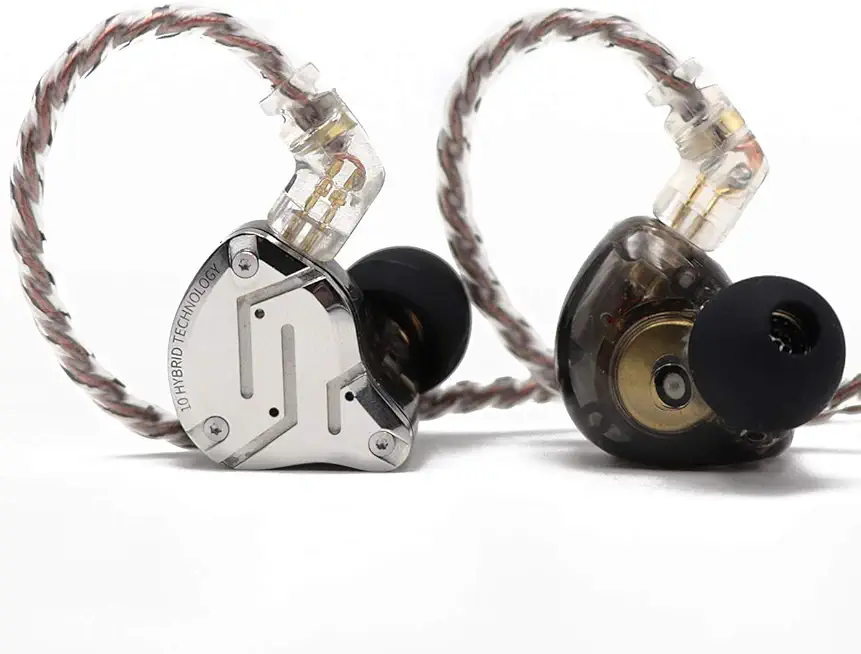
Quick Specs: 4 Balanced Armatures + 10mm Dynamic Driver | 30 ohm Impedance | 111 dB Sensitivity | Detachable 2-Pin Cable With Inline Microphone | 304 Stainless Steel Faceplate | Price Tier: under $100
Audit Score: 8.2 / 10
- Spatial Imaging & Acoustic Tuning (35%): 8.1 / 10
- Ergonomics, Isolation & Build Quality (25%): 8.1 / 10
- Connectivity, Battery & Source Matching (20%): 8.3 / 10
- Mic Strategy & Overall Value (20%): 8.5 / 10
Many handheld, laptop, and PlayStation/Xbox controller players simply want an affordable multi-driver monitor with an inline microphone wired straight onto the cord. The Linsoul KZ ZS10 Pro pairs a 10mm second-generation dynamic woofer with four balanced armatures behind a 304 stainless steel faceplate, while its higher 30-ohm impedance handles slightly higher-output controller and laptop headphone jacks without suffering severe bass bloat. For casual party chat and quick drop-in matches, having a ready inline mic on the stock 3.5mm TRRS plug saves you from hunting down separate cables or USB desk microphones.
When placed side by side against newer 2026 standards like the #3 Moondrop CHU II and #7 TRUTHEAR Zero: RED, however, the ZS10 Pro shows its age. Its V-shaped upper-treble boost pushes crisp highs forward aggressively—which can feel fatiguing over three-hour sessions—and its soundstage depth falls noticeably behind the #1 SIMGOT EM6L.
Buyer Verification Alert: Amazon lists separate SKUs for With Mic (B07QKT3BKR) and Without Mic (B07QKYTGH9); desktop PCs with dual green/pink 3.5mm motherboard ports need a TRRS splitter to activate the inline microphone.
Pros
- Built-in inline microphone works out of the box with console controllers and combo-jack laptops
- 30-ohm impedance tolerates modest-output controller jacks better than ultra-low-ohm hybrids
- Durable stainless steel faceplate and detachable 2-pin cable construction
Cons
- Sharp V-shaped treble spike can cause gunfire sibilance at elevated volumes
- Stock thin braided cable tangles easily and lacks desktop TRRS splitter hardware
Verdict: Buy it if you need an under-$100 multi-driver IEM with an out-of-the-box inline mic for console controllers or gaming laptops. Skip it if you play on a desktop PC with a standalone mic—the Moondrop CHU II or TRUTHEAR Zero: RED sound substantially smoother. Upgrade Note: Swap to memory foam ear tips to tame upper-treble peaks and strengthen passive room-noise isolation.
10. CCA CRA Dynamic Driver In-Ear Monitor Wired Gaming Earbuds — Best Entry V-Shaped Single-Dynamic IEM

Quick Specs: Ultra-Thin Diaphragm Single Dynamic Driver | 34 ohm Impedance | 105 dB Sensitivity | Detachable 2-Pin Wired Cable | Lightweight Resin Cavity | Price Tier: under $100
Audit Score: 7.9 / 10
- Spatial Imaging & Acoustic Tuning (35%): 7.7 / 10
- Ergonomics, Isolation & Build Quality (25%): 7.8 / 10
- Connectivity, Battery & Source Matching (20%): 8.1 / 10
- Mic Strategy & Overall Value (20%): 8.3 / 10
Rounding out our ten-unit audit, the CCA CRA serves entry-level gamers who want punchy single-driver bass impact and replaceable 2-pin cabling at minimal spend. Equipped with an ultra-thin polymer diaphragm rated at 34 ohms and 105 dB sensitivity, it connects cleanly to gaming laptops, Steam Deck handhelds, and standard controller jacks without whining from source noise floors. Its lightweight translucent resin housing stays comfortable across long sessions, making it far less fatiguing on the neck than heavy cheap over-ear gaming headsets.
Placed directly beside our #3 Moondrop CHU II, however, the trade-offs are clear: the CCA CRA pushes an aggressive V-shaped bass and upper-treble boost that sounds lively in casual action RPGs yet masks quiet midrange footsteps during intense ranked matches. Buyers focused on pure competitive FPS precision should step straight to the Moondrop CHU II or TRUTHEAR Zero: RED.
Buyer Verification Alert: Check the Amazon style/color selector carefully before checkout to verify whether your chosen CCA CRA listing ships with a mic-less cable or an inline microphone wire.
Pros
- 34-ohm load stays whisper-quiet on standard laptop and handheld 3.5mm jacks
- Detachable 2-pin cable design preserves repairability at an entry-tier budget
- Energetic sub-bass punch adds fun weight to casual single-player titles
Cons
- V-shaped bass emphasis obscures subtle midrange footstep cues behind explosions
- Lightweight plastic shell and entry wire feel basic next to the metal Moondrop CHU II
Verdict: Buy it if you want a featherweight spare IEM with replaceable cables and fun bass slam for casual games or mobile travel. Skip it if you want clean competitive shooter accuracy—the Moondrop CHU II delivers noticeably cleaner tuning under $25. Upgrade Note: Pull back 4kHz–6kHz slightly in software EQ if bright soundtracks feel sharp.
Buying Guide: Choosing the Best Gaming IEMs and Wireless Headsets
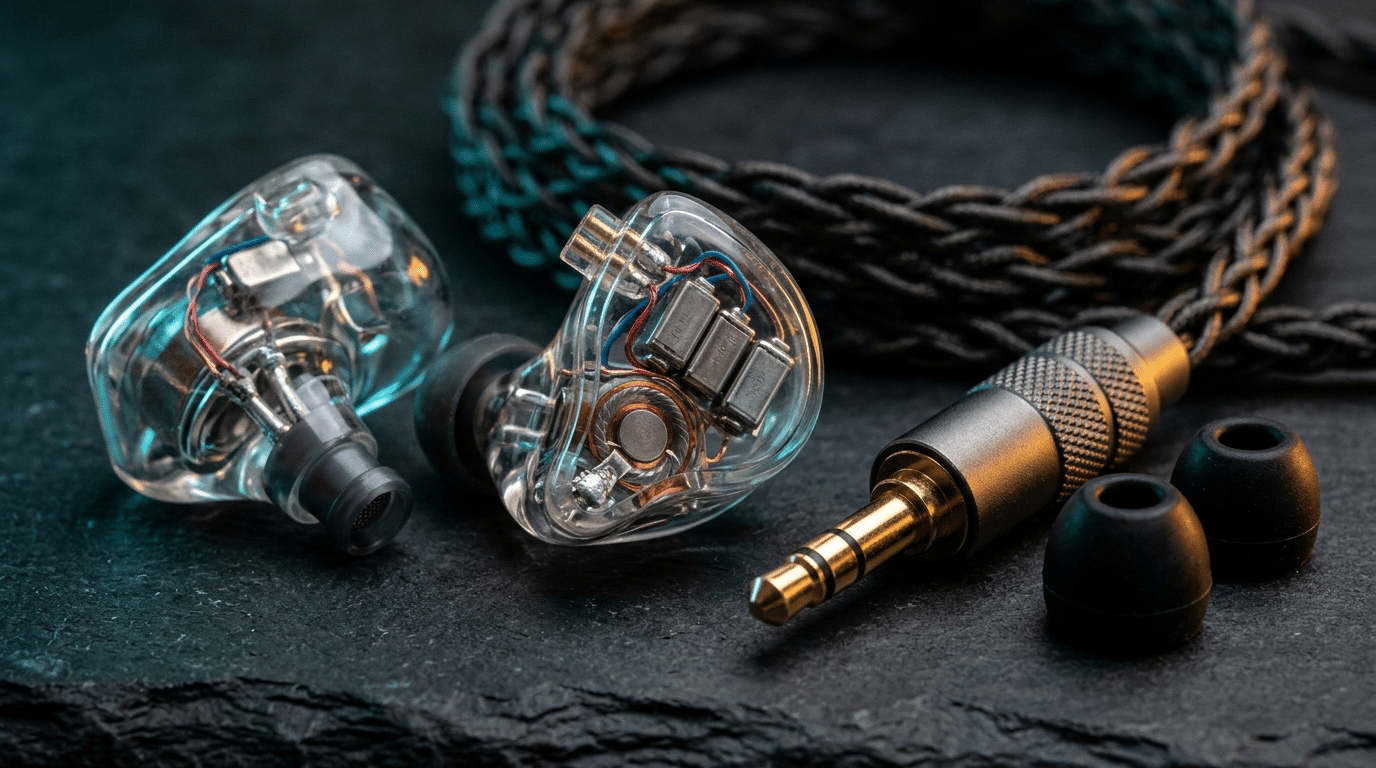
Marketing spec sheets on gaming audio boxes love big numbers—50mm drivers, “7.1 Surround,” and 8-driver hybrids—while omitting the electrical and acoustic realities that actually govern competitive spatial imaging. Use the engineering checklist below before committing to the best gaming IEMs and wireless headsets for your rig.
1. Driver Topologies: Dynamic vs. Dual-Dynamic vs. Hybrid (BA, Planar & PZT)
Inside gaming IEMs, transducer choice determines how cleanly explosions separate from footstep transients. A single dynamic driver (like the Moondrop CHU II or CCA CRA) uses one moving diaphragm across the full frequency band, creating seamless phase coherence and zero crossover gaps, though heavy bass drops can slightly mask subtle midrange cues. A dual dynamic driver configuration (such as the TRUTHEAR x Crinacle Zero: RED) splits a 10mm subwoofer from a dedicated 7.8mm mid-high cone so low-end rumble never clouds vocal callouts. Finally, multi-driver hybrids (like the SIMGOT EM6L, ZiiGaat Arete, and quad-topology SIMGOT SuperMix 4) pair dynamic woofers with fast balanced armature, planar magnetic, and piezoelectric tweeters—resolving micro-details like reload clicks and multi-story vertical cues far more distinctly during dense FPS teamfights.
2. Output Impedance & the 1/8th Rule (Why Motherboard Jacks Ruin Low-Ohm IEMs)
One of the most overlooked pitfalls when switching from headsets to low-impedance multi-driver IEMs is source output impedance. According to audio engineering’s 1/8th damping rule, your headphone jack’s output impedance should stay at least eight times lower than your IEM’s rated impedance. Desktop PC motherboard rear 3.5mm jacks frequently measure between 40 ohms and 100 ohms, whereas modern multi-driver IEMs like the SIMGOT SuperMix 4 (7.2 ohms) and ZiiGaat Arete (9 ohms) dip into single-digit territory. Plugging a 7.2-ohm quad-driver hybrid directly into a high-impedance motherboard port alters its internal crossover voltage division—audibly muddying mid-bass, distorting spatial imaging, and adding background static hiss. Solving this costs very little: a clean sub-1-ohm USB-C DAC dongle (around $10) bypasses noisy motherboard analog traces completely and guarantees accurate target tuning.
3. Native Stereo HRTF vs. Virtual 7.1 Surround & 2.4GHz Wireless
Never judge a headset or IEM setup by “Virtual 7.1 Surround” badges. Modern competitive titles—including CS2, Valorant, Call of Duty, and Apex Legends—calculate directional Head-Related Transfer Functions (HRTF) inside the game engine itself and output binaural depth cues over a standard two-channel stereo signal. Activating cheap driver-level 7.1 reverb filters on top of native game HRTF creates artificial room echo that blurs footstep distance. Keep Windows spatial sound and headset software set to clean Stereo mode instead. On the wireless side, always demand a dedicated 2.4GHz wireless USB-C or USB-A dongle (like those bundled with the SteelSeries Arctis Nova 7 Gen 2 and HyperX Cloud III S Wireless) rather than Bluetooth-only audio; standard Bluetooth introduces noticeable lip-sync delay and collapses audio fidelity to mono whenever your microphone engages on Windows.
4. Upgrade Roadmap & Hidden Ownership Costs
Budget buyers transitioning to wired gaming IEMs should factor small secondary accessories into their true total ownership cost before comparing against turnkey wireless headsets:
- Sub-1-Ohm USB-C DAC Dongle (around $10): Mandatory for sub-15-ohm IEMs (SuperMix 4, Arete) and helpful on noisy desktop motherboard outputs with any IEM.
- Microphone Strategy (around $15 to $70): Mic-less IEMs (EM6L, Arete, SuperMix 4, Zero: RED, CHU II) require either a replacement 0.78mm/QDC boom-mic cable or a standalone USB dynamic microphone mounted on a boom arm—though a desk dynamic mic far outperforms any wireless headset boom microphone in vocal richness and keyboard noise rejection.
- Aftermarket Ear Tips (around $10-$15): Proper passive isolation determines sub-bass response and external fan-noise blocking. Wide-bore nozzles like the TRUTHEAR Zero: RED often benefit tremendously from soft SpinFit silicone or memory foam tips.
5. Gaming IEMs vs. Wireless Headsets: Which Ecosystem Should You Pick?
Choose wired gaming IEMs if you wear eyeglasses, play in warm rooms, want zero top-of-head clamp fatigue, or chase maximum directional separation per dollar in competitive FPS shooters. Choose a 2.4GHz wireless over-ear headset like the SteelSeries Arctis Nova 7 Gen 2 or HyperX Cloud III S Wireless if you stand up frequently between matches, game from a couch on PS5, or prefer a single battery-powered device with an integrated boom microphone and zero extra cables on your desk. For a deeper head-to-head breakdown of ergonomic and acoustic trade-offs, consult our full guide on Gaming IEMs vs. Wireless Headsets.
Audio is only one link in a competitive input chain. Once footstep imaging is sorted, pair it with a low-latency pointer from our ultralight 8K gaming mice audit (and check whether 8000Hz polling rates justify their extra CPU overhead on your rig), a rapid-trigger board from our Hall Effect gaming keyboards roundup, and a surface matched to your aim style using our speed vs. control mousepad guide.
How We Audited, Scored & Filtered These Picks
Every recommendation on The PC Audit undergoes a structured hardware specification audit grounded in acoustic transducer datasheets, crossover topology, output-impedance behavior, wireless codec latency specs, and long-term buyer reliability reports rather than sponsored placements. Read our complete editorial standards on our Evaluation Methodology page. Each contender is scored against four weighted criteria totaling 100%:
| Evaluation Criterion | Weight | What We Audited |
|---|---|---|
| Spatial Imaging & Acoustic Tuning | 35% | Horizontal and vertical footstep separation, native Stereo HRTF accuracy, midrange clarity, and absence of sibilant treble spikes or mid-bass bleed. |
| Ergonomics, Isolation & Build Quality | 25% | Nozzle diameter and shell geometry vs. headband clamp pressure, eyeglass comfort, passive room-noise isolation, and chassis or 2-pin durability. |
| Connectivity, Battery & Source Matching | 20% | 2.4GHz low-latency wireless stability, simultaneous Bluetooth mixing, battery life ratings, modular cable sockets, and low-impedance USB-C DAC requirements. |
| Mic Strategy & Overall Value | 20% | Integrated boom/inline mic versatility versus total cost after adding a sub-1-ohm DAC dongle or desk dynamic mic across each budget tier. |
Models We Audited & Rejected (And Why)
- Bluetooth-Only True Wireless Gaming Earbuds Without 2.4GHz Dongle: Disqualified because standard AAC and SBC wireless links introduce 120ms to 250ms audio-to-frame lag, and enabling microphone input on Windows forces audio into muffled mono Hands-Free Profile mode.
- Budget Over-Ear Headsets Built Around Virtual 7.1 Surround DSP: Excluded because synthetic surround reverb smears game-engine HRTF cues, making footstep distance harder to judge than clean stereo IEMs under $25.
- Entry 3.5mm Analog Headsets With Fixed Hardwired Cables: Rejected because non-detachable cables inevitably fail at earcup strain reliefs, whereas modular 0.78mm 2-pin IEMs like the Moondrop CHU II allow quick wire replacement.
- Generic Multi-BA Earbud Clones With Uncalibrated Treble Crossovers: Excluded because cramming cheap uncalibrated balanced armatures into generic shells produces painful 6kHz-8kHz gunfire fatigue and erratic impedance swings.
Official References & Further Reading
Frequently Asked Questions About Gaming IEMs and Wireless Headsets
Are gaming IEMs actually better than wireless headsets for competitive FPS?
Gaming IEMs consistently deliver sharper spatial imaging, stronger passive noise isolation, and zero headband clamp pressure for glasses wearers at lower budgets. Wireless headsets win on convenience by integrating a boom microphone and untethered 2.4GHz freedom across PC and console setups.
Do low-impedance gaming IEMs need a USB-C DAC dongle on a PC?
Yes—multi-driver hybrids like the 7.2-ohm SIMGOT SuperMix 4 and 9-ohm ZiiGaat Arete shift tonal balance when plugged into high-impedance motherboard 3.5mm jacks. A sub-1-ohm USB-C DAC dongle around $10 eliminates background hiss and preserves accurate frequency response.
Should I enable Virtual 7.1 Surround Sound on wireless headsets or IEMs?
No—keep Windows and headset drivers in clean Stereo mode for modern competitive shooters. Games like CS2, Valorant, and Apex Legends already process built-in 3D HRTF audio engines, whereas cheap Virtual 7.1 filters add artificial reverb that blurs footstep distance.
Can I use a gaming IEM for Discord voice chat without a desk microphone?
Yes, either by selecting an inline-mic SKU like the Linsoul KZ ZS10 Pro (With Mic) or snapping an aftermarket 0.78mm 2-pin boom mic cable onto IEMs like the Moondrop CHU II or Zero: RED. Dedicated USB dynamic mics still deliver cleaner vocal quality.
Which wireless gaming headset lasts longest on a single charge in 2026?
The HyperX Cloud III S Wireless leads our audited lineup at up to 120 hours over its low-latency 2.4GHz USB-C dongle and up to 200 hours via Bluetooth. The SteelSeries Arctis Nova 7 Wireless Gen 2 trails at 50+ hours while adding simultaneous dual-wireless audio.
What is the best budget gaming IEM under $25 vs. under $120?
Under $25, the Moondrop CHU II offers metal housings, brass nozzles, and a detachable 0.78mm cable with clean stereo imaging. Stepping up to the $90-$115 tier, the Linsoul SIMGOT EM6L upgrades to a 1DD + 4BA hybrid crossover with pinpoint competitive separation.
Final Verdict: Which Gaming IEM or Wireless Headset Should You Buy?
Sorting through the best gaming IEMs and wireless headsets in 2026 comes down to matching transducer accuracy with your desk ergonomics. If competitive spatial imaging, passive isolation, and glasses-friendly comfort rank first, start with our #1 Linsoul SIMGOT EM6L in the $90-$115 tier—or step up to the ZiiGaat x Fresh Reviews Arete paired with a sub-1-ohm USB-C DAC if tournament FPS depth separation is everything. Budget buyers under $25 get immediate modular reliability from the Moondrop CHU II. Prefer an untethered all-in-one setup with a boom microphone? Pick the SteelSeries Arctis Nova 7 Wireless Gen 2 for simultaneous 2.4GHz + Bluetooth mixing, or grab the HyperX Cloud III S Wireless for unbeatable 120-hour battery endurance.


