
Disclosure: As an Amazon Associate, I earn from qualifying purchases. If you buy through links on this page, we may earn a small commission at no extra cost to you.
Finding the best gaming power supply ATX 3.1 unit comes down to three engineering safeguards: transient power excursion headroom, native 12V-2×6 connector safety, and verified acoustic efficiency under real gaming loads. Modern 2026 graphics cards—from the 300W RTX 5070 Ti and 304W Radeon RX 9070 XT up to the 575W RTX 5090—draw sharp millisecond current spikes that trip older ATX 2.x power supplies and overheat legacy 12VHPWR plugs. Here at The PC Audit, we evaluated dozens of retail power supply listings against official electrical standards and certification reports to select 10 standout ATX 3.1 models across 750W, 850W, 1000W, 1200W, and Mini-ITX SFX tiers.
Whether you are building an affordable 1440p rig or powering a flagship 4K workstation, every pick below features native PCIe 5.1 cabling, full modular wire routing, and documented multi-protection circuitry. If you already know your target capacity bracket, you can also explore our dedicated 850W ATX 3.1 power supply roundup or 1000W and 1200W+ flagship PSU guide for deeper tier-specific comparisons.
In This Guide
- Quick Picks at a Glance
- Side-by-Side Comparison: Top 10 Gaming Power Supplies
- Match Your Use Case: Which Wattage & Model Fits Your Build?
- Detailed Audits: Best Gaming Power Supply ATX 3.1 Picks (1–10)
- Buying Guide: ATX 3.1, 12V-2×6, Cybenetics & Sizing
- How We Audited, Scored & Rejected Models
- Frequently Asked Questions
- Final Verdict
Quick Picks: Best Gaming Power Supply ATX 3.1 Units at a Glance
#1 Best Overall Gaming PSU
Corsair RM1000x (2024 ATX 3.1)
Cybenetics ETA Platinum efficiency, whisper-quiet Lambda A acoustics, embossed cables, and native 600W 12V-2×6 safety for RTX 5080 and 1440p/4K systems. (Jump to audit)
#2 Best 850W 1440p Gaming PSU
CORSAIR RM850x ATX 3.1
Balanced 850W ATX 3.1 capacity with Cybenetics Gold validation, Japanese 105C capacitors, and a 10-year warranty tailored to RTX 5070 Ti and RX 9070 XT rigs. (Jump to audit)
#3 Best Budget 850W ATX 3.1 PSU
MONTECH Century II 850W
Compact 140mm depth, native 12V-2×6 cabling, 135mm Zero RPM FDB fan, and 100% Japanese electrolytic capacitors at an accessible budget tier. (Jump to audit)
Side-by-Side Comparison: Top 10 Gaming Power Supplies
| Product & Award | Best For | Wattage & Standard | Efficiency & Depth | Action |
|---|---|---|---|---|
| Corsair RM1000x (2024 ATX 3.1) Best Overall Gaming PSU | RTX 5080 / 5070 Ti quiet 4K builds | 1000W | ATX 3.1 / 12V-2×6 | Cybenetics Platinum / Lambda A | 160mm | View on Amazon |
| CORSAIR RM850x ATX 3.1 Best 850W 1440p PSU | 1440p RTX 5070 Ti & RX 9070 XT rigs | 850W | ATX 3.1 / 12V-2×6 | Cybenetics Gold | 160mm | View on Amazon |
| MONTECH Century II 850W Best Budget 850W PSU | High-value mid-range DIY builds | 850W | ATX 3.1 / 12V-2×6 | 80 Plus Gold | 140mm | View on Amazon |
| CORSAIR HX1200i (2025) Best 1200W Flagship PSU | RTX 5090 & creator workstations | 1200W | ATX 3.1 / 12V-2×6 | Cybenetics Platinum | 200mm | View on Amazon |
| Seasonic FOCUS GX-1000 Best Compact 1000W ATX | Tight ATX mid-towers needing 1000W | 1000W | ATX 3.1 / 12V-2×6 | Cybenetics Gold | 140mm | View on Amazon |
| Super Flower Leadex VII XG 1000W Best Value Platinum 1000W | Platinum efficiency on a mid budget | 1000W | ATX 3.1 / 12V-2×6 | Cybenetics Platinum | 150mm | View on Amazon |
| be quiet! Pure Power 13 M 750W Best 750W Mid-Range PSU | Quiet RTX 5070 / RX 9070 rigs | 750W | ATX 3.1 / 12V-2×6 | Cybenetics Platinum | 160mm | View on Amazon |
| NZXT C1200 Gold ATX 3.1 Best Compact 1200W Value | 1200W output inside 160mm cases | 1200W | ATX 3.1 / 12V-2×6 | Cybenetics Gold | 160mm | View on Amazon |
| MSI MAG A850GL PCIE5 Best Visual-Latch Safety PSU | First-time builders verifying seating | 850W | ATX 3.1 / Dual-Color 12V-2×6 | Cybenetics ETA Gold | 140mm | View on Amazon |
| CORSAIR SF1000 (2024) SFX Best SFX Mini-ITX PSU | Sub-15L SFF RTX 5080/5090 builds | 1000W SFX | ATX 3.1 / Type-5 | 80 Plus Platinum | 100mm | View on Amazon |
Match Your Use Case: Which Wattage & Model Fits Your Build?
| Buyer Scenario | Best Match | Why & Expected Outcome |
|---|---|---|
| Quiet 4K Gaming (RTX 5080 + Ryzen 7 9800X3D) | Corsair RM1000x (2024 ATX 3.1) | Keeps peak 450W–500W system draw right inside the 50% efficiency curve with sub-25 dBA Cybenetics Lambda A acoustics. |
| Mainstream 1440p Rig (RTX 5070 Ti / RX 9070 XT) | CORSAIR RM850x ATX 3.1 | Provides clean 850W transient excursion headroom with embossed leads and a 10-year warranty without paying for 1200W capacity. |
| Value 1440p Build Stretching GPU Budget | MONTECH Century II 850W | Retains full ATX 3.1 specs, compact 140mm housing depth, and Japanese capacitors while freeing budget for a stronger GPU or 2TB SSD. |
| Flagship RTX 5090 (575W TDP) + 16-Core CPU | CORSAIR HX1200i (2025) | Delivers 1200W Cybenetics Platinum conversion, digital iCUE wattage telemetry, and Zero RPM idle cooling for multi-hour 4K sessions. |
| Tight ATX Case With Drive Cages at 1000W | Seasonic FOCUS GX-1000 | Short 140mm depth preserves generous basement cable space where 160mm–200mm power supplies collide with bottom drive racks. |
| Compact Mini-ITX Small Form Factor Tower | CORSAIR SF1000 (2024) SFX | Fits strict 100mm SFX brackets while delivering 1000W Platinum power via compact Type-5 Micro-Fit plugs. |
Detailed Audits: Best Gaming Power Supply ATX 3.1 Picks (1–10)
1. Corsair RM1000x (2024 ATX 3.1) — Best Overall Gaming PSU

Quick Specs: 1000W | ATX 3.1 & PCIe 5.1 | Native 16-pin 12V-2×6 (600W) | 80 Plus Gold & Cybenetics ETA Platinum | Cybenetics Lambda A (20–25 dBA) / 140mm FDB Zero RPM + speed knob | 160mm depth | 10-year warranty | Price Tier: Upper mid-range
Audit Score: 9.6 / 10
- ATX 3.1 Compliance & Transient Handling (35%): 9.7 / 10
- Efficiency & Noise (80 Plus / Cybenetics) (25%): 9.8 / 10
- Cable Quality, 12V-2×6 & Modularity (20%): 9.5 / 10
- Internal Protections & Warranty (20%): 9.4 / 10
Most 1000W power supplies force an uncomfortable compromise between acoustic restraint, stiff ribbon cables, and genuine Platinum efficiency. Corsair avoids all three pitfalls on the refreshed 2024 RM1000x. According to Corsair’s official RM1000x specifications, the unit pairs 100% Japanese 105C capacitors with a full modular native 16-pin 12V-2×6 cable rated to 600W alongside embossed, individually textured leads that route far more cleanly behind tight motherboard trays than flat plastic ribbons. Independent verification from the Cybenetics ETA efficiency program awards this model a Platinum efficiency grade alongside a Lambda A noise rating (20–25 dBA average), proving its 140mm fluid dynamic bearing fan stays near-inaudible even during sustained 4K gaming loads.
One tactile detail sets the RM1000x apart from both the Seasonic FOCUS GX-1000 and Super Flower Leadex VII XG 1000W: a dedicated rotary fan-override dial on the rear exhaust grille. Builders can leave Zero RPM mode active for silent desktop browsing or dial in continuous low-RPM airflow inside warm media cabinets. Compared with our #2 pick, the CORSAIR RM850x, stepping up to the RM1000x adds 150W of breathing room for RTX 5080 overclocking and future flagship GPU drops while elevating efficiency from Gold to Cybenetics ETA Platinum.
Buyer Verification Alert: Confirm the listing title reads “(2024)” and “ATX 3.1” with a 12V-2×6 header (ASIN B0DJ1M9C62) so you do not inadvertently purchase older 2021 ATX 2.4 RM1000x stock that lacks a native 16-pin GPU port.
Pros
- Cybenetics ETA Platinum efficiency and Lambda A (<25 dBA) acoustic certification
- Rear manual fan-speed knob overrides Zero RPM mode when extra chassis airflow helps
- Flexible embossed modular cabling and native 600W 12V-2×6 connector
- Japanese 105C capacitors backed by a comprehensive 10-year warranty
Cons
- 160mm housing depth requires checking basement shroud fit in shorter mid-towers
- Priced higher than bare-bones 1000W Gold alternatives lacking Lambda A tuning
Verdict: Buy it if you want the best gaming power supply ATX 3.1 overall for RTX 5070 Ti or RTX 5080 builds with whisper-quiet cooling and zero cable-routing headaches. Skip it if your rig draws under 250W at the GPU or your chassis caps PSU clearance at 140mm. Pairing 1000W capacity with an RTX 5080 and Ryzen 7 9800X3D locks gaming loads squarely into the ideal 50% efficiency window without needing another power supply upgrade for a decade.
2. CORSAIR RM850x ATX 3.1 PCIe 5.1 850W — Best 850W PSU for 1440p Rigs

Quick Specs: 850W | ATX 3.1 & PCIe 5.1 | Native 12V-2×6 | Cybenetics Gold | 160mm depth | 10-year warranty | Price Tier: Mid-range
Audit Score: 9.3 / 10
- ATX 3.1 Compliance & Transient Handling (35%): 9.4 / 10
- Efficiency & Noise (80 Plus / Cybenetics) (25%): 9.3 / 10
- Cable Quality, 12V-2×6 & Modularity (20%): 9.3 / 10
- Internal Protections & Warranty (20%): 9.2 / 10
For the vast majority of 1440p gaming desktops built around a 300W RTX 5070 Ti or 304W Radeon RX 9070 XT, paying extra for 1000W–1200W capacity rarely changes frame rates or real-world stability. The CORSAIR RM850x ATX 3.1 hits the exact sweet spot for high-refresh 1440p rigs. Built on the same updated 2024 topology as our #1 RM1000x, it meets Intel’s ATX Version 3 power design specifications for rapid transient power excursions and pairs a native 12V-2×6 lead with multiple discrete PCIe 8-pin ports for triple-8-pin RDNA 4 partner cards.
Against our #3 budget 850W pick, the MONTECH Century II 850W, Corsair brings more flexible embossed modular leads and verified Cybenetics Gold consistency across partial and full-load brackets. Against our #9 MSI MAG A850GL PCIE5, the RM850x trades away MSI’s high-visibility yellow connector tip in exchange for superior acoustic damping and Zero RPM idle behavior—an important distinction if your tower sits right beside your monitor. Explore even more options in that wattage tier inside our dedicated 850W ATX 3.1 power supply audit.
Buyer Verification Alert: Corsair also sells an “RMe” budget family (RM850e) and older 2021 RM850x stock on Amazon. Verify the RM850x ATX 3.1 SKU (B0DJ1JL3MK) to secure the 10-year warranty, embossed cables, and upgraded ATX 3.1 hardware.
Pros
- Ideal 850W capacity for RTX 5070 Ti, RTX 5070, and RX 9070 XT 1440p systems
- Native 12V-2×6 safety header plus plenty of 8-pin PCIe leads for AMD GPUs
- Cybenetics Gold verified efficiency with quiet fan behavior and embossed cables
- 10-year Corsair warranty outlasts multiple CPU and GPU refresh cycles
Cons
- 160mm depth is 20mm longer than compact 140mm rivals like Montech Century II
- Mid-range pricing leaves less upfront cash on entry-level $1,000–$1,200 builds
Verdict: Buy it if you are building a quiet, long-lived 1440p gaming PC around an RTX 5070 Ti or RX 9070 XT and want proven RMx build quality. Skip it if you intend to upgrade to a 575W RTX 5090 later—step directly up to the 1000W RM1000x or 1200W NZXT C1200 instead.
3. MONTECH Century II 850W ATX 3.1 — Best Budget 850W ATX 3.1 PSU
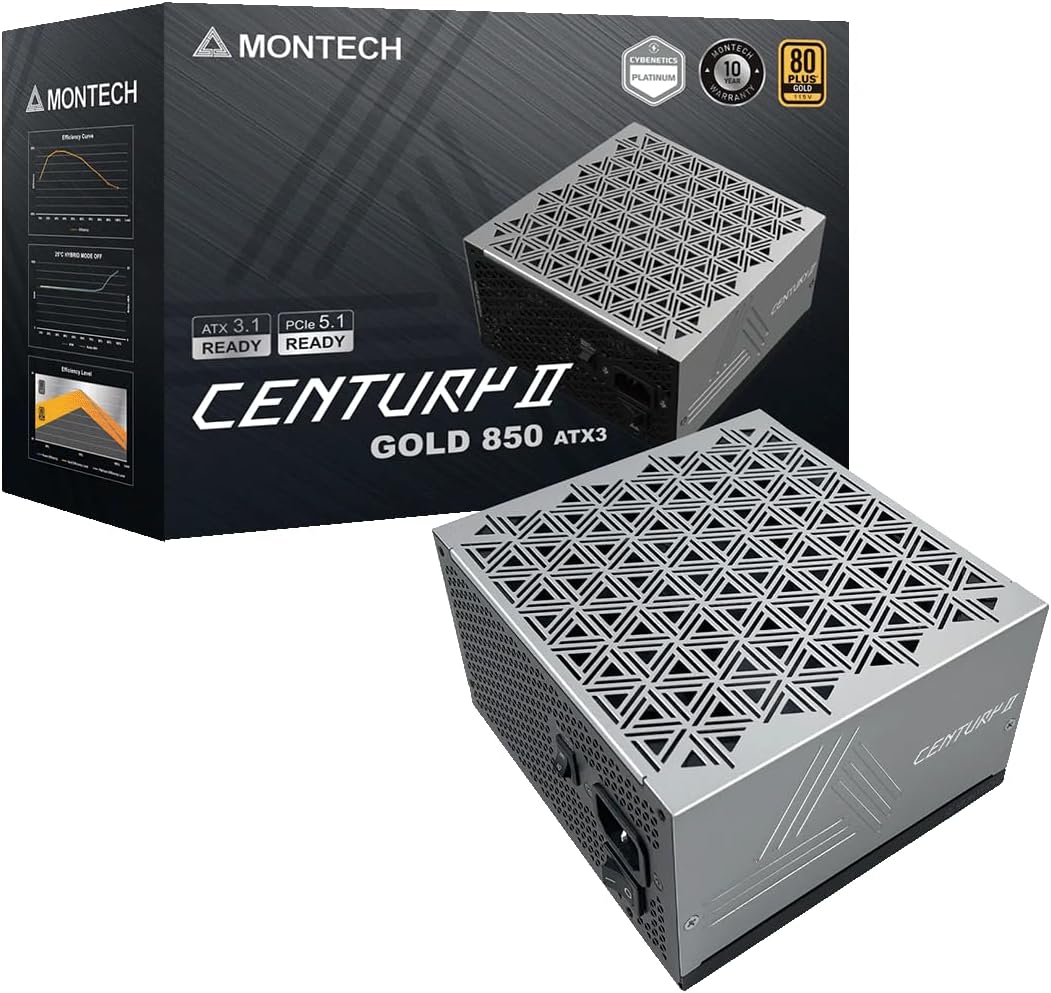
Quick Specs: 850W | ATX 3.1 & PCIe 5.1 | Native 12V-2×6 | 80 Plus Gold | 140mm depth | 135mm FDB (Zero RPM Mode) | 10-year warranty | Price Tier: Budget-friendly
Audit Score: 9.1 / 10
- ATX 3.1 Compliance & Transient Handling (35%): 9.2 / 10
- Efficiency & Noise (80 Plus / Cybenetics) (25%): 9.0 / 10
- Cable Quality, 12V-2×6 & Modularity (20%): 9.0 / 10
- Internal Protections & Warranty (20%): 9.2 / 10
Entry-priced power supplies routinely cut corners on capacitor ratings, slash warranties to three or five years, or omit native PCIe 5.1 plugs entirely. The MONTECH Century II 850W refuses every one of those compromises while remaining one of the best-value 850W ATX 3.1 units on Amazon. Inside its compact 140mm steel enclosure sit 100% Japanese electrolytic capacitors, a 135mm fluid dynamic bearing fan with Zero RPM light-load operation, and a native 12V-2×6 cable aligned with ATX 3.1 recessed sense-pin safeguards.
Shorter 140mm PSU clearance matters enormously in value mid-tower builds where bottom 3.5-inch drive cages often sit just behind the power shroud. Where our #2 pick, the 160mm CORSAIR RM850x, leaves tighter finger clearance for modular connectors, the Century II gives builders 20mm of welcome slack. Even compared with #7, the be quiet! Pure Power 13 M 750W, Montech delivers an extra 100W of headroom for high-draw GPUs like the RX 9070 XT at a similarly aggressive budget tier, backed by an identical 10-year warranty.
Buyer Verification Alert: Check the Amazon wattage selector carefully to ensure 850W (B0F3XW1J16) is active, and verify that the 12V-2×6 header sits completely flush at both the GPU and PSU ends since Montech uses standard all-black plug housings.
Pros
- Compact 140mm footprint fits cramped mesh mid-towers with zero drive-cage interference
- 100% Japanese capacitors, native 12V-2×6 cable, and 135mm Zero RPM FDB fan
- 10-year manufacturer warranty inside a budget-friendly 850W bracket
Cons
- Standard modular wire sheathing feels stiffer than Corsair’s embossed cables
- Lacks a visual dual-color tip on the 16-pin connector or manual fan-override dial
Verdict: Buy it if you want a compact, 10-year-warrantied 850W ATX 3.1 power supply that preserves maximum cash for your GPU and storage. Skip it if you prefer ultra-flexible embossed cables or manual rear fan control like the Corsair RM850x. Saving money here safely funds an upgrade from 16GB to 32GB DDR5-6000 CL30 memory or a 2TB NVMe SSD.
4. CORSAIR HX1200i (2025) ATX 3.1 1200W — Best 1200W Flagship PSU

Quick Specs: 1200W | ATX 3.1 & PCIe 5.1 Ready | Native 12V-2×6 | Cybenetics Platinum | 200mm depth | 140mm FDB (Zero RPM Mode) | iCUE digital monitoring | 10-year warranty | Price Tier: Enthusiast flagship
Audit Score: 9.4 / 10
- ATX 3.1 Compliance & Transient Handling (35%): 9.6 / 10
- Efficiency & Noise (80 Plus / Cybenetics) (25%): 9.7 / 10
- Cable Quality, 12V-2×6 & Modularity (20%): 9.0 / 10
- Internal Protections & Warranty (20%): 9.5 / 10
Powering a 575W TDP NVIDIA GeForce RTX 5090 alongside a 230W–250W flagship processor like the Ryzen 9 9950X3D or Core Ultra 9 285K pushes peak system loads well past 800W under combined rendering and path-traced 4K gameplay. The updated 2025 CORSAIR HX1200i absorbs those extremes effortlessly, keeping gaming draw around 55%–65% capacity where conversion efficiency peaks under Cybenetics Platinum certification and its 140mm FDB fan stays remarkably composed.
Because the HX1200i uses a digital platform linked over an internal USB header, builders running CORSAIR iCUE gain live telemetry for input wattage, output efficiency, temperature, and fan RPM—plus software toggling between single-rail and multi-rail Overcurrent Protection (OCP). That feature suite cleanly outperforms #8, the NZXT C1200 Gold, which omits digital monitoring and sits at Gold efficiency. The trade-off is physical length: at 200mm deep, the HX1200i demands a spacious full-tower or dual-chamber case, whereas the NZXT C1200 fits standard 160mm mid-tower brackets.
Buyer Verification Alert: Check your chassis manual’s maximum PSU clearance before buying—200mm housing depth plus protruding modular plugs requires roughly 230mm of unobstructed basement space.
Pros
- 1200W Cybenetics Platinum headroom built specifically for RTX 5090 and AI workloads
- Digital iCUE telemetry monitors live efficiency, rail load, and custom fan curves
- Switchable single-rail / multi-rail OCP with 105C Japanese electrolytic capacitors
- 140mm Zero RPM FDB fan stays dead silent during light workstation tasks
Cons
- Long 200mm chassis depth locks out compact mid-tower PC cases
- Enthusiast pricing is unnecessary if your rig runs an RTX 5070 Ti or RTX 5080
Verdict: Buy it if you are assembling an RTX 5090 flagship or multi-drive creator rig in a large dual-chamber or full-tower chassis and value Platinum efficiency plus digital wattage telemetry. Skip it if your case maxes out at 160mm–180mm PSU length—choose our #8 NZXT C1200 Gold instead.
5. Seasonic FOCUS GX-1000 ATX 3.1 1000W — Best Compact 1000W ATX PSU

Quick Specs: 1000W | ATX 3.1 & PCIe 5.1 Ready | Native 12V-2×6 | 80 Plus Gold & Cybenetics Gold | 140mm depth | 135mm FDB (Hybrid Fan Control) | 10-year warranty | Price Tier: High-end
Audit Score: 9.2 / 10
- ATX 3.1 Compliance & Transient Handling (35%): 9.3 / 10
- Efficiency & Noise (80 Plus / Cybenetics) (25%): 9.0 / 10
- Cable Quality, 12V-2×6 & Modularity (20%): 9.3 / 10
- Internal Protections & Warranty (20%): 9.3 / 10
High-wattage power supplies often stretch to 160mm, 180mm, or 200mm, forcing builders with compact ATX towers to pull hard-drive trays or wrestle stiff cables against front radiator fans. Seasonic packs a full 1000W ATX 3.1 platform into a stubby 140mm housing on the refreshed FOCUS GX-1000. Inside, Seasonic retains high-grade Japanese 105C electrolytic capacitors, tight load regulation, a native 12V-2×6 GPU output, and a 135mm FDB fan controlled by a rear Hybrid Fan Control pushbutton.
Compared against our #1 Corsair RM1000x (160mm) and #6 Super Flower Leadex VII XG 1000W (150mm), the Seasonic FOCUS GX-1000 wins purely on compact 140mm ATX ergonomics and Seasonic’s reputation for durable voltage regulation. While it settles for Cybenetics Gold efficiency rather than the Platinum grade earned by both Corsair and Super Flower, real-world wall draw differences are only a few watts at 1440p and 4K gaming loads—often worth trading for an extra 20mm of cable-tuck clearance behind your case shroud.
Buyer Verification Alert: Seasonic refreshed the FOCUS GX lineup from ATX 2.4 to ATX 3.0 and now ATX 3.1. Verify the listing specifically names ATX 3.1 & PCIe 5.1 (ASIN B0DLFKRJDC) so you receive the native 12V-2×6 cable.
Pros
- 140mm depth fits 1000W output into virtually any standard ATX chassis
- Hybrid Fan Control switch toggles Zero-RPM silence vs constant cooling
- Japanese 105C capacitors and 10-year Seasonic manufacturer warranty
Cons
- Gold efficiency sits one tier below Platinum-rated 1000W peers
- High-end price tier makes Super Flower Leadex VII XG stronger on pure watt-per-dollar efficiency
Verdict: Buy it if you need 1000W ATX 3.1 reliability inside a short-chassis ATX tower where 160mm power supplies leave zero room for modular plugs. Skip it if your case fits 150mm–160mm units easily—Corsair’s RM1000x runs quieter and Super Flower hits Cybenetics Platinum at a mid-range price.
6. Super Flower Leadex VII XG 1000W — Best Value Cybenetics Platinum 1000W
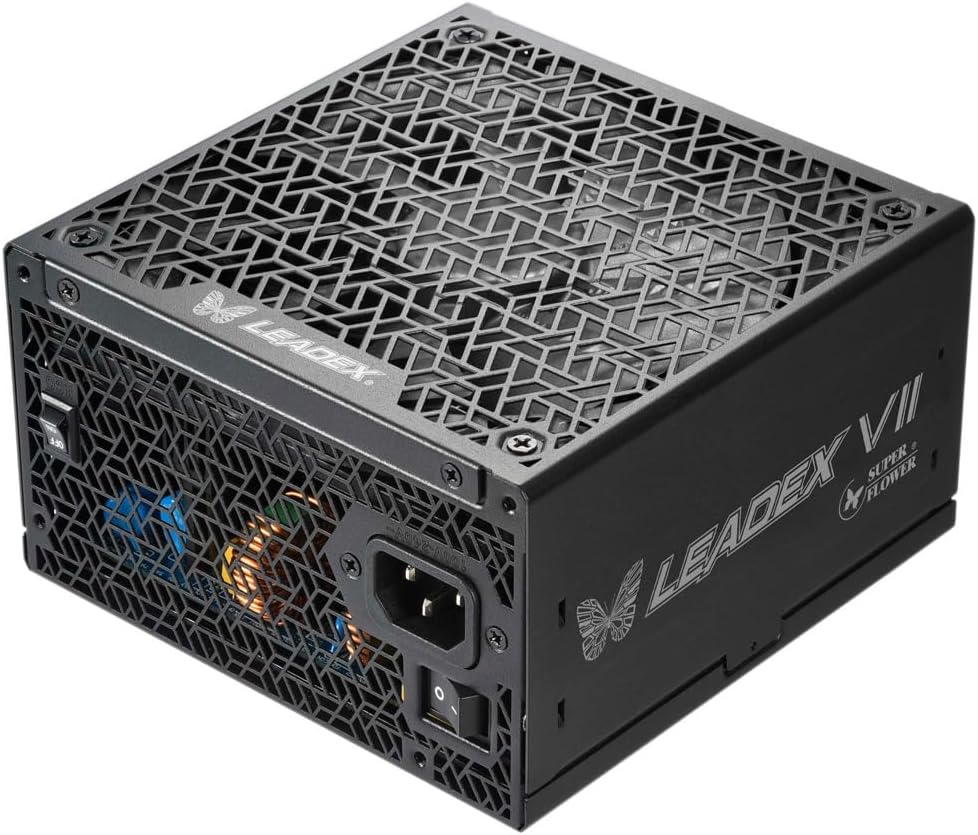
Quick Specs: 1000W | ATX 3.1 & PCIe 5.1 | 16-Pin PCIe Gen 5 (12V-2×6) | 80 Plus Gold & Cybenetics Platinum | 150mm depth | FDB Fan | 100% Japanese 105C capacitors | Price Tier: Mid-range
Audit Score: 9.2 / 10
- ATX 3.1 Compliance & Transient Handling (35%): 9.2 / 10
- Efficiency & Noise (80 Plus / Cybenetics) (25%): 9.4 / 10
- Cable Quality, 12V-2×6 & Modularity (20%): 9.0 / 10
- Internal Protections & Warranty (20%): 9.1 / 10
While retail badges advertise 80 Plus Gold on the outer box, the Super Flower Leadex VII XG 1000W actually clears Cybenetics ETA Platinum efficiency thresholds across its broader real-world load sweep—all while sitting in a mid-range 1000W bracket. Built by one of the PC industry’s respected OEM PSU engineering houses, it relies on 100% Japanese 105C capacitors (including high-end Nippon Chemi-Con primaries), full OCP OVP OPP and thermal safeguards, and a tidy 150mm chassis footprint.
Sizing up at 150mm splits the difference cleanly between the 140mm Seasonic FOCUS GX-1000 and the 160mm Corsair RM1000x. Where Corsair wins on embossed wire aesthetics and verified sub-25 dBA Lambda A fan tuning, Super Flower lets performance-first RTX 5080 and RX 9070 XT builders capture Platinum electrical conversion without paying a flagship tax. Check out how both stack up across high-wattage workloads in our 1000W and 1200W+ power supply guide.
Buyer Verification Alert: Super Flower ships some Leadex VII XG revisions with a dual-8-pin PSU-side harness feeding a native 12V-2×6 GPU plug rather than a 16-pin socket on the PSU wall; both handle 600W cleanly, though confirm clearance before routing.
Pros
- Cybenetics Platinum real-world efficiency at a mid-range Gold budget bracket
- 100% Japanese 105C capacitors with clean ripple suppression
- Balanced 150mm depth preserves PSU clearance in mainstream mid-towers
Cons
- Standard black cables are less supple to comb than Corsair’s embossed leads
- Slightly louder under peak load than the Lambda A-rated Corsair RM1000x
Verdict: Buy it if you want 1000W Cybenetics Platinum efficiency and top-shelf Japanese internals for an RTX 5080 build without paying top-tier Corsair RMx pricing. Skip it if ultra-low acoustic certification or embossed cabling matters most—pick the RM1000x instead.
7. be quiet! Pure Power 13 M 750W — Best 750W Mid-Range PSU

Quick Specs: 750W | ATX 3.1 & PCIe 5.1 | Native 12V-2×6 | 80 Plus Gold & Cybenetics Platinum | 160mm depth | Semi-Passive Zero-RPM 120mm fan | 10-year warranty | Price Tier: Budget-friendly
Audit Score: 9.0 / 10
- ATX 3.1 Compliance & Transient Handling (35%): 9.0 / 10
- Efficiency & Noise (80 Plus / Cybenetics) (25%): 9.4 / 10
- Cable Quality, 12V-2×6 & Modularity (20%): 8.8 / 10
- Internal Protections & Warranty (20%): 8.9 / 10
Not every gaming PC needs 850W or 1000W of wall capacity. Builders pairing a 180W RTX 5060 Ti 16GB, 220W Radeon RX 9070, or 250W RTX 5070 with an efficient 65W–120W AM5 processor hit peak total system loads around 350W–420W—making a 750W unit the exact 50%–60% load sweet spot. The refreshed be quiet! Pure Power 13 M 750W elevates that mid-range tier by earning Cybenetics Platinum efficiency alongside semi-passive Zero-RPM fan tuning and a native 600W 12V-2×6 lead.
Unlike budget Bronze units that spin fans continuously from boot, the Pure Power 13 M keeps its airflow-optimized 120mm fan off under light desktop loads and spins gently only once thermal or wattage thresholds cross. Compared with #3, the MONTECH Century II 850W, be quiet! brings higher Cybenetics Platinum efficiency and quieter idle behavior at 750W, though Montech offers an extra 100W and a shorter 140mm body for power-hungry RX 9070 XT or RTX 5070 Ti upgrades.
Buyer Verification Alert: Amazon groups 750W, 850W, and 1000W versions of the Pure Power 13 M under shared variant selectors—verify 750W (B0FBX9VS3B) matches your GPU wattage tier before ordering.
Pros
- Cybenetics Platinum conversion efficiency inside a budget-friendly 750W tier
- Semi-passive Zero-RPM cooling eliminates PSU fan hum at desktop idle
- Full modular ATX 3.1 architecture with native 12V-2×6 and 10-year warranty
Cons
- 750W ceiling limits future leaps to 360W–575W flagship graphics cards
- 160mm body depth is 20mm deeper than compact 140mm 850W alternatives
Verdict: Buy it if you are building a silent 1080p or 1440p system around an RTX 5060 Ti 16GB, RX 9070, or RTX 5070 and value Platinum efficiency with a 10-year warranty. Skip it if you run an RTX 5070 Ti, RX 9070 XT, or RTX 5080—step up to 850W or 1000W.
8. NZXT C1200 Gold ATX 3.1 1200W — Best Compact 1200W Value PSU

Quick Specs: 1200W | ATX 3.1 & PCIe 5 | Native 12V-2×6 (600W) | 80 Plus Gold & Cybenetics Gold | 160mm depth | 135mm FDB (Zero Fan Mode) | 10-year warranty | Price Tier: Upper mid-range
Audit Score: 9.0 / 10
- ATX 3.1 Compliance & Transient Handling (35%): 9.2 / 10
- Efficiency & Noise (80 Plus / Cybenetics) (25%): 8.8 / 10
- Cable Quality, 12V-2×6 & Modularity (20%): 9.0 / 10
- Internal Protections & Warranty (20%): 9.0 / 10
Stepping up to 1200W usually forces builders into oversized 180mm–200mm frames that crowd standard ATX cases. The NZXT C1200 Gold ATX 3.1 removes that physical penalty by delivering full 1200W capacity and a 600W 12V-2×6 connector inside a mainstream 160mm depth—40mm shorter than our #4 CORSAIR HX1200i (2025). Inside, NZXT pairs 100% Japanese 105C capacitors with a 135mm fluid dynamic bearing fan and a hardware Zero Fan Mode switch to keep desktop noise minimal.
When deciding between the HX1200i and NZXT C1200 Gold for an RTX 5090 rig, your PC case and budget answer the question fast. If your chassis supports 200mm power supplies and you want Platinum conversion plus iCUE digital tracking, the HX1200i justifies its enthusiast premium. If your tower caps PSU clearance around 180mm–190mm or you want 1200W transient safety at an upper-midrange price, NZXT delivers dependable Gold performance and a 10-year warranty without cramped routing.
Buyer Verification Alert: NZXT released both a 2023 ATX 3.0 C1200 and this refreshed ATX 3.1 edition (ASIN B0D1VDNCT7). Confirm “ATX 3.1” in the title so you receive the revised 12V-2×6 socket.
Pros
- Standard 160mm depth fits 1200W capacity into mid-tower ATX enclosures
- 100% Japanese 105C capacitors with Cybenetics Gold validation
- 135mm FDB fan with Zero Fan Mode toggle and 10-year NZXT warranty
Cons
- Gold efficiency trails Platinum 1200W competitors by roughly two percentage points
- No USB telemetry software or multi-rail OCP switching like Corsair’s HX1200i
Verdict: Buy it if you need 1200W ATX 3.1 headroom for an RTX 5090 inside a standard mid-tower case at an approachable upper-midrange cost. Skip it if you own a cavernous full-tower and prioritize Platinum efficiency and digital power monitoring.
9. MSI MAG A850GL PCIE5 850W — Best Visual-Latch Safety PSU

Quick Specs: 850W | ATX 3.1 Ready & PCIe 5.1 Ready | Native dual-color yellow 16-pin 12V-2×6 | 80 Plus Gold & Cybenetics ETA Gold | Cybenetics Lambda Standard+ / 120mm FDB | 140mm depth | 10-year warranty | Price Tier: Mid-range
Audit Score: 8.9 / 10
- ATX 3.1 Compliance & Transient Handling (35%): 9.3 / 10
- Efficiency & Noise (80 Plus / Cybenetics) (25%): 8.4 / 10
- Cable Quality, 12V-2×6 & Modularity (20%): 9.1 / 10
- Internal Protections & Warranty (20%): 8.9 / 10
Even with ATX 3.1 recessed sense pins guarding against catastrophic half-seated meltdowns, first-time DIY builders still worry about whether their 16-pin GPU lead is pushed completely home inside cramped chassis corners. MSI solves that anxiety cleanly on the MAG A850GL PCIE5 by molding the inner 12V-2×6 terminal shroud in bright yellow plastic. If any sliver of yellow shows after clicking the retention latch, the plug is not fully seated; when black meets black cleanly, electrical contact is locked across all 16 pins.
Beyond its visual safety tip, the MAG A850GL PCIE5 packs full 2x total and 3x GPU transient excursion tolerances, Cybenetics ETA Gold efficiency, a 10-year warranty, and compact 140mm depth. Its main compromise relative to #2 CORSAIR RM850x and #3 MONTECH Century II 850W is acoustic refinement: MSI uses a continuously spinning 120mm FDB fan earning a Cybenetics Lambda Standard+ noise rating rather than a silent Zero-RPM 135mm–140mm profile. Read our ATX 3.1 and 12V-2×6 safety explainer to see why seating depth works hand-in-hand with recessed sense pins.
Buyer Verification Alert: Inspect both the GPU end and the PSU wall end after routing—zero yellow plastic should remain visible from any angle once latched.
Pros
- High-visibility dual-color yellow 12V-2×6 tip eliminates seating guesswork
- Short 140mm housing eases modular routing in compact mid-towers
- Cybenetics ETA Gold efficiency with full 10-year warranty
Cons
- 120mm fan carries a Cybenetics Lambda Standard+ rating without Zero-RPM idle stop
- Noticeably louder at high gaming draw than Corsair RM850x or RM1000x
Verdict: Buy it if you are building your first high-powered RTX 5070 Ti or RTX 5070 system and want unmistakable visual verification on your 12V-2×6 connection alongside compact 140mm clearance. Skip it if desktop silence is paramount—choose the Corsair RM850x or RM1000x.
10. CORSAIR SF1000 (2024) 1000W SFX — Best SFX Power Supply for Mini-ITX

Quick Specs: 1000W SFX | ATX 3.1 & PCIe 5.1 | Type-5 Micro-Fit / 12V-2×6 | 80 Plus Platinum | 100mm depth | 92mm PWM FDB (Zero RPM Mode) | 7-year warranty | Price Tier: High-end
Audit Score: 9.1 / 10
- ATX 3.1 Compliance & Transient Handling (35%): 9.4 / 10
- Efficiency & Noise (80 Plus / Cybenetics) (25%): 9.1 / 10
- Cable Quality, 12V-2×6 & Modularity (20%): 9.4 / 10
- Internal Protections & Warranty (20%): 8.5 / 10
Small Form Factor (SFF) Mini-ITX enclosures under 15 liters simply cannot accept standard 140mm–160mm ATX blocks. The refreshed 2024 CORSAIR SF1000 delivers a remarkable 1000W of 80 Plus Platinum ATX 3.1 muscle inside a true 100mm SFX frame—not a stretched 125mm–130mm SFX-L shell that collides with sandwich-style spine cables or bottom 25mm fans. Its compact Type-5 Micro-Fit modular connectors shrink PSU-side socket bulk dramatically, giving Mini-ITX builders extra millimeters to curve a 12V-2×6 lead cleanly into an RTX 5080 or RTX 5090.
Where standard ATX power supplies like our #1 RM1000x or #5 Seasonic FOCUS GX-1000 leverage larger 135mm–140mm fans and 10-year warranties, the ultra-dense SF1000 relies on a 92mm PWM FDB fan (supporting Zero RPM Mode at idle) and carries a 7-year warranty. Keep the SF1000 dedicated to compact ITX cases where physics demands 100mm SFX density; standard ATX mid-tower builders gain quieter cooling and three extra warranty years from full-size ATX units.
Buyer Verification Alert: Corsair Type-5 Micro-Fit modular cables use smaller pin housings and different wiring layouts from older Type-4 SF750/SF600 cables—never reuse legacy Type-4 cables with the 2024 SF1000.
Pros
- True 100mm SFX form factor packs 1000W Platinum power without SFX-L overhang
- Shrunk Type-5 Micro-Fit headers simplify cable bending in cramped Mini-ITX rigs
- Includes native 12V-2×6 cable, 92mm Zero RPM FDB cooling, and SFX-to-ATX bracket
Cons
- 7-year warranty trails the 10-year coverage on full-size ATX peers
- 92mm fan turns noticeably louder under sustained >600W workloads than 140mm ATX units
Verdict: Buy it if you are building a high-wattage Small Form Factor Mini-ITX rig with an RTX 5080 or RTX 5090 where standard ATX blocks do not fit. Skip it if you have a standard ATX tower—the Corsair RM1000x costs less and runs far quieter.
Buying Guide: How to Choose the Best Gaming Power Supply ATX 3.1 Unit
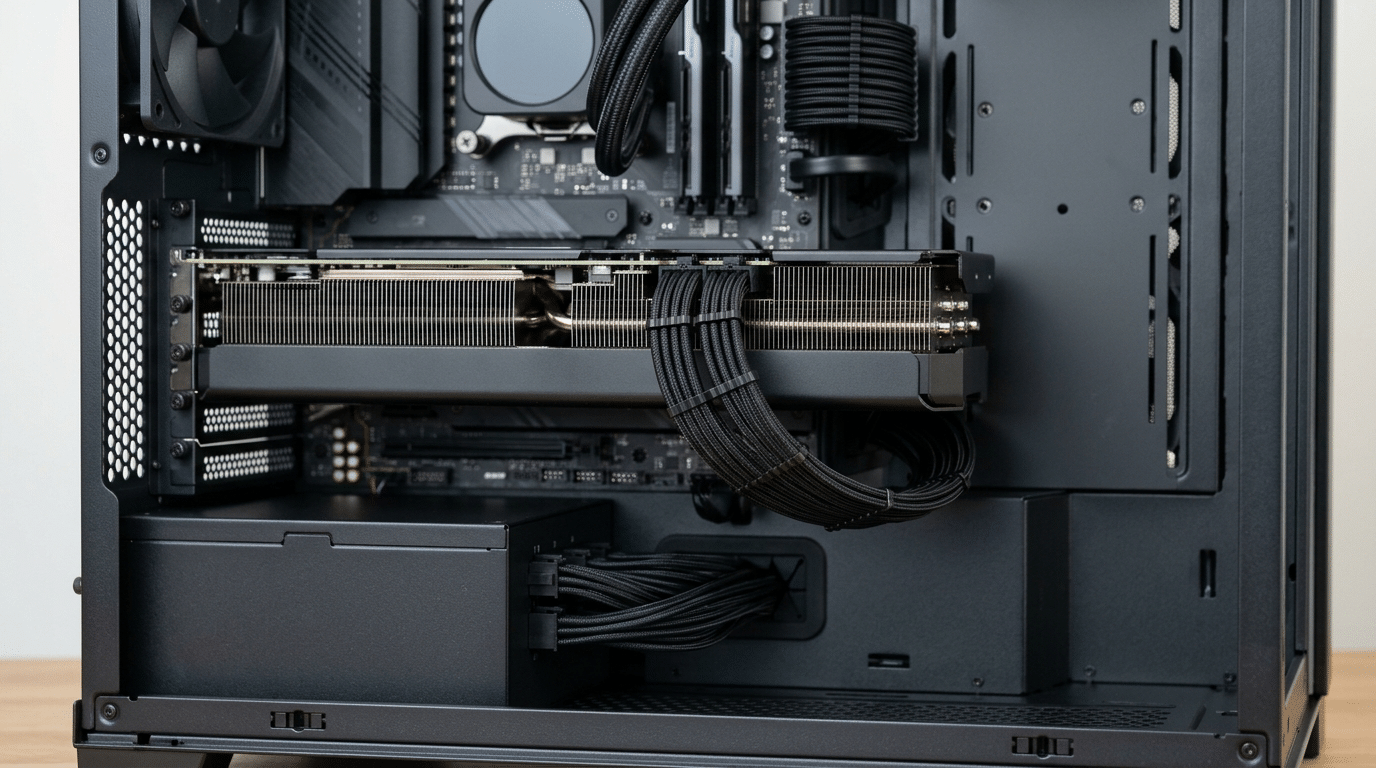
Selecting the best gaming power supply ATX 3.1 model requires looking past raw wattage decals on the side of the box. Cheap power supplies frequently cut corners on transient spike tolerance, secondary capacitor life, and fan bearing durability—hidden compromises that rarely show up on day one but trigger sudden black-screen shutdowns or loud coil/fan acoustics under modern 1440p and 4K loads.
1. ATX 3.1, PCIe 5.1, and 12V-2×6 Recessed Sense Pins
Older ATX 2.x power supplies were engineered before GPUs routinely spiked to double or triple their rated TDP for split-millisecond bursts. Under the Intel ATX Version 3 specification, certified units must sustain transient power excursions up to 200% total system draw and 300% GPU-specific draw without tripping false shutdown protection.
Equally vital is the transition from ATX 3.0’s original 12VHPWR socket to ATX 3.1’s revised 12V-2×6 connector. As documented in Corsair’s ATX 3.0 vs. ATX 3.1 engineering breakdown, the 12V-2×6 socket shortens and recesses the four sideband sense pins while extending the 12 main power conductors. If a builder leaves the 16-pin plug slightly unseated, the recessed sense pins lose contact immediately, instructing the GPU and PSU to cap or cut high-wattage delivery rather than melting plastic over high-resistance half-contact pins. See our full ATX 3.1 and 12V-2×6 technical guide for pinout diagrams and seating best practices.
2. 80 Plus Gold vs. Cybenetics ETA and Lambda Certifications
Traditional 80 Plus stickers check AC-to-DC efficiency at only a handful of static load points (typically 20%, 50%, and 100%) and reveal zero information about acoustic noise or standby efficiency. Modern PSU shoppers gain far higher transparency from Cybenetics ETA and Cybenetics Lambda reports. Cybenetics ETA evaluates over 1,450 load combinations at a realistic 30°C ambient room temperature, while Cybenetics Lambda measures real logarithmic sound pressure inside an anechoic chamber—grading units from Standard up to near-silent A (<25 dBA), A+ (<20 dBA), and A++ (<15 dBA). Learn how to decode both labels in our 80 Plus vs. Cybenetics ETA and Lambda comparison.
3. 2026 Gaming PC Wattage Sizing Guide (Targeting the 50%–60% Load Sweet Spot)
Rather than sizing a power supply right on the razor edge of maximum system draw, target rated capacity so typical gaming load sits near 50%–60% utilization. That margin places your unit inside its peak efficiency valley, reduces thermal heat stress on internal components, and allows Zero RPM fan modes to stay quiet longer. Use the 2026 sizing matrix below across NVIDIA Blackwell, AMD RDNA 4, and Intel Battlemage GPUs:
| Rig Tier | Typical 2026 GPU & CPU Pairing | Target PSU Wattage | Recommended Standards |
|---|---|---|---|
| Entry 1080p | RTX 5060 / RX 9060 XT / Arc B580 + Ryzen 5 9600X or Core Ultra 5 245K | 650W | ATX 3.1 / 80 Plus Gold |
| Mid-Range 1440p | RTX 5060 Ti 16GB / RX 9070 + Ryzen 7 or Core Ultra 5–7 | 750W | ATX 3.1 / Cybenetics Gold+ / Native 12V-2×6 |
| Performance 1440p | RTX 5070 / RTX 5070 Ti / RX 9070 XT + Ryzen 7 9800X3D or 270K Plus | 750W–850W (850W ideal for 5070 Ti / 9070 XT) | ATX 3.1 / 80 Plus Gold or Cybenetics Gold+ / Full Modular |
| High-End 4K | RTX 5080 (360W TDP) + Ryzen 7 9850X3D or Core Ultra 9 285K | 1000W | ATX 3.1 / Cybenetics Gold–Platinum / Japanese 105C capacitors |
| Flagship / AI Rig | RTX 5090 (575W TDP) + Ryzen 9 9950X3D or Core Ultra 9 285K | 1200W+ | ATX 3.1 / Cybenetics Platinum–Titanium / Lambda A+ |
4. Chassis Depth, 12V-2×6 Bend Radius & Modular Cable Rules
Before clicking buy, measure two distinct physical dimensions inside your PC case: bottom basement PSU clearance and side-panel width clearance. Compact ATX supplies such as the 140mm MONTECH Century II 850W, MSI MAG A850GL PCIE5, and Seasonic FOCUS GX-1000 fit virtually every ATX mid-tower without dislodging hard-drive cages. Standard 160mm models (RM850x, RM1000x, Pure Power 13 M, NZXT C1200) fit most modern mesh cases once unused cages slide forward, while 200mm flagships like the CORSAIR HX1200i require full-tower or generous dual-chamber footprints.
At the graphics card side, always leave at least 35mm–40mm of straight, unstrained cable distance exiting the 12V-2×6 header before bending downward toward the basement shroud. Forcing a tight 90-degree crease against tempered glass pulls unevenly on terminal pins. Finally, follow the cardinal rule of full modular builds: never mix or reuse modular cables between two different PSU brands or even different model lines from the same brand. PSU-side pinouts are not standardized, so plugging incompatible leads can destroy GPUs, motherboards, and NVMe SSDs instantly.
5. Upgrade Roadmap & Hidden Ownership Costs
Power supplies outlive almost every other part in a gaming tower. Spending an extra $30 to $40 tier upfront to step from a 750W unit to an 850W or 1000W ATX 3.1 model backed by a 10-year warranty eliminates buying a second PSU when upgrading from an RTX 5070 class GPU to a future 4K card. Also factor in hidden costs on pre-built or OEM systems: budget towers often hide non-modular Bronze units or omitted-spec supplies, and swapping them for an audited ATX 3.1 unit protects expensive GPU upgrades while lowering monthly standby power waste.
6. Secondary Intent Resolver: 850W vs. 1000W & ATX vs. SFX
Still torn between 850W and 1000W? Choose 850W (CORSAIR RM850x or MONTECH Century II 850W) if you play at 1440p with a 250W–304W GPU and want the sharpest value per watt. Choose 1000W (Corsair RM1000x or Super Flower Leadex VII XG) if you run an RTX 5080, add multiple PCIe SSDs and high-draw fans, or plan to carry the same PSU across two GPU generations. Only buy an SFX unit like the CORSAIR SF1000 if your Mini-ITX case mandates SFX dimensions; ATX mid-towers always get quieter 135mm–140mm cooling and longer 10-year warranties from full-size ATX power supplies.
How We Audited, Scored & Rejected Models
Every model in this roundup was evaluated strictly through spec-sheet verification, official Cybenetics ETA and Lambda certification databases, Intel ATX 3.1 design standards, and chassis clearance auditing—in accordance with The PC Audit evaluation methodology. Rather than awarding subjective letter grades, we weighted each PSU across four engineering pillars summing to 100%, verifying complete internal safeguards including OCP OVP OPP, UVP, SCP, and OTP protection circuits, Japanese 105C capacitors, and native 12V-2×6 cable architecture.
| Evaluation Criterion | Weight | What We Audited |
|---|---|---|
| ATX 3.1 Compliance & Transient Handling | 35% | 200%–300% GPU power excursion compliance, native 12V-2×6 recessed sense-pin safety, and DC voltage hold-up stability. |
| Efficiency & Noise (80 Plus / Cybenetics) | 25% | Cybenetics ETA/Lambda or 80 Plus Gold/Platinum verification, FDB fan bearing longevity, and Zero-RPM acoustic tuning. |
| Cable Quality, 12V-2×6 & Modularity | 20% | Full modular layout, flexible embossed or braided 12V-2×6 cabling, Type-5/ATX plug ergonomics, and chassis PSU clearance. |
| Internal Protections & Warranty | 20% | Complete OCP OVP OPP / UVP / SCP / OTP safety circuits, Japanese 105C capacitors, and 7-year to 10-year manufacturer coverage. |
Models We Audited & Rejected (And Why)
- Legacy ATX 2.x Group-Regulation Power Supplies: Excluded completely because older group-regulated topologies cannot safely absorb 200%–300% modern GPU transient spikes and require bulky multi-8-pin 12VHPWR adapter dongles that double contact failure points.
- Non-Modular 80 Plus Bronze Budget PSUs Above 650W: Disqualified for cutting corners on primary/secondary capacitor endurance, offering short 3-to-5-year warranties, cluttering airflow shrouds with fixed cables, and omitting native 12V-2×6 ports.
- First-Generation ATX 3.0 Units With Legacy 12VHPWR Sockets: Rejected in favor of refreshed ATX 3.1 hardware because non-recessed 12VHPWR headers lack the shortened sense-pin interlock that shuts down high-wattage delivery when partially unseated.
- Omitted-Spec Retail Prebuilt Power Supplies: Generic unlisted units hidden inside budget prebuilt towers fail transparency checks around real 12V rail output, ATX revision, and safety protections—always verify explicit ATX 3.1 branding when upgrading.
Frequently Asked Questions About Gaming Power Supplies
What makes an ATX 3.1 power supply safer than ATX 3.0 for modern GPUs?
ATX 3.1 replaces 12VHPWR with the safer 12V-2×6 socket. Its four sense pins sit deeper inside the connector while power pins extend further, ensuring any half-seated plug breaks sense contact immediately and cuts high-wattage delivery before localized terminal overheating can melt plastic housings.
How many watts do I actually need for an RTX 5070 Ti, RTX 5080, or RTX 5090?
Target 850W for an RTX 5070 Ti or RX 9070 XT, 1000W for an RTX 5080, and 1200W for a 575W RTX 5090. Keeping typical gaming draw near 50%–60% of rated capacity maximizes conversion efficiency, minimizes waste heat, and keeps cooling fans in quiet low-RPM or Zero RPM operation.
Should I prioritize 80 Plus Gold or Cybenetics ETA and Lambda ratings?
Prioritize Cybenetics ETA and Lambda ratings whenever available. Unlike 80 Plus, which only checks a few isolated load points without measuring noise, Cybenetics evaluates over 1,450 load scenarios at 30°C ambient temperature and measures true anechoic fan noise in decibels from Standard up to near-silent A++.
Can I reuse modular power cables from my old PSU when upgrading?
Never reuse or mix modular cables between different power supplies. PSU-side connector pinouts are not standardized across manufacturers or even between different model generations from the same brand; mismatched modular wiring sends wrong voltages directly into GPUs, motherboards, and SSDs, causing instant hardware damage.
How much PSU depth and 12V-2×6 cable bend clearance does my PC case need?
Verify both bottom shroud length and at least 35mm–40mm of side-panel width clearance. Short 140mm PSUs fit virtually every ATX chassis cleanly, whereas 160mm–200mm blocks may crowd drive cages; leaving 35mm–40mm of straight cable before bending prevents sideways strain on 12V-2×6 terminals.
Final Verdict: Selecting the Best Gaming Power Supply ATX 3.1 Unit
Choosing the best gaming power supply ATX 3.1 model protects every expensive component inside your PC for the next decade. For most high-end 1440p and 4K gamers running an RTX 5080 or RTX 5070 Ti, the Corsair RM1000x (2024 ATX 3.1) takes #1 Best Overall thanks to Cybenetics ETA Platinum efficiency, whisper-quiet Lambda A acoustics, embossed cables, and a 10-year warranty. Sweet-spot 1440p builders running an RX 9070 XT or RTX 5070 Ti get tremendous long-term value from the CORSAIR RM850x ATX 3.1, while value-conscious DIYers save meaningfully without dropping Japanese capacitors via the compact 140mm MONTECH Century II 850W.
If your build steps up to a 575W RTX 5090, pick the CORSAIR HX1200i (2025) for Platinum digital monitoring in roomy cases or the 160mm NZXT C1200 Gold ATX 3.1 for tighter towers—and lock in Mini-ITX SFF headroom with the true 100mm CORSAIR SF1000 (2024).


